













Scientists identify new dinosaur species from 210-million-year-old fossils in Zimbabwe
text_fields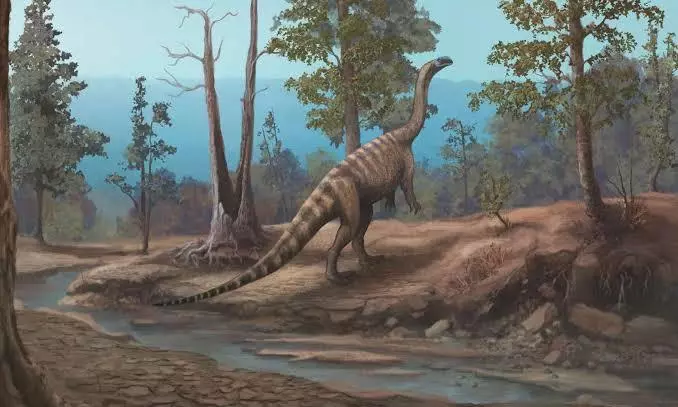

Scientists have identified a previously unknown dinosaur species from fossils discovered along the shores of Zimbabwe's Lake Kariba, providing new insights into the early evolution of dinosaurs.
The newly identified species, Musango matusadonaensis, lived about 210 million years ago during the Late Triassic period, when dinosaurs were becoming larger, more diverse and beginning to dominate ecosystems. The findings have been published in the Journal of Systematic Paleontology.
The fossils were unearthed during a 2018 expedition to Spurwing Island in Lake Kariba by researchers from Zimbabwe, South Africa and the United Kingdom.
The remains included part of a hind leg comprising the thigh, shin and ankle bones. Scientists said the bones were distinct enough to identify a previously unknown species.
Lead author Paul Barrett, a palaeontologist at the Natural History Museum in London, said he noticed the bones eroding from the shoreline while walking along the lake. After excavation, researchers found the dinosaur differed significantly from other species known from the region.
Barrett said it was the first dinosaur species he had described that he had personally discovered.
Researchers estimate that Musango matusadonaensis stood about 1.5 metres tall at the hip, weighed around 390 kilograms and belonged to the sauropodomorph group, which later evolved into the giant long-necked sauropods.
The dinosaur was named after the houseboat Musankwa, which served as the research team's floating laboratory during the expedition, and the nearby Sanyati River.
Evolutionary analysis suggests the species may have been closely related to dinosaurs found in Argentina and South Africa, indicating that early dinosaurs spread across connected landmasses.
The researchers said the discovery also points to the untapped palaeontological potential of Africa, where dinosaur fossils remain relatively underrepresented because of limited exploration and excavation.