


















Malaysia, Japan plan carbon capture ignoring climatic benefit doubts
text_fields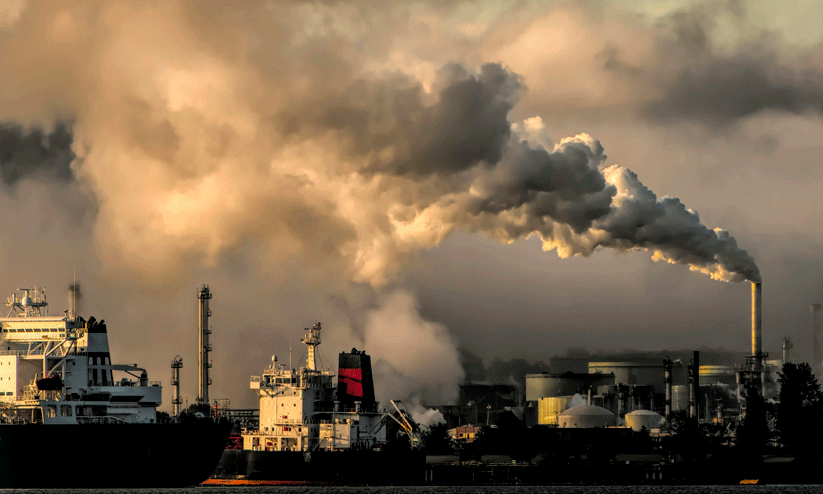
Representational.

Bangkok: Japan wants to ship carbon emissions to Malaysia in a first-of-its-kind project in Southeast Asia for carbon capture and storage, a widely debated process that critics say is more symbolic than effective in curbing climate change, the Associated Press reported.
Despite such doubts, Malaysia is positioning itself as Southeast Asia's hub for alternative technology, a three-step process that captures, transports and buries carbon dioxide, which contributes to climate change. With about 81% of Malaysia's electricity generated from fossil fuels, climate activists say carbon capture is an expensive distraction from proven emissions-reducing actions such as transitioning to renewable energy.
Japan, one of the world's top carbon emitters, plans to ship emissions from its heavily polluting industries spanning electric power, oil refining, cement, shipping and steel to Malaysia within the next few years. If the project succeeds, experts say it may blaze a path for other Southeast Asian nations with carbon storage potential, like Indonesia and Thailand.
Detractors say it will slow the progress of already off-track global efforts to curb emissions.
The plan "dangerously shifts the burden of climate change onto Malaysia rather than onto Japan," said Rachel Kennerley, a carbon capture specialist with the Washington-based Center for International Environmental Law.
The debated process starts with capturing emissions directly from a polluting source, like a refinery or power station. This can be done in different ways, such as retrofitting a facility to emit directly into a storage location or by building vacuum-like structures to suck up emissions.
While Japan and Malaysia have yet to share detailed plans, the carbon dioxide will likely then need to be separated from the other captured gases emitted during industrial processes.
The carbon will then be liquefied and later transported in specially designed ships to burial sites, likely in depleted gas fields off the coast of the Malaysian state of Sarawak on the island of Borneo.