















Iran rebuts Trump’s ‘war ending soon’ claim after Putin call, says Tehran will decide its end
text_fields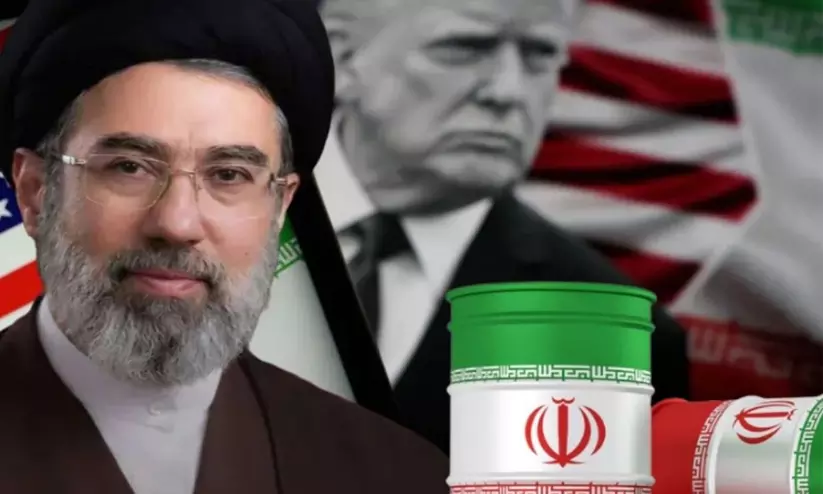

The Donald Trump bragged about ending the war in Iran soon, claiming that US strikes on Iranian targets were “very complete” and that carefully calibrated attacks on military facilities had impaired Tehran’s striking capacity; however, the assertion drew a caustic rejoinder from the Islamic Revolutionary Guard Corps, which declared that it would be Iran, not the US, that would determine when the war should cease.
In a defiant missive that has reverberated through global diplomatic channels, the IRGC underscored that the "equations" governing the regional security architecture now reside firmly within the grasp of Iranian forces, thereby dismissing the US’ unilateral projections of a truncated campaign, asserting that neither American troops nor their allies possessed the authority to decide the moment when military operations would come to an end.
The organisation further warned that continued bombardment by the United States and Israel could provoke drastic retaliatory measures, including the halting of oil exports from the Gulf region, a move that could reverberate across global energy markets.
The diplomatic impasse further solidified as Foreign Minister Abbas Araghchi, speaking with a gravitas that mirrored the regime’s intransigent posture, formally expunged the possibility of bilateral negotiations, characterising the current theatre of war as one where diplomacy has been supplanted by an enduring readiness for missile-borne retaliation.
This bellicose rhetoric coincides with the ascension of Ayatollah Mojtaba Khamenei to the station of Supreme Leader, a transition that many geopolitical observers interpret as a definitive pivot toward a more protracted and "hard-line" defensive strategy.
Addressing Republican lawmakers at his golf club near Miami, the US president portrayed the military campaign as a decisive and short-term operation intended to neutralise what he described as destabilising forces in the Middle East, while expressing confidence that the conflict would soon wind down.
The volatility of the situation has found expression in the Strait of Hormuz, a maritime juggernaut through which a substantial portion of the world’s oil supply passes. In response to the Islamic Revolutionary Guard Corps’s vow to prohibit the export of even “one litre of oil” should American and Israeli strikes persist, President Donald Trump issued a characteristically pugnacious ultimatum via social media.
He warned that any disruption to global energy conduits would invite a response "twenty times harder" than prior engagements, invoking a biblical lexicon of "Death, Fire, and Fury" to describe the potential annihilation of Iranian infrastructure.
Oil prices briefly surged to their highest levels since 2022 before retreating amid speculation that the war might not last much longer, even as geopolitical anxieties continued to roil financial markets.
Diplomatic manoeuvring has also intensified behind the scenes, with Donald Trump holding a telephone conversation with Vladimir Putin to discuss the conflict and possible avenues for settlement.
According to Kremlin adviser Yuri Ushakov, the Russian president proposed several ideas for a rapid political and diplomatic resolution after consultations with Gulf leaders and Iranian President Masoud Pezeshkian, signalling that major powers are increasingly wary of the war’s expanding geopolitical and economic repercussions.