













London gallery removes artwork after row over Churchill’s role in Bengal famine
text_fields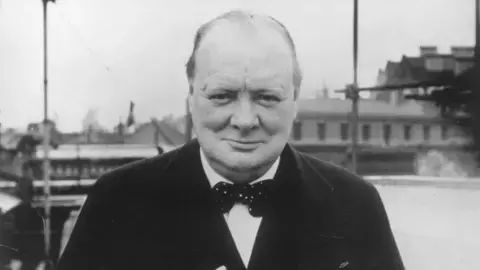

London: A video installation at London’s National Portrait Gallery has been removed following a controversy over claims about former British Prime Minister Winston Churchill’s alleged role in the Bengal famine during colonial rule in India.
The 40-minute video work titled 'Persistence', created by artist Helen Cammock, was temporarily displayed at the gallery and was scheduled to remain until August. The installation was withdrawn after criticism over comments made in the narrated film linking Churchill’s wartime policies to the famine.
In the video, Cammock discussed the military campaigns of 17th-century English soldier and parliamentarian Oliver Cromwell in Ireland and compared Cromwell’s mass starvation tactics with what she described as the “wilful starvation” of Indians under Churchill’s leadership, according to reports.
The Bengal famine of 1943 resulted in the deaths of an estimated 30 lakh people in eastern India. Several historians and scholars, including Nobel laureate economist Amartya Sen, have argued that the famine was linked to wartime policies of the Churchill-led British government, including inadequate measures to control inflation and prioritising food supplies for military needs.

However, some historians have argued that the Japanese invasion of Burma in 1941, which disrupted a major rice supply route to India, was the primary cause of the famine rather than Churchill’s policies.
The controversy intensified after the installation prompted an open letter to the National Portrait Gallery by historian Andrew Roberts. The letter, signed by 50 peers, criticised the portrayal of Churchill, describing it as an ideologically driven attack. Nicholas Soames, Churchill’s grandson, was among those who signed the letter.
On Monday, the National Portrait Gallery said the artwork was removed at Cammock’s request. The gallery said it respected the artist’s decision while also acknowledging the views of those who objected to the film’s content.
The gallery clarified that the work was an artistic response to its collection rather than a documentary, and said the opinions expressed in the video did not necessarily represent the institution’s views.
Cammock said the installation was based on academic research and aimed to raise questions about historical recognition, including who is honoured, whose stories are preserved and whose experiences are overlooked.
She also cited American musician and civil rights activist Nina Simone’s view that an artist’s responsibility is to reflect the times, adding that this can involve revisiting history, questioning established narratives and challenging perspectives.