













Trump says US-Iran talks to begin Monday after delaying planned strikes
text_fields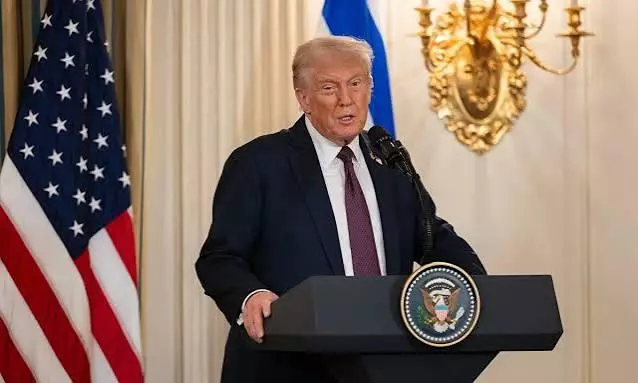

US President Donald Trump said fresh talks with Iran will begin on Monday after he decided to delay what he described as "the biggest attack since World War II" following requests from Gulf allies and unnamed Iranian officials.
Speaking on Sunday, Trump said Qatar, Saudi Arabia and the United Arab Emirates had urged him to give diplomacy more time instead of carrying out the planned strikes.
The proposed talks are aimed at ending the conflict and restoring cargo traffic through the Strait of Hormuz, a key shipping route that carried about one-fifth of the world's traded oil and natural gas before the war.
However, Iran denied that direct negotiations with the United States were under way. Foreign Ministry spokesperson Esmail Baghaei said Tehran's current discussions were only with Oman and focused on establishing a temporary route for safe navigation through the Strait of Hormuz.
According to trade data platform Kpler, nine vessels transited the strait on Sunday, most of them using an Iranian-controlled route.
Meanwhile, Iran's judiciary said it executed two men on Monday after convicting them of spying for Israel and providing military coordinates, images and other intelligence used in attacks on Iranian targets.
Iranian Foreign Minister Abbas Araghchi also arrived in Iraq's holy city of Najaf to participate in the Arbaeen commemorations.
Separately, Israeli strikes on the Gaza Strip over the weekend killed at least 17 people, including children, according to hospitals in Gaza. The Israeli military said the strikes targeted militants.
The strikes came days after the United States and Hamas said they had reached an agreement for the militant group to disarm, a potential step towards ending the war in Gaza.
Humanitarian conditions in Gaza also continued to worsen as extreme summer temperatures affected displaced Palestinians living in overcrowded tent camps with limited access to water, electricity and sanitation. Aid agencies warned that the conditions increased the risk of dehydration, heat-related illnesses and the spread of disease.