

















China builds world’s first nuclear-blast-resistant floating artificial island
text_fields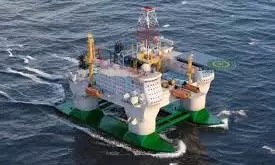

China is developing a 78,000-tonne artificial floating island capable of surviving nuclear blasts.
The structure is a mobile, semi-submersible, twin-hull platform designed to support 238 people for four months without needing fresh supplies.
The platform is the same size as China’s Fujian aircraft carrier. It is expected to be fully operational in 2028. Officials say it can endure extreme sea conditions, including 6–9 metre waves and category-17 typhoons, the strongest classification of tropical cyclones.
An academic leading the project, Lin Zhongqin, said the operational status will be achieved by 2028.
A report by the South China Morning Post said scientists have built the facility using “metamaterial” sandwich panels. These materials can turn “catastrophic shocks into gentle squeezes.”
The project team, led by Professor Yang Deqing of Shanghai Jiao Tong University (SJTU), wrote that the deep-sea major scientific facility was designed for all-weather, long-term residency. They added that its superstructure contained critical compartments ensuring emergency power, communications, and navigation control, making nuclear-blast protection for these spaces absolutely vital.
The facility is officially named the Deep-Sea All-Weather Resident Floating Research Facility. China describes it as a “far-sea floating mobile island,” a project that follows ten years of research and planning.
The island will measure 138 metres in length and 85 metres in width. Its main deck will sit 45 metres above the waterline.
Although China calls it a civilian scientific platform, its design references GJB 1060.1-1991, a military standard for nuclear blast resistance. This means the structure is built to survive the worst possible nuclear scenarios.