
















Google seeks permission to release 32 million mosquitoes in California and Florida
text_fields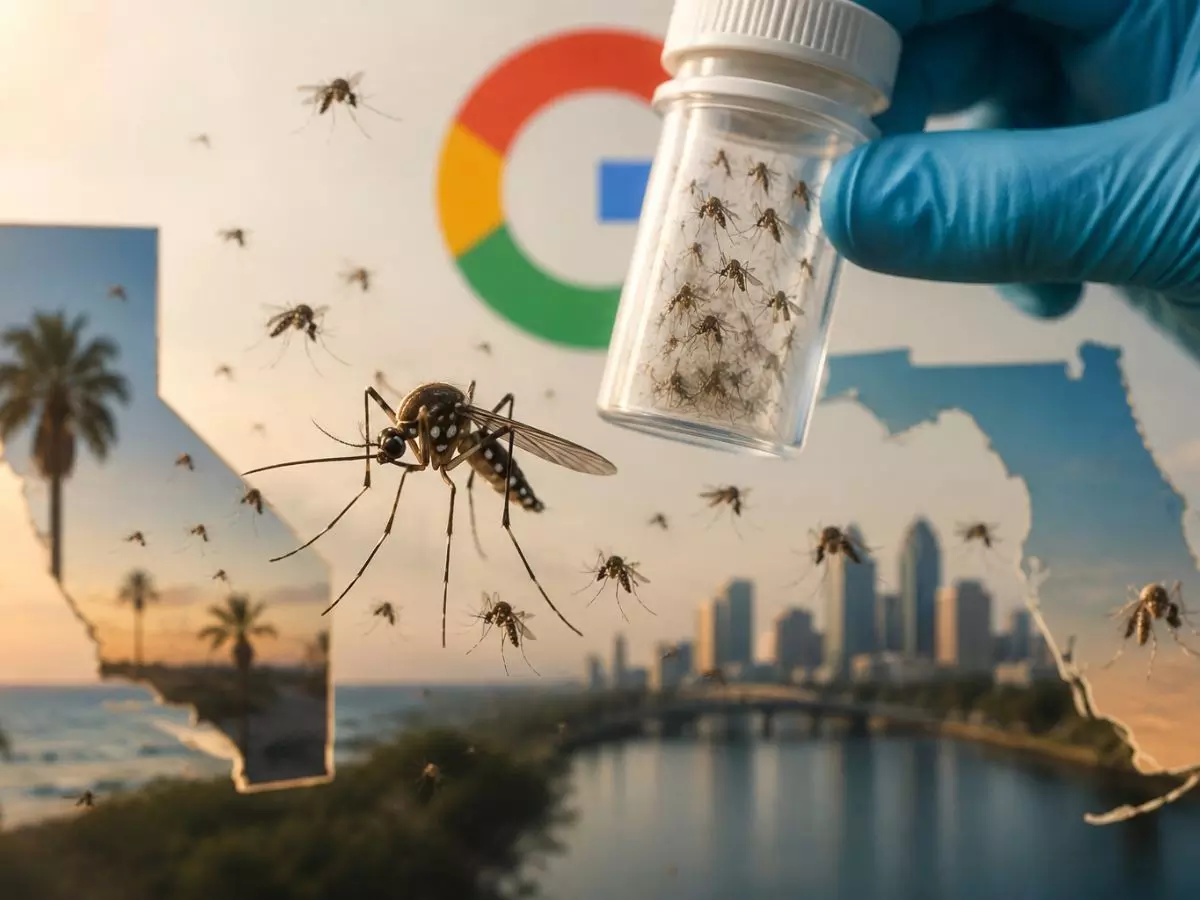

It may sound bizarre at first hearing that the tech giant Google has requested the US government to permit the release of 32 million sterilised mosquitoes in California and Florida, apparently in an attempt to deploy its technological expertise to eliminate disease-spreading mosquitoes worldwide.
Google has approached the US Environmental Protection Agency (EPA) for an experimental permit that would allow the annual release of up to 16 million mosquitoes in the two states over a period of two years, while the federal regulator reviews the proposal following a public consultation process scheduled to conclude on 5 June.
The initiative forms part of Google's “Debug” programme, through which the company is harnessing artificial intelligence, data analytics and automated breeding systems to combat mosquito-borne diseases.
Mosquitoes remain the deadliest animals on Earth, and they are responsible for transmitting a host of lethal illnesses, including dengue, malaria, Zika, chikungunya and West Nile virus, which collectively claim hundreds of thousands of lives each year.
The programme focuses on male Aedes aegypti mosquitoes, a species notorious for spreading several of the world's most dangerous viral infections. These males are reared with Wolbachia, a naturally occurring bacterium that renders them reproductively incompatible with wild females. Consequently, when infected males mate with females in the wild, the eggs fail to hatch, and mosquito populations diminish generation after generation.
Although the spectacle of a technology conglomerate breeding bacteria-infected insects may appear extraordinary, the underlying science is far from novel. The sterile insect technique has been employed against agricultural pests and disease vectors for decades, while Wolbachia-based mosquito control programmes have been tested internationally for nearly 15 years.
Google argues that conventional interventions, including pesticide spraying and habitat elimination, have yielded diminishing returns, whereas its data-driven strategy offers a precise, scalable and potentially transformative weapon in the global battle against vector-borne disease.