



















PSLV-C62 launches EOS-N1 in ISRO’s first mission of 2026
text_fields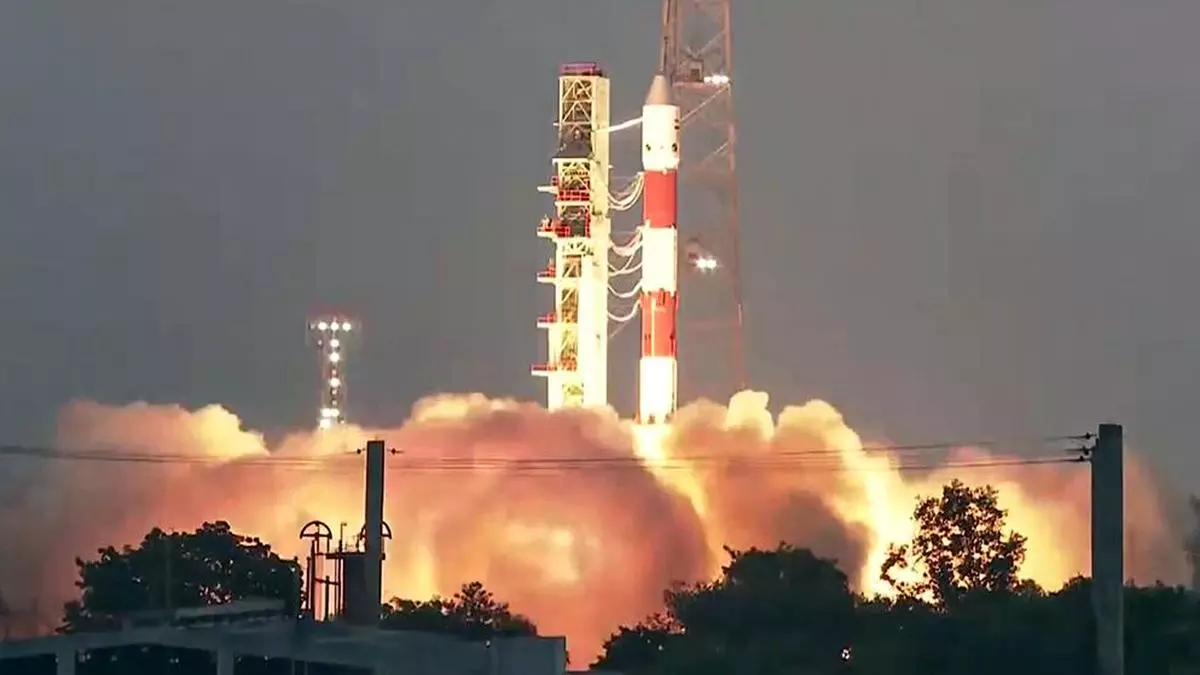

New Delhi: The Indian Space Research Organisation on Monday successfully carried out its first mission of 2026 with the launch of the EOS-N1 Earth observation satellite onboard the PSLV-C62 rocket.
The EOS-N1 satellite, also known as Anwesha, lifted off at 10:17 am IST on the 64th flight of the Polar Satellite Launch Vehicle from the First Launch Pad at the Satish Dhawan Space Centre in Sriharikota.
“Liftoff! PSLV-C62 launches the EOS-N1 Mission from SDSC-SHAR, Sriharikota,” ISRO said in a post on the social media platform X.
The mission is aimed at strengthening India’s remote sensing capabilities, particularly in agriculture, urban mapping and environmental monitoring. EOS-N1 is planned to be injected into a Sun-Synchronous Orbit.
In addition to the primary satellite, the mission is carrying 15 co-passenger satellites. Among them is the Kestrel Initial Technology Demonstrator (KID), a small-scale re-entry vehicle prototype developed by a Spanish startup.
According to ISRO, the KID capsule will be the final co-passenger to be deployed. Following its injection, it is scheduled to undertake a re-entry trajectory and splash down in the South Pacific Ocean.

The PSLV-C62 / EOS-N1 mission marks the ninth dedicated commercial mission undertaken by NewSpace India Limited, the commercial arm of ISRO. It is also the fifth mission to use the PSLV-DL variant, which is equipped with two solid strap-on motors.
With this launch, PSLV continues its long operational record, having completed 63 flights so far. The launch vehicle has played a key role in several landmark missions, including Chandrayaan-1, the Mars Orbiter Mission, Aditya-L1 and Astrosat. In 2017, PSLV created a world record by launching 104 satellites in a single mission.
ISRO’s previous launch attempt was the PSLV-C61 mission in May, marking its 101st launch endeavour, which aimed to place the 1,696-kilogram EOS-09 Earth observation satellite into a 505-kilometre Sun-Synchronous Polar Orbit. Although the initial phases of that flight performed normally, a technical anomaly in the rocket’s third stage prevented the satellite from reaching its intended orbit.
With IANS inputs