





Is the trade war coming to an end?
text_fields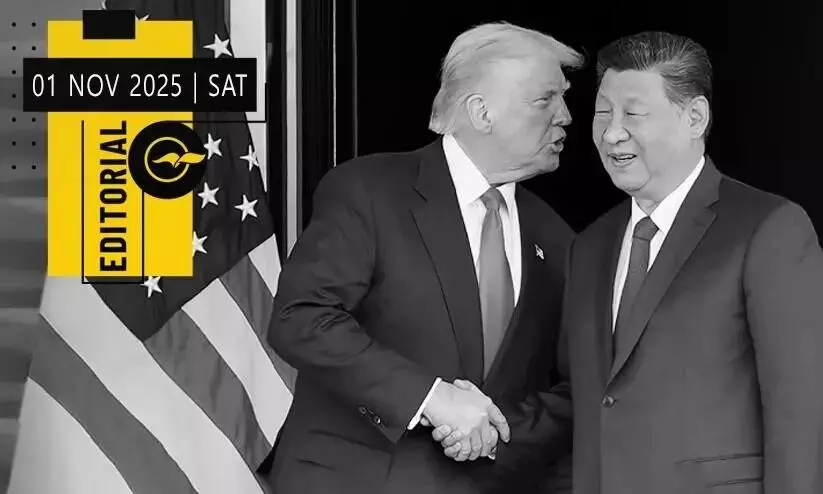

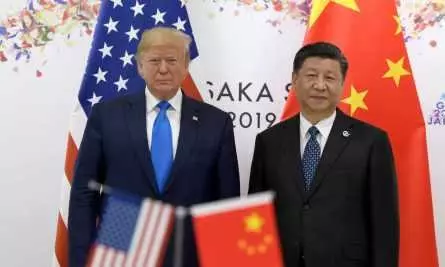
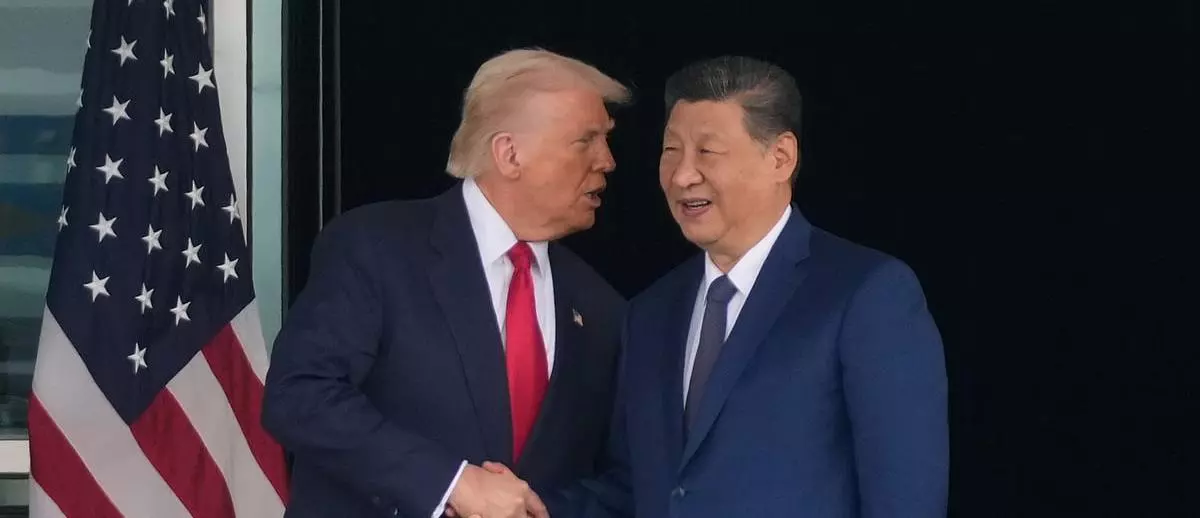
At the talks held in Busan between US President Donald Trump and Chinese President Xi Jinping on the sidelines of the Asia-Pacific Economic Cooperation (APEC) summit in Gyeongju, South Korea. the trade war between the two countries has eased, at least temporarily. The two sides have reached an agreement on tariffs and exports, which will undoubtedly ease months of global uncertainty. While the US halved its 20 per cent tariff on Chinese goods, China agreed to a one-year suspension of its restrictions on the export of rare earth elements. Trump’s announcement that he would withdraw restrictions on the supply of computer chips to China and that a trade deal would be signed soon is an apparent sign of thawing. It should be remembered that Trump had earlier announced that he would implement 100 per cent tariffs on China from November 1. Viewed from that point, it certainly bodes well that the two countries reached a consensus in the first phase of direct talks. Busan also had the distinction of being the first meeting with the main adversary in Trump’s second visit. With the two sides shaking hands and parting for further talks, another question remains whether it will be a step towards a new geopolitics.
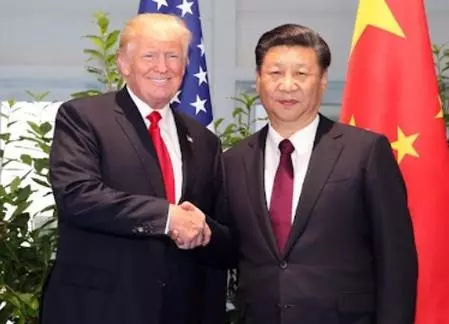
Trump initiated a rare political and economic emergency in his first term in 2018, which jolted the world economy and forced almost all countries to intervene directly or indirectly and become victims. The media described it as a trade war when countries around the world, completely disregarding the fundamental objective of the World Trade Organization (WTO) — to make international trade as free and transparent as possible — imposed import tariffs at their own discretion. It began with a 10 per cent and 25 per cent increase in import duties on aluminium and steel, respectively. It was clear that the move aimed not only to secure huge profits for Trump’s business allies in the US but also to weaken China, the largest exporter in this sector. But China was not the only victim; this was a blow to all countries except Australia and Brazil, which were major exporters in this field. The WTO intervened in the matter, but to no avail. When China retaliated by raising tariffs by 25 per cent on about 7,000 products imported from the US, that marked the beginning of a new kind of war the world had never witnessed before. However, after Trump left office, things eased up a bit. However, in his second term, he took up the trade war with an extremely aggressive posture. The retaliatory tariff measures shook most countries around the world, including India. The first tariff announced on imports of Indian products was 25 per cent. Later, an additional 25 per cent punitive tariff was imposed as penalty for India's imports of Russian oil, which came as a heavy blow. Despite the efforts of Trump’s ‘dear friend’, the Prime Minister, there was no relenting. With similar measures, Trump has put all the world’s superpowers on edge.
It seems that the various domestic setbacks, the pressures therefrom, and the strong resistance of countries including China have forced Trump to change his mind. Trump may not have expected that countries including India would start negotiations with European countries in search of markets. Remember that the India-UK trade agreement, which had been under discussion for three years, quickly became a reality after the ‘retaliatory tariff’ was imposed. India needed a new market to survive. After that, India also activated trade talks with the European Union. Along with this, there are other diplomatic interventions to reduce the gap with China. In parallel, new trade agreements with Russia are also being prepared. It can be said that Trump realised that forming new trade alliances centred on areas such as the European Union, Russia, and China would weaken the US. This realisation may have prompted Trump to prepare for a consensus with China. Although this would defuse the trade war, it is to be feared that it would lead global politics to other complications. Trump revealed that before the talks with China, he had asked the Pentagon to brush up its nuclear weapons. It was 33 years ago that the United States last conducted a nuclear weapons test. It is noteworthy that Trump’s statement came after the news that Russia was preparing for a nuclear test. So, even if the trade war ends, one could expect that the test of power in other directions would continue.