

The sabotage in West Bengal’s voter rolls
text_fields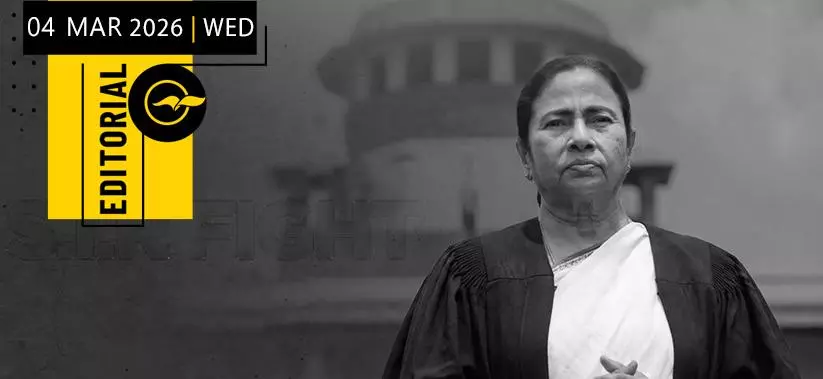

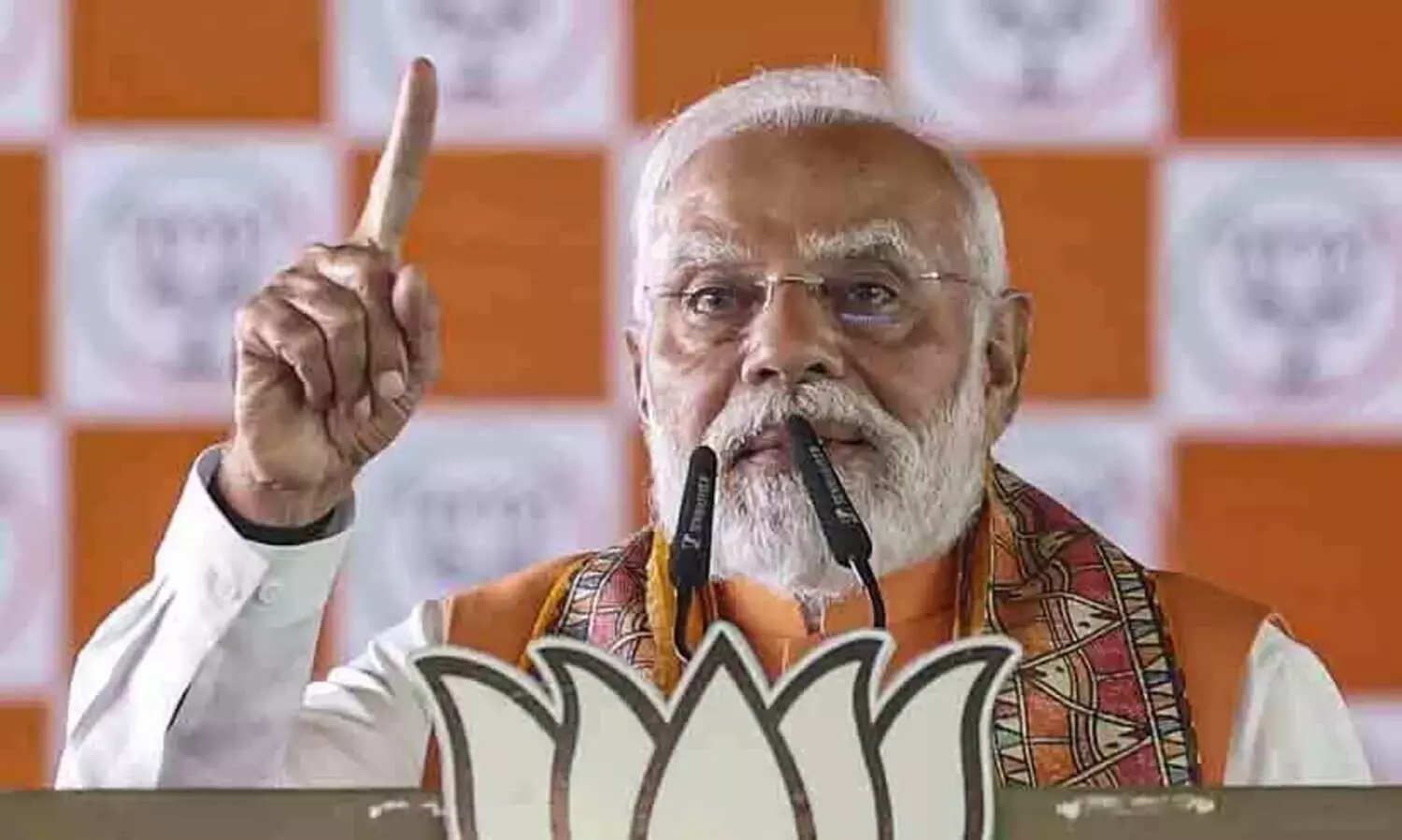
With Union Home Minister Amit Shah openly declaring that only the names of alleged infiltrators had been removed through the SIR process and that they would be expelled from the state altogether if the BJP comes to power, the underlying agenda of a hardline Hindutva government has been laid bare beyond doubt. He made this announcement while inaugurating the BJP’s Parivartan Yatra at Mathurapur in West Bengal. While the party’s primary objective in the upcoming Assembly elections is to wrest power from Mamata Banerjee’s All India Trinamool Congress at any cost, the Home Minister’s remarks suggest that a second phase would involve deporting en masse those Muslim minorities in Assam, Bengal and Bihar whom the BJP alleges are “infiltrators", It is an undeniable fact that decisive Muslim votes had enabled the Left Front led by the Communist Party of India (Marxist) to rule West Bengal for more than three decades. Subsequently, Mamata Banerjee’s Trinamool Congress came to power with the consolidated support of minority communities who had grown disillusioned with the Left regime. Since assuming office in 2011, her hopes for securing a fourth consecutive term have continued to rely significantly on this very vote bank.
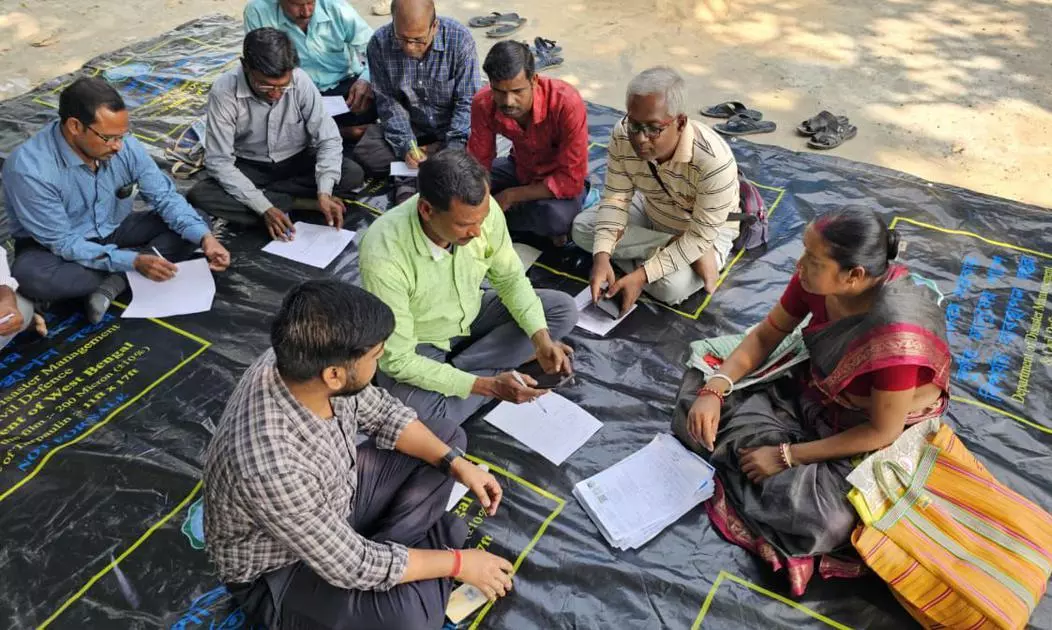
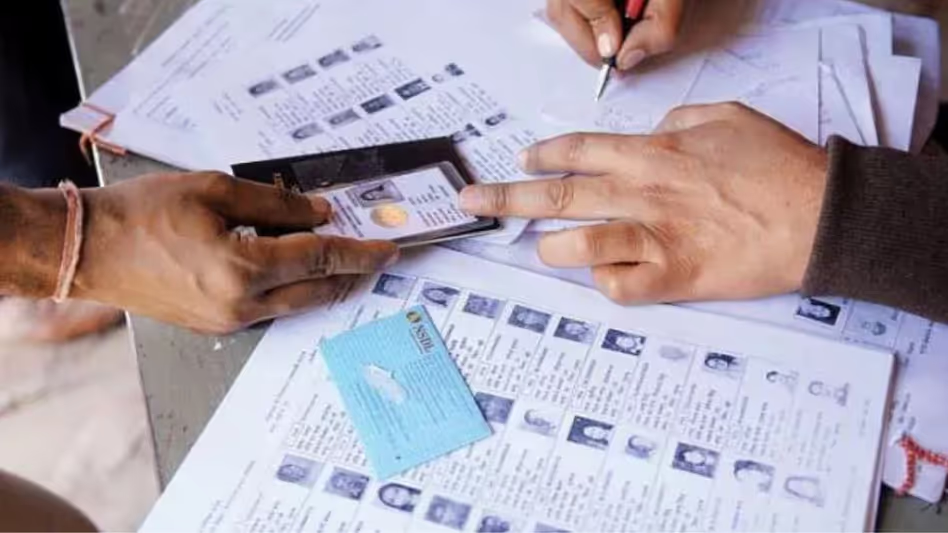
Amit Shah’s earlier remarks ratify Banerjee’s claim that the removal of voters was a planned move carried out jointly by the Election Commission of India and the Bharatiya Janata Party. It was probably in response to Mamata's approaching the Supreme Court and dramatically presenting her arguments by herself what she described as electoral manipulation that the apex court decided to appoint a judicial panel to oversee an intensive scrutiny of the electoral rolls. However, even after the verification process conducted under judicial supervision, the revised voter list reportedly excluded 63.66 lakh voters. This accounts for 8.3% of the state’s total electorate. The current voter base stands at over 7.04 crore, meaning that the deletions were made from the previous total of 7.66 crore voters. Those whose names are marked for “adjudication” in the rolls will not be permitted to cast their votes in the election. Observers say there is little need to speculate on why the Election Commission undertook what is being described as a highly planned and one-sided action of such magnitude. Critics contend that the present Election Commission of India functions in a manner aligned with the ruling establishment. They point out that the government had earlier introduced legislative amendments enabling the appointment of a commission perceived by opponents as an ally of the ruling party to oversee the conduct of general elections, which form the bedrock of democracy. It is further alleged that the amendments ensured the Commission was given powers that made them safe from judicial challenge. This has created a situation where even the intervention of the Supreme Court is unlikely to effectively prevent the denial of voting rights to lakhs. Notably, the SIR process is said to have had its most severe impact in districts such as Malda, Murshidabad and North and South 24 Parganas in West Bengal, where Muslim minority votes are considered decisive.
The Hindutva narrative alleging that a significant section of West Bengal’s Muslim population consists of infiltrators from Bangladesh has been voiced for some time. It is true that during the 1971 Bangladesh Liberation War, large numbers of people from what was then East Pakistan entered India as refugees with the consent of the Indian military authorities. However, a substantial proportion of them were Hindus. The Bharatiya Janata Party government has shown no intention of denying voting rights to Hindus who settled permanently in India, nor of expelling them from the country, and is unlikely to do so. At the same time, there is an insistence on deporting Muslims, even though Bangladesh has shown no willingness to accept them. It must also be noted that these expulsions are not being carried out on the basis of adequate evidence. In Assam, opponents contend that the ongoing drive under Chief Minister Himanta Biswa Sarma is rooted in a discriminatory presumption that all Bengali-speaking Muslims are Bangladeshis — a characterisation they describe as unjust and inhumane. It is at the same time when process continues there that similar measures are reportedly being pursued in West Bengal with equal rigour. Whether Mamata Banerjee’s one-person resistance will prove effective in countering Hindutva majoritarianism remains to be seen. It is also uncertain to what extent the Indian National Congress and the Communist Party of India (Marxist) — both rivals of the Trinamool Congress in the Assembly elections — will cooperate with her in opposing the mass deletions from the voter rolls.