






Four Republicans go against Trump to limit his authority and US involvement in Iran war
text_fields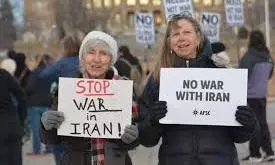

Four Republican senators voted with Democrats on Tuesday to advance a resolution seeking to limit President Donald Trump’s authority to continue US military involvement in the Iran war under the War Powers Act.
The measure passed the Senate 50-47.
Republican Senators Rand Paul of Kentucky, Susan Collins of Maine, Lisa Murkowski of Alaska, and Bill Cassidy of Louisiana backed the Democrats, while Democrat Senator John Fetterman of Pennsylvania voted against the resolution. Three Republican senators missed the vote.
The resolution does not force an immediate withdrawal of US forces from the conflict, but marks a rare public challenge to Trump from members of his own party over a war that has lasted 81 days.
Fighting that began on February 28 has reportedly killed more than 10,000 people across the Gulf region, caused major damage to civilian and energy infrastructure, and shut down the Strait of Hormuz, a key global oil shipping route.
The Pentagon’s last estimate placed US war costs at $29 billion.
Democrats argue Trump exceeded his authority under the War Powers Act, which bars presidents from deploying forces for more than 60 days without congressional approval. Critics say that the deadline expired on May 1. The White House argues the clock stopped on April 8 after a ceasefire announcement.
Diplomatic efforts continued this week as Iran submitted a 14-point proposal seeking sanctions relief, reparations, and recognition of its authority over Hormuz. Washington’s counterproposal called for tighter restrictions on Tehran’s nuclear programme and the surrender of much of its enriched uranium stockpile.
Iran warned on Tuesday that renewed military action by the United States and Israel would bring heavier losses for its adversaries, as tensions remained high despite ongoing ceasefire talks.
Iranian Foreign Minister Abbas Araghchi said in a post on X that Tehran had gained military experience from the conflict and warned that “a return to war will feature many more surprises.”
His remarks came after US President Donald Trump gave Iran a “two-to-three-day” ultimatum to reach a peace agreement, while warning that Washington could launch fresh strikes.
Araghchi claimed Iranian forces were the first to shoot down an American F-35 fighter jet, citing what he described as a US congressional report on aircraft combat losses. He said Iran’s armed forces had learned lessons from the conflict and strengthened their capabilities.
Iran’s army spokesman Mohammad Akraminia warned that Tehran would open “new fronts” against the United States if attacks resumed. He added that Iran had used the ceasefire period to improve its combat readiness.
Speaking at the White House, Trump said he had been “an hour away” from relaunching attacks on Iran before delaying the decision during negotiations. He said he hoped further war could be avoided but added that the United States might deliver “another big hit” if necessary.
Trump also said Washington intended to end the conflict quickly and repeated that Iran would not be allowed to obtain a nuclear weapon. He acknowledged growing political pressure over the war, which has increased fuel prices in the United States ahead of congressional elections in November.
US Vice President JD Vance said Iran appears willing to negotiate a nuclear agreement with Washington, but cautioned that the United States remains uncertain about Tehran’s intentions until a formal deal is signed.
Speaking during a White House briefing, Vance said the Trump administration was engaging in talks “in good faith” and believed Iran understood that developing a nuclear weapon remained a non-negotiable red line for the United States.
“What I think is that the Iranians want to make a deal. Iranians recognise that a nuclear weapon is the red line for the United States of America,” Vance said.
However, he warned against assuming an agreement was close, saying Washington would only know Iran’s true position “when we’re actually putting pen to paper on signing a deal.”
Vance also said President Donald Trump was prepared to take stronger action if diplomatic efforts failed. According to Vance, Trump had made clear that while the United States preferred a peaceful resolution, it remained “locked and loaded” and ready to use military force if necessary.
He suggested divisions within Iran’s leadership could complicate negotiations. “Maybe the Iranians aren’t quite clear on what direction they want to go. They are also just a fractured country,” Vance said.
Vance further warned that a nuclear-armed Iran could trigger wider global instability and spark an international arms race.
“Iran would really be the first domino in what would set off a nuclear arms race all over the world. That’s very, very bad for the safety of our country,” he said.