













ED should be made independent - and clean
text_fields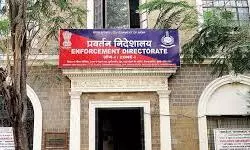

The Enforcement Directorate (ED) is a central investigative agency that has been in the news for a long time. In the past few weeks, the ED’s ongoing conflicts with state governments and related litigation have also drawn attention. The raid conducted by the ED at the office of I-PAC (Indian Political Action Committee), the political analysis and campaign consultancy of the ruling Trinamool Congress party in West Bengal, and the subsequent protest by Chief Minister Mamata Banerjee, who arrived at the spot, along with the trouble that followed, became major news events. All the legal proceedings in the Supreme Court have centred on discussions surrounding the activities of the ED. The court, which prima facie held the state government machinery guilty of obstructing the ED’s investigation, is hearing the arguments of both parties and will deliver its verdict. In Kerala as well, the filing of cases against the individuals in charge for violating KIIFB foreign exchange laws, along with the state government’s allegations against the ED, sparked intense debate. The High Court’s decree the right of the ED to file a writ petition is now under challenge before the Supreme Court. Tamil Nadu has also impleaded in this case.
Also read: Safeguard Constitution and democracy: Mamata appeals to CJI
The Enforcement Unit was formed in 1956 to deal with violations of foreign exchange rules, underwent several transformations before and after being renamed the Enforcement Directorate in 1957. Meanwhile, the Foreign Exchange Regulation Act (FERA) was replaced by the Foreign Exchange Management Act (FEMA) in 1999. In response to international money laundering trends, India also enacted the Prevention of Money Laundering Act (PMLA) and brought it under the jurisdiction of the ED. ED cases are mainly registered under these two laws. However, alongside detecting and taking action against such violations, the ED today is increasingly seen as using the extensive powers granted to it for interrogation and arrest, to target political and media entities that the central government does not favour, thereby harassing them. There are growing instances in which the accused are eventually acquitted after enduring long periods of incarceration while investigations and court proceedings continue without resulting in punishment. In the meantime, news reports are published in the legacy and social media during the course of investigations, leading to reputational damage to the accused through media trials. It may also be noted that the percentage of those convicted and punished through trials is very low.
Also read: ED may attach Al Falah University campus under PMLA
The ED has extensive powers, which make it all the more prone to abuse. The ED has the authority to summon anyone for questioning, record sworn statements without clarifying whether the person is an accused or a witness, arrest individuals without a warrant, even in the absence of clear evidence, and seize assets instantly. All this would not invite criticism if these powers were used sparingly and solely against those who can reasonably be accused of a grave crime. However, the ED’s practice is to first detain individuals and only then examine the merits of the predicate offence to be charged. Historically, most of those targeted in such cases tend to be opponents of the ruling party. This would be evident when one examines the political affiliations of the accused in cases registered by the ED over the years.
Also read: Delhi HC issues notice to Sonia Gandhi, Rahul in National Herald case
The reality that has repeatedly come to light is that ED officials, whose duty is to enforce high standards of honesty and financial integrity, are not entirely clean. In November 2023, ED officials were caught on the spot accepting bribes to dilute a chit fund case in Rajasthan. Soon after, an ED official in Madurai, Tamil Nadu, was caught red-handed while demanding bribe to drop a case. In 2024, the CBI arrested an ED Assistant Director in Mumbai for accepting a bribe from a jeweller. An ED official in Odisha was arrested last year for demanding crores from a mining tycoon. Although suspensions and press releases followed in all these cases, it remains unclear whether no fundamental corrective measures are known to have been taken.
Also read: Masala Bonds case: Kerala HC stays ED proceedings against KIIFB
If the misuse of the ED is to be curbed, an independent mechanism free from political interference is essential. At present, the Central Government appoints its Director on the recommendation of a high-level committee of mostly bureaucrats headed by the Vigilance Director. As with many other central appointments, this system does not guarantee the independence of the top official. Instead, the appointment should be made on the recommendation of a panel including the Leader of the Opposition, a Supreme Court judge, and government representatives with proven integrity. There should also be restrictions on post-retirement appointments for top officials. Such mechanisms can ensure freedom of action and moral integrity to a great extent. However, it is for the government in power to take the initiative to change the situation by giving serious thought to such reforms.
Also read: ED attaches eight PFI properties worth Rs 67 crore in Kerala