
















Tarique Rahman returns from exile bearing Zia’s legacy after Hasina’s fall
text_fields

In December 2024, Tarique Rahman returned to his homeland of Bangladesh from the United Kingdom. He is the son of former prime minister Khaleda Zia, who died on 30 December, and of Ziaur Rahman, who was president from 1977 to 1981.
The 60-year-old Rahman had been in London for 17 years because, during Sheikh Hasina’s tenure as prime minister, he feared incarceration. Indeed, his mother, Khaleda Zia, spent time in jail after being convicted of misappropriating funds intended for an orphanage. She maintained that she was unjustly imprisoned by a “kangaroo court” and that she was innocent of all charges.
Sheikh Hasina was brought down by tumultuous demonstrations in 2024 and fled to India, where she was granted asylum. Subsequently, a court acquitted Khaleda Zia on appeal and set her free.
In 2025, Sheikh Hasina was charged with responsibility for the killing of 1,400 people slain by the security forces through grossly excessive use of force in 2024. Bangladesh requested her extradition from India, which New Delhi declined to grant.
Sheikh Hasina chose not to return voluntarily, stating that she would never receive a fair trial, which she claimed would be a blatantly politicised act of vengeance. She was tried in absentia, and a Bangladeshi court awarded her the death penalty.
It is perhaps surprising that the Republic of India has taken Sheikh Hasina in. The Hindu community had a difficult time under her rule: she is said to have failed to protect them adequately. However, she did not encourage anti-Hindu violence and even oversaw the restitution of property to Hindu families whose land had been unlawfully seized in the 1970s. She also initiated the prosecution of Islamic activists, mostly blamed for fundamentalism and for having committed violence against Hindus in 1971 in coordination with Pakistan.
Although Sheikh Hasina’s record as a protector of the Hindu community is not exemplary, it is believed by Hindus in general that conditions for Bangladeshi Hindus would be worse if the BNP were to assume office.
Sheikh Hasina is an observant Muslim. Prime Minister Modi is often accused of being anti-Muslim and even of fascist conduct in his treatment of religious minorities. His defence could be that when a Muslim woman is persecuted, she looks to him as her saviour.
The timing of Rahman’s return from overseas is notable. It came just days before his mother died. Presumably, he was informed that her demise was imminent. As the family’s nemesis, Sheikh Hasina, had resigned last year, it is surprising that Tarique Rahman did not return sooner.
Perhaps he did not believe it was entirely safe to do so. But now that Hasina has been sentenced to death, he may believe that the judiciary and security forces are no longer on her side. Some say he showed a lack of valour in not returning earlier. He is the leader of the Bangladesh National Party.
Since independence in 1971, Bangladesh’s government has alternated between the Bangladesh National Party (BNP) and the Awami League. Awami means “people”.
In a country where women are not on equal footing with men in public life, it is notable that for decades the country has been governed by female prime ministers: Khaleda Zia of the BNP and Sheikh Hasina of the Awami League alternated in office.
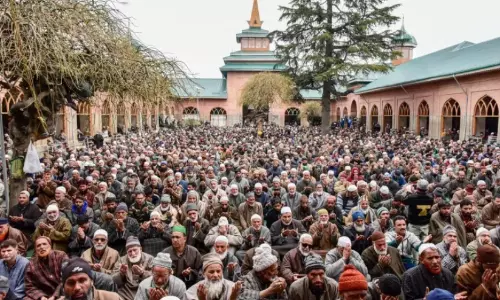
The BNP had millions lining the streets to hail the return of their leader from overseas. He was welcomed in scenes reminiscent of Benazir Bhutto’s return to Pakistan in 1988—another South Asian dynast who came home before elections that swept her family’s opponents from office. The party is highly confident about the upcoming elections.
The BNP was last in office under Khaleda Zia as prime minister. She forged an alliance with the religious party Jamaat-e-Islami. After her party was ushered into office, there were allegations of widespread violence against Hindus, and the police allegedly seldom intervened. Bangladeshi Hindus were seen as being supporters of the Awami League.
It is thought that the already-banned Awami League will be prohibited from contesting the elections. Many blame the party, and not just Sheikh Hasina, for large-scale violations of human rights. Sheikh Hasina was the dominant figure in the party for 50 years following the assassination of her father, Sheikh Mujibur Rahman. He was no relation of Tarique Rahman, Rahman being a common surname in Bangladesh.
Sheikh Hasina’s niece was a Labour MP in the United Kingdom. She was obliged to resign her junior ministerial post over allegations that she was engaged in her aunt’s nefarious activities.
The Bangladeshi community in the United Kingdom constitutes around 1 per cent of the population. Most arrived after the 1970s and are British citizens. British Bangladeshis are strongly concentrated in London and vote overwhelmingly in favour of the Labour Party.