












Bully Raj Made in America
text_fields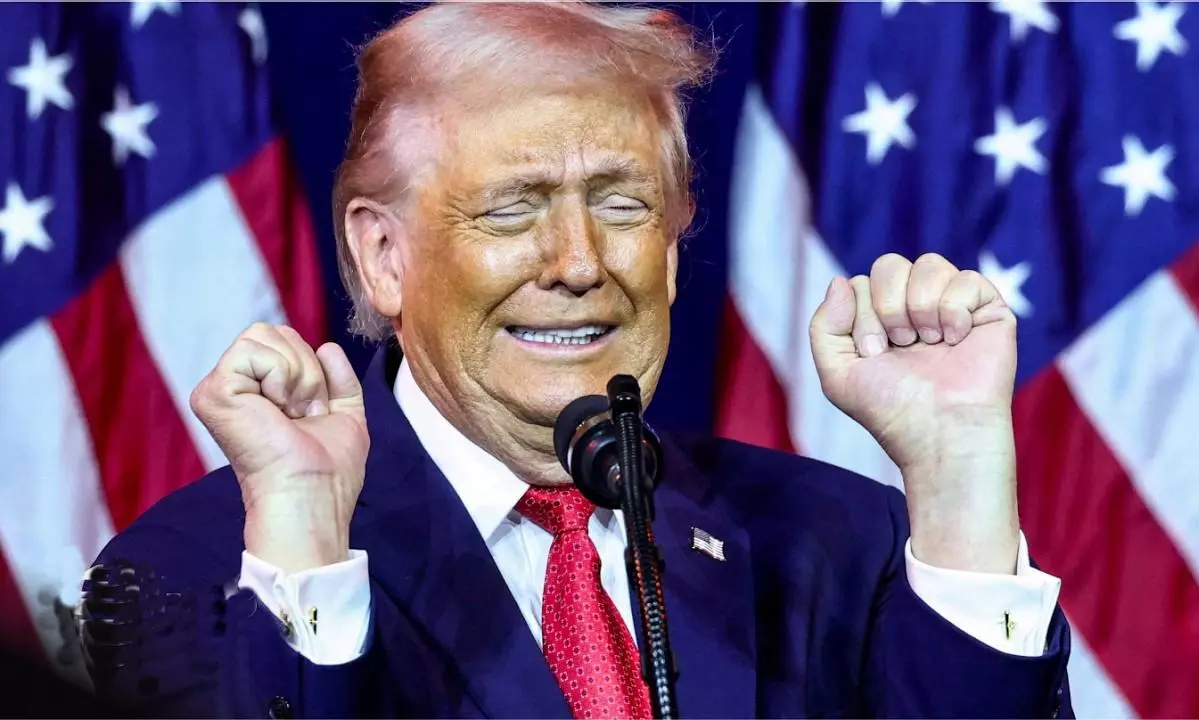
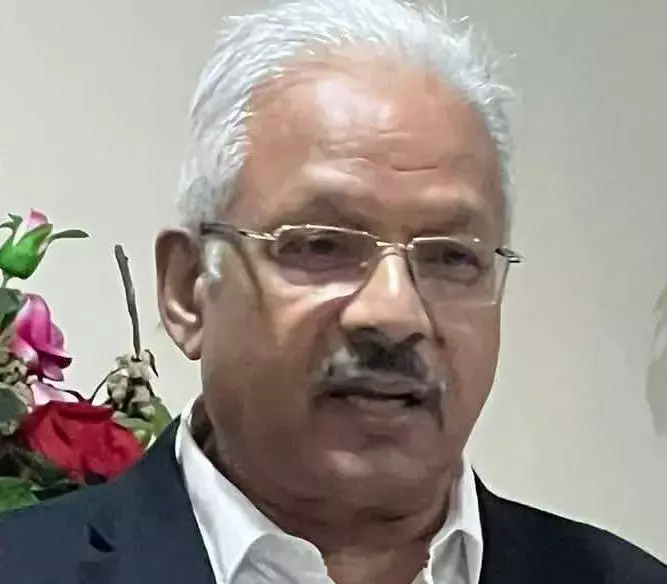
I grew up an unabashed admirer of the United States. I was a student in a modest government school where free food was distributed to children officially classified as “poor.” The meal was simple: a serving of a yellowish dish and a tumbler of milk. To me, it looked like a feast.
There was a small room in the school where flour and milk powder were stored in packets emblazoned with American symbols. Only later did I learn that the supplies came under Public Law 480, the American food assistance programme that supported countries like India in times of scarcity. As a child, I did not understand geopolitics. I only knew that the food came from a faraway land called America.
Because I was not considered “poor,” I did not qualify for the midday meal. I carried the tiffin my mother packed for me. I watched some of my teachers—who were certainly not poor—quietly partake of the free food. I could never taste it. Perhaps that small exclusion made America seem even more alluring: a distant benefactor whose generosity I could see but not experience.
As I grew older, my political sensibilities changed. Communism began to appeal to me. America was denounced in intellectual circles as bourgeois, the embodiment of capitalist excess. The Soviet Union was presented as the future—a society where equality would prevail, and opportunity would not depend on wealth.
I remember reading an anecdote by Justice V.R. Krishna Iyer about a domestic flight in Russia, where a woman seated next to him carried a live rooster for her daughter. I wondered then not about ideology, but about when I would be able to board a plane myself.
The Vietnam War marked a turning point. Like many young Indians, I joined processions condemning American intervention. I recall my editor, Nikhil Chakravartty, distributing laddus on the day Saigon fell. I ate mine with satisfaction. To us, it symbolised the triumph of a small, determined nation over a superpower. Years later, when I visited Vietnam and tasted its delicate, balanced cuisine, my admiration for the Vietnamese people grew a thousandfold. They were gritty, resilient and dignified.
Yet, despite these ideological oscillations, my admiration for America never entirely disappeared. One of my earliest major assignments as a journalist was to travel to Rajasthan to report on the Satellite Instructional Television Experiment (SITE). For one year, India had access to an American satellite that broadcast educational programming to remote villages. At community centres across North India, villagers gathered to watch programmes on improving agricultural practices and understanding menstrual hygiene. It was transformative.
I also knew that IIT Kanpur had been established with American assistance and was the first Indian institute to offer computer education. Today, when India is known for its satellite-launch capabilities and information technology prowess, we cannot ignore the foundational contributions made through collaboration with the United States.
Politically, India was aligned more closely with the Soviet Union during the Cold War, and the U.S. and India often behaved like wary strangers. Yet, few Indians aspired to study in Moscow. An American visa was regarded as a passport to opportunity. The story of Indra Nooyi, who rose to become the chairperson of PepsiCo, symbolised the American promise—that an ordinary woman from India could ascend to the helm of a global corporation.
America’s democratic heritage also inspired awe. The founding fathers—George Washington, Thomas Jefferson, James Madison and Benjamin Franklin—were men of remarkable vision. In crafting the Constitution, they attempted something audacious: to establish a republic grounded in liberty, separation of powers and the rule of law. They debated fiercely yet understood the need for compromise. They distrusted concentrated authority and created checks and balances to guard against tyranny. Their words continue to echo across centuries, reminding citizens that democracy demands vigilance, participation and moral courage.
The life of Abraham Lincoln was another enduring inspiration. Born in poverty, defeated repeatedly in elections, burdened by personal tragedy, Lincoln persisted. His rise to the presidency demonstrated that failure need not be final. For countless Indians, his journey upheld the belief that moral clarity can emerge from hardship.
When President John F. Kennedy was assassinated, Indians mourned as though they had lost one of their own. His charisma and eloquence had captivated the world. While not every American president lived up to the highest moral standards, many projected seriousness and responsibility. America was seen not only as a superpower but as a moral leader.
There were, of course, shadows. American interventions in Latin America, including the events surrounding Salvador Allende in Chile, were widely criticised. Yet these were often described as aberrations—deviations from an otherwise principled foreign policy. Many accepted America’s role in World War II as necessary, though the atomic bombings of Hiroshima and Nagasaki were condemned for their brutality. At least, some argued, the war ended.
The United States was the backbone of the United Nations, funding much of its operations and hosting its headquarters. It commanded respect not only for its military might but also for its professed commitment to freedom and democracy.
When Saddam Hussein invaded Kuwait, few defended him. Yet the subsequent invasion of Iraq, on the claim that it possessed weapons of mass destruction later proved to be based on false premises. Iraq, cradle of Mesopotamian civilisation, is heir to some of humanity’s earliest achievements: writing, law codes, urban planning and monumental architecture. From the Epic of Gilgamesh to the Abbasid Golden Age in Baghdad, Iraqi culture has enriched world civilisation profoundly.
The attacks of September 11, 2001, were horrific. Though most perpetrators were Saudi nationals, the ensuing invasion of Afghanistan became a protracted conflict from which America ultimately withdrew in disarray.
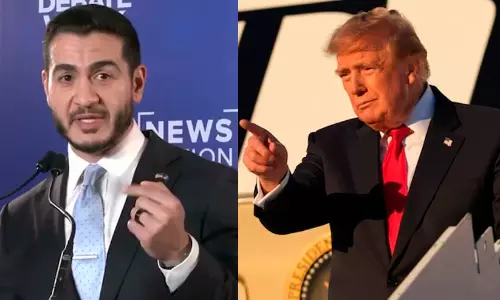
Donald Trump rose to power promising restraint. He criticised his predecessors for entangling America in foreign wars. Yet in his second term, he ordered an attack on Iran. Then he captured the Venezuelan president and brought him to America to stand trial. He made sweeping allegations: that Iran was on the verge of building a nuclear bomb; that it posed an imminent threat to American security; that it sponsored terrorism at an intolerable scale; that diplomacy had failed; and that pre-emptive action was necessary to preserve global stability.
But Iran had engaged in three rounds of talks with the United States, the last in Geneva on Friday. Reports suggested progress. Iran signalled willingness to comply. Yet, Trump ordered an invasion with regime change as its objective. By killing one leader, he has given rise to several leaders who independently decide whom to attack, Dubai or Oman.
The escalation serves to deflect attention from domestic troubles. Legal challenges mounted. The Supreme Court rebuked aspects of Trump’s trade policy. Details of his involvement with a child trafficker and pimp eroded public trust. Meanwhile, Israel’s Prime Minister Benjamin Netanyahu faced corruption charges at home, raising questions about political motivations on multiple fronts.
If principled action generates soft power—the capacity to attract and persuade—then America has squandered a vital asset. As political scientist Robert Keohane observed, admiration for American society once translated into support for its policies. Today, that admiration has diminished. China, unconcerned with promoting liberal values, has stepped into spaces vacated by American retreat.
In 1947, Secretary of State George Marshall articulated a vision at Harvard: American policy, he said, was directed not against any country or doctrine but against hunger, poverty, desperation and chaos. The aim was to foster conditions in which free institutions could flourish. That vision underpinned decades of international cooperation.
Trump’s supporters argue that such idealism no longer serves American interests. In fact, the Trump Doctrine suggests that global stewardship weakens, rather than strengthens, the United States.
For someone like me, who once gazed at milk powder packets bearing American symbols with wonder, this transformation is deeply disheartening. America was never perfect. But it aspired to something larger than itself. If it has relinquished that aspiration, it has forfeited not only moral leadership but also the enduring affection of those who once believed in its promise. Donald Trump has proved that his true place is jail.