










Emerging global dynamics: is a new world order in the making?
text_fields
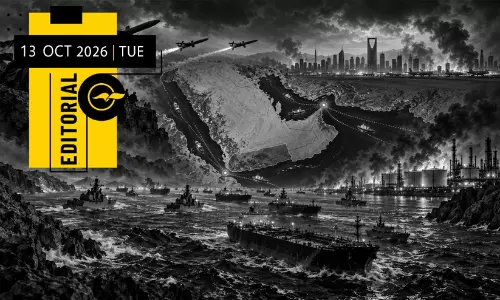
The ongoing conflict sparked by the recent US-Israel attack on Iran, appears to be reshaping global alliances and signaling the emergence of a new world order. This conflict has revealed significant fractures within traditional Western coalitions and highlighted shifting geopolitical loyalties.
Major European powers have openly expressed their reluctance to engage in the war, declaring it is not their war to fight. This stance marks a clear departure from past tendencies to align closely with US-led military initiatives. Adding to this narrative, Chinese President Xi Jinping underscored the importance of cooperation between China and Spain to oppose the “law of the jungle,” a pointed critique directed at U.S. and Israeli actions. This message resonates strongly as a challenge to Western dominance and a call for a new framework of international relations.
The US's Asian and European allies have markedly distanced themselves from the military campaign against Iran. They cited a lack of consultation before the operation as a key reason for their abstention, reinforcing that the conflict does not represent their interests. More recently, these allies have also refrained from supporting the US-imposed naval blockade on Iranian ports, further isolating Washington’s position and signaling a reluctance to be drawn into unilateral actions.
Even Italy’s far-right conservative government—led by Prime Minister Giorgia Meloni—has drawn a firm line against deeper entanglement with both the United States and Israel. On Tuesday, April 14, 2026, Meloni explicitly announced that her administration has suspended the automatic renewal of a long-standing bilateral defence cooperation agreement with Israel.
Meanwhile, Europe is reconsidering its strategic alignment, with talks underway about closer ties with China amidst increasingly strained relations with the United States. This shift reflects growing dissatisfaction in Europe over U.S. foreign policy and a desire to cultivate more balanced, multipolar partnerships.
It all started with Trump’s claim to Greenland, an arctic island under Danish control. Though Denmark and other EU countries strongly defended the Danish control over the island, Trump was not in the mood to back down. He repeated the claim and even threatened to annex the island, which predictably provoked his European friends.
The discord extends to the highest levels of leadership. U.S. President Donald Trump has openly criticized his European counterparts and even threatened to withdraw the United States from NATO, a move that would profoundly alter transatlantic security arrangements. In response, the Spanish President proposed creating an independent European military alliance that operates without relying on the US, thereby underscoring Europe’s aspiration for greater strategic autonomy.
Europe's domestic political changes are also influencing this geopolitical reorientation. The recent electoral defeat of Hungary’s far-right Prime Minister Viktor Orban, a vocal Trump ally, has invigorated European efforts to assert a more independent path in international affairs. This political shift further weakens the cohesion of the pro-U.S. faction within Europe.
Meanwhile, US allies like Japan, the Philippines, Thailand, and South Korea are preparing to make a deal with Iran to supply oil and natural gas. The Asian countries are the worst hit in the ongoing war, and some of them have even declared an energy emergency. Interestingly, China has come forward to make an energy collaboration with its neighbouring economies, even with Taiwan. The Communist regime expressed its readiness to help the countries alleviate the energy crisis. The US has already stepped back from helping its allies, saying it has nothing to do with the Hormuz crisis, and those who want the oil can send their army.
This cut-and-run policy has alienated many of the US allies and made them think about an alternative. The logic is simple. One has to survive. So they even bought the natural resources from Russia, an adversary of the US. Though Trump bragged that several countries have come forward to help open the strategic Hormuz, it remains an unsubstantiated claim, like many of his other tall claims. .
In fact, the war against Iran has in effect isolated the United States on the global stage, inadvertently paving the way for China’s emergence as a leading power in a reconfigured world order. The evolving dynamics suggest a significant realignment, with China poised to take a central role alongside a more autonomous Europe, challenging the long-standing dominance of the U.S. and its traditional allies.
In conclusion, the Iran conflict has not only altered the geopolitical landscape but also accelerated the formation of a new world order. This emerging order is characterized by multipolarity, with China’s leadership and European strategic independence at its core, signaling a profound transformation in global power structures.
Reading these undercurrents, however, need not make any one purblind to the huge military superiority of the US. in absolute terms and in comparison with European nations, and the leverage it should give to that country. The difference is that now China, an untested military power, is joining the equation now. But except for direct land battle, military prowess may not be all.