

















Resistance to Hindi in South India due to Urdu-Persian words: Arlekar
text_fields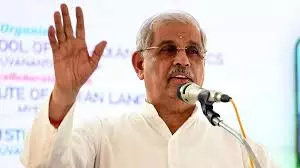

Thiruvananthapuram: Kerala Governor Rajendra Vishwanath Arlekar on Wednesday said that resistance to Hindi in certain parts of the country, particularly in South India, may stem from the presence of Urdu and Persian words in the language. He suggested that incorporating a Sanskrit-based vocabulary could help overcome this barrier.
Speaking at the centenary celebrations of renowned linguist V I Subramoniam at the International School of Dravidian Linguistics, Arlekar observed that opposition to Hindi may be more related to vocabulary challenges than to the language itself.
He noted that many words in contemporary Hindi are borrowed from Urdu or Persian, which can make the language less accessible to speakers of South Indian languages. Arlekar proposed that greater use of Sanskrit-derived words—what he termed “Sanskrit-prachur Hindi”—could make Hindi easier to understand across regions.
"If we incorporate more Sanskrit-derived words while speaking Hindi, many people in South India may understand it better than they do today," he said, adding that this approach would promote inclusiveness rather than impose uniformity.

Arlekar also highlighted that linguistic challenges often arise from everyday usage rather than the structural aspects of a language. He pointed out that many Indian languages share deep historical and cultural connections through Sanskrit, and emphasising these shared roots could help bridge linguistic divides.
The Governor described India’s linguistic diversity as a source of strength, with regional languages representing varied expressions of a common civilizational heritage. He urged scholars and researchers to focus on identifying links among languages and fostering mutual understanding instead of highlighting differences.
He concluded by emphasising that understanding one another’s language is essential to building an inclusive and united India.
With PTI inputs