


















Qutub Minar not minaret but Vedhshala, claims former ASI director
text_fields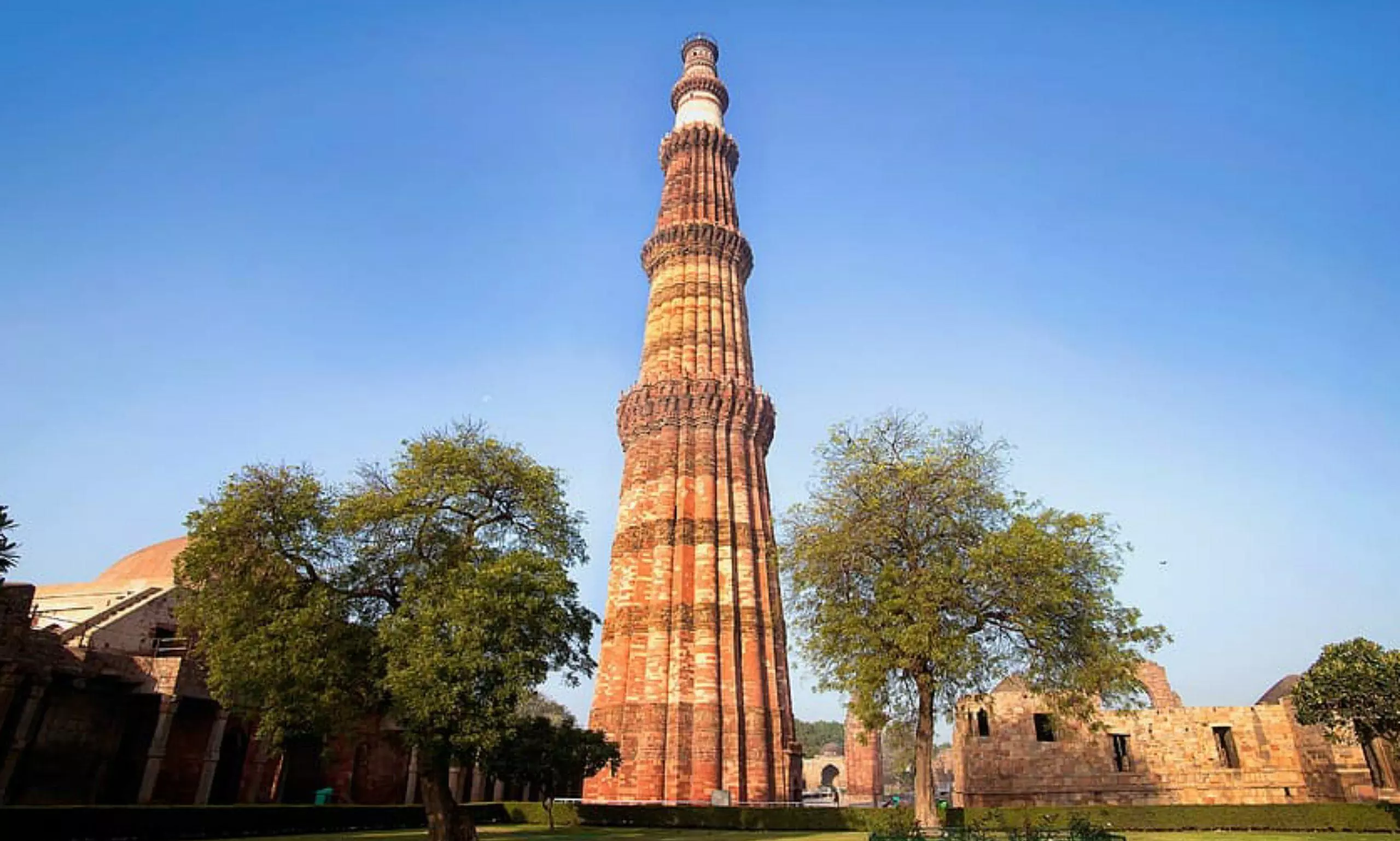

New Delhi: Former Archaeological Survey of India (ASI) regional director Dharamveer Sharma on Saturday claimed that Delhi’s iconic Qutub Minar was originally a Vedhshala, an ancient astronomical observatory and not a minaret, presenting what he described as strong scientific and structural evidence to support his assertion.
Speaking at the Shabdotsav 2026 event, Sharma said every monument is built with a specific plan and purpose, which is reflected in its foundation. “I have called Qutub Minar a Vedhshala, and there is a reason for this. A circular structure should have a circular foundation, but the foundation of Qutub Minar is oblong,” he said.
Drawing from his years of work on the monument, Sharma said he uncovered several lesser-known facts that are neither well-documented nor widely discussed. He noted that the foundation of the structure was excavated in 1954 and was found to be rectangular in shape, with one base measuring 62 feet in length and 52 feet in breadth. “This contradicts the idea of it being designed as a circular minaret,” he explained.
Citing another key observation, Sharma said the Qutub Minar is tilted about 25 feet towards the south, a feature he described as deliberate. “Such a slanted structure requires a strong cantilever support to survive, and provisions for this were clearly made during its construction,” he said.

Elaborating on the astronomical aspect, Sharma pointed out that on June 21, the longest day of the year, when the sun enters Dakshinayan, the shadow of the Qutub Minar does not fall on the ground for nearly half an hour. “This is undeniable proof that the structure was originally a Vedhshala,” he said, adding that the monument’s original character and purpose were later altered by invading rulers.
The Qutub Minar has long been the subject of controversy, with some Hindu organisations claiming it was originally the Vishnu Stambh and that temples were destroyed to build it. Official records, however, describe it as a minaret and a monument from the Mughal period.
Sharma’s remarks are expected to reignite the debate and trigger strong reactions from various quarters. Responding to the claims, Acharya Mithilesh Nandini Sharan, head of Hanuman Niwas Peeth in Ayodhya Dham, said the issue was not new. “This is a decades-old matter. He has not raised it as a political issue. He is an author who has worked on this himself, served as an officer, and conducted archaeological research. What he shared are findings from that research,” he said.
With IANS inputs