












Pacts PM Modi signs overseas need no prior nod from Cabinet: Centre
text_fields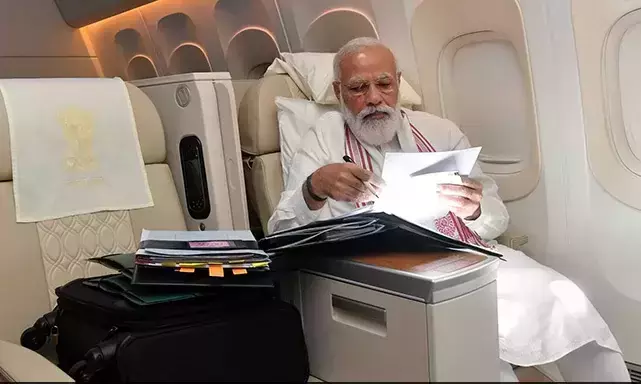
X photo.

New Delhi: Fresh guidelines issued by the Cabinet Secretariat indicate that certain international agreements signed during the visits of the Prime Minister to foreign countries, or during visits by foreign heads of state to India, will no longer require prior approval from the Union Cabinet. The Tribune, citing documents it accessed, reported that the change marks a significant shift in how the government processes international instruments.
The Cabinet Secretariat periodically circulates instructions to secretaries of all Union ministries under the Government of India (Transaction of Business) Rules, 1961. These instructions specify which matters must be placed before the Cabinet for prior approval, post-facto approval, or simply for information.
According to the report, the new guidelines cover a wide range of international instruments, including agreements, conventions, protocols, memoranda of understanding (MoUs), joint declarations of intent, statements of intent, memoranda of cooperation and memoranda of association signed with foreign governments.
Under the revised procedure, the Ministry of External Affairs will compile a Cabinet note every six months listing all such agreements signed during the period and place it before the Union Cabinet for information.
The development has drawn attention amid criticism of Prime Minister Narendra Modi’s style of diplomacy, often described by critics as highly personalised (hugplomacy). Observers note that India follows a parliamentary system in which the prime minister functions as the “first among equals” within the Council of Ministers, which is collectively responsible to the Lok Sabha under Article 75(3) of the Constitution.
The debate has also been linked to concerns over major international agreements and economic partnerships signed during high-level visits in recent years. Some of these deals, involving large Indian conglomerates such as the Adani Group and Reliance Industries, have faced political scrutiny, although the companies have denied receiving any special favours.
The issue has gained added political significance as Modi leads a minority National Democratic Alliance government since June 2024, relying on the support of regional allies, including the Telugu Desam Party and Janata Dal (United) to maintain its parliamentary majority.