


















No one can dictate a major’s right to marry: Allahabad HC slams UP police’s ulterior motives
text_fields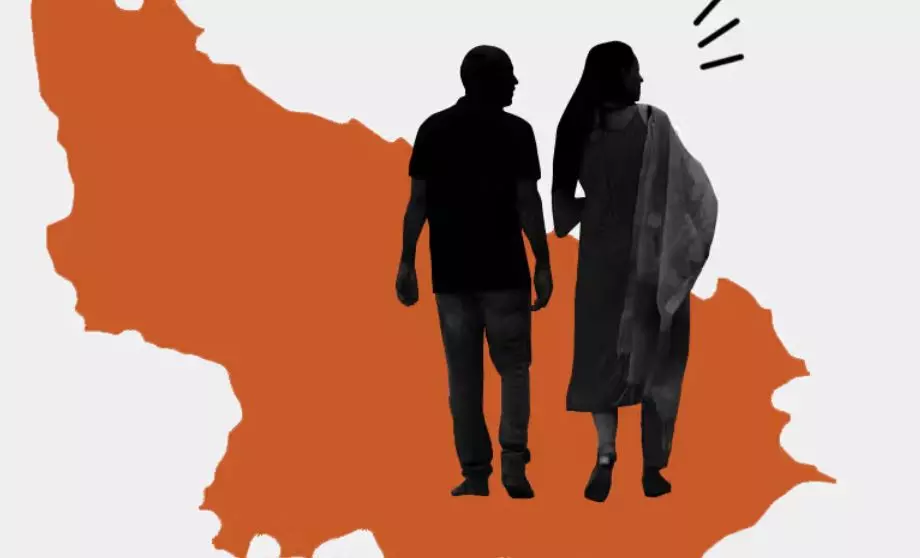

The Allahabad High Court lambasted the UP police over chasing couples married across different faiths, particularly Muslim and Hindu couples, in an attempt to find the right-wing-coined “Love Jihad” element after registering FIRs, while observing that such FIRs amount to a disservice carried out with ulterior motives to separate the couples, and thus themselves amount to offences.
Hearing a plea by a young married couple seeking the quashing of an FIR initiated at the instance of the woman’s father, a Division Bench comprising Justices J.J. Munir and Tarun Saxena delivered an order on April 21, in which it deprecated the emerging pattern of police intervention in private matrimonial choices.
The Court, while allowing the petition, held that the autonomy of consenting adults, particularly those who have attained majority, cannot be subordinated to familial objections or societal disapproval, thereby reaffirming the constitutional protection accorded to personal liberty and decisional independence.
The Bench underscored that the police, instead of discharging their statutory obligation of investigating cognisable offences, have increasingly engaged in what it described as an unwarranted and intrusive scrutiny of marriages.
Such conduct, the Court noted, reflects a systemic distortion of priorities, wherein law enforcement machinery is deployed not for the preservation of law and order but for the policing of personal relationships.
The Court further indicated that the registration of such FIRs is often accompanied by an implicit intent to coerce separation, particularly by returning the woman to her parental household. It emphasised that no individual or authority possesses the legal competence to dictate where an adult should reside, whom they should marry, or how they should conduct their life.
The judgment also highlighted the cascading institutional consequences of such police actions, noting that they contribute to an unnecessary swelling of judicial dockets, as courts are compelled to adjudicate disputes that ought never to have arisen had due process been adhered to at the initial stage.
Taking cognisance of the gravity of the issue, the Court directed the Director General of Police, Uttar Pradesh, along with the Additional Chief Secretary (Home), to institute corrective mechanisms to curb such practices, while cautioning that continued dereliction may necessitate judicial intervention.