











Muslim-majority regions in Assam reserved for SC/STs, yet Muslims win 22 of 24 opposition seats
text_fields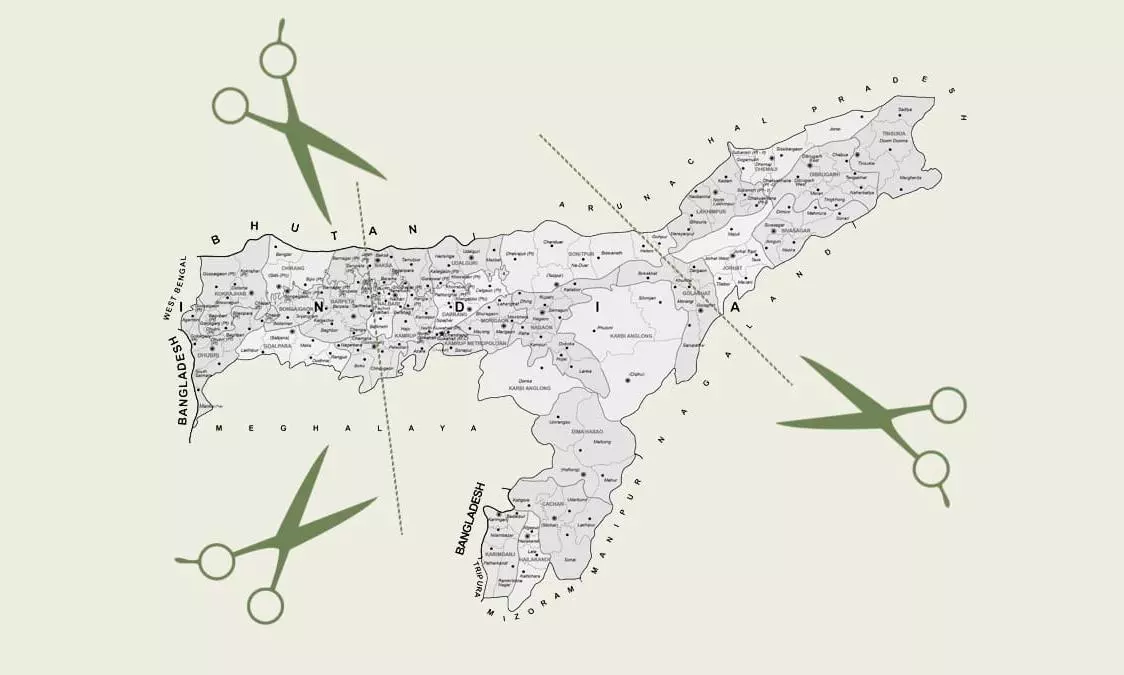

The BJP landslide victory in Assam, where communal rhetoric targeting the Muslim community is seen at its peak, heralded by Chief Minister Himanta Biswa Sarma, is largely linked to the delimitation before the Assembly poll, whereby Muslim-majority regions were merged with indigenous communities and those areas were reserved for SCs and STs, thereby reducing the Muslim community’s influence, though Muslim candidates managed to secure 22 of the 24 seats won by the opposition.
The 2023 delimitation, conducted on the basis of the 2011 Census, retained the Assembly’s strength at 126 seats while recalibrating demographic compositions through boundary realignments and increased reservations, with Scheduled Tribe seats rising from 16 to 19 and Scheduled Caste seats rising from eight to nine.
This cartographic reconfiguration fragmented erstwhile Muslim-majority constituencies and diluted their electoral weight by subsuming them within broader indigenous-majority frameworks.
This structural shift was reflected in the electoral arithmetic, as the Muslim vote, which had historically played a decisive role in nearly 35 constituencies, found its sphere of influence curtailed to fewer than 25 seats, thereby constraining the opposition’s reach while consolidating the BJP-led NDA’s advantage across a re-engineered electoral landscape.
The NDA’s emphatic tally of 102 seats, with the BJP securing 82 and its allies, including the Asom Gana Parishad and the Bodoland Peoples’ Front, 10 each, underscored the efficacy of this recalibration, particularly in reserved and reconstituted constituencies such as Barpeta and Goalpara (West), redesignated for Scheduled Castes and Scheduled Tribes respectively and wrested from the Congress.
In the Bodoland region, where reserved seats increased from 11 to 15, the NDA’s dominance was further entrenched, with the Bodoland Peoples’ Front capturing 10 constituencies, even as its lone Muslim candidate failed to secure victory.
Conversely, the opposition’s modest haul of 24 seats—comprising 19 for the Congress, two each for the AIUDF and Raijor Dal, and one for the Trinamool Congress—was overwhelmingly concentrated in constituencies that remained largely unaffected by delimitation, with Muslim candidates accounting for 22 of these victories.
For the Congress, the outcome signified not merely an electoral setback but a profound transformation in its political identity, as its seat tally declined from 29 in 2021 to 19 in 2026, a contraction of 34 per cent, while its once expansive, pan-Assam appeal appeared to have ceded ground to a narrower, sub-regional consolidation anchored predominantly in minority-dominated districts.
This contraction was compounded by the decimation of the AIUDF, led by Badruddin Ajmal, whose representation plummeted from 16 seats in the previous Assembly to a mere two, as minority voters coalesced behind the Congress in a strategic bid to counter the BJP, thereby eliminating vote fragmentation but simultaneously reinforcing a singular demographic alignment.
The erosion of the Congress’s traditional base in Upper Assam and the North Bank—long anchored in ethnic Assamese, tea tribe and tribal constituencies—was stark, with the party securing just one of 43 seats, while the defeat of Gaurav Gogoi in Jorhat by the BJP’s Hitendra Nath Goswami symbolised the waning resonance of both legacy and leadership in these heartlands.
Capitalising on this demographic consolidation, Sarma orchestrated a counter-polarisation strategy that framed the election as a defence of indigenous civilisational identity against perceived external influences.