















India departs from decades-old tradition by appointing non-Muslim ambassador to Saudi Arabia
text_fields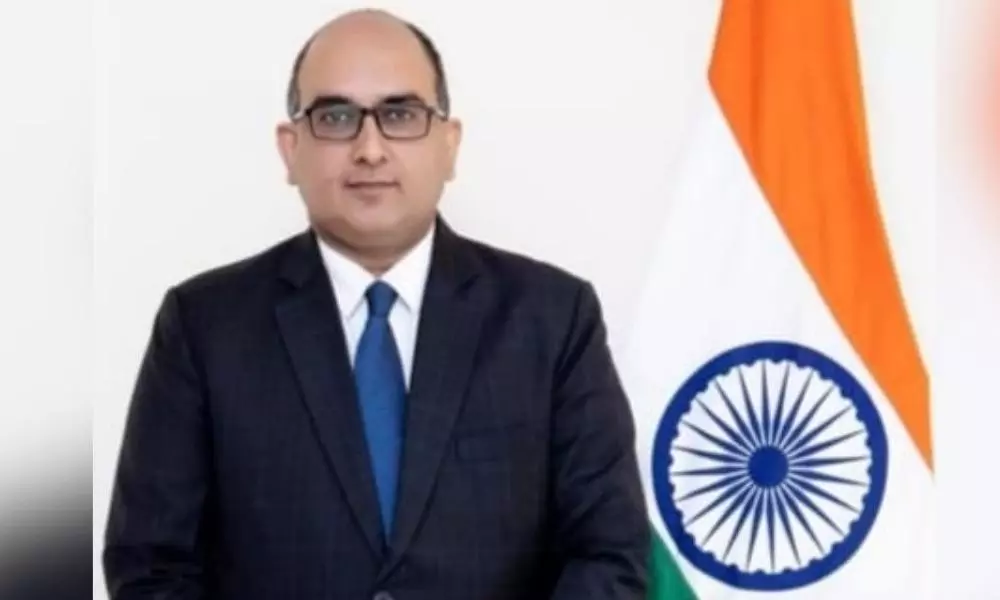

In a historic shift in its diplomatic strategy, the Indian government has appointed a non-Muslim envoy to Saudi Arabia for the first time since 1948, breaking a convention that has stood since the country's independence.
Vipul, a career diplomat from the 1998 batch of the Indian Foreign Service (IFS), has been named as India's next ambassador to Riyadh. He is currently serving as the Indian ambassador to Qatar and will take over the crucial Gulf posting from Suhel Ajaz Khan.
Since the late 1940s, New Delhi had exclusively selected senior Muslim diplomats for the ambassadorial role in Riyadh and the consul general position in Jeddah. This practice was primarily rooted in logistics; the Indian mission in Saudi Arabia plays a massive role in coordinating the annual Haj pilgrimage, which sees hundreds of thousands of Indian Muslims travel to Islam's holiest sites.
However, sources indicate that the pool of eligible candidates has shrunk considerably in recent decades. The Ministry of External Affairs has faced growing challenges not only in finding Muslim officers with the necessary seniority but also in finding those willing to take up the post. This scarcity occasionally forced the government to extend the tenures of sitting ambassadors or look outside the career diplomatic corps entirely—such as in 2016, when former Mumbai Police Commissioner Ahmad Javed was appointed to the role.
The incoming ambassador takes the helm at a complex time for Middle Eastern geopolitics. Beyond navigating broader regional security challenges and ongoing tensions involving Iran, Riyadh is increasingly entering into open economic and diplomatic competition with the United Arab Emirates (UAE)—traditionally one of New Delhi's closest allies in the region.
Despite these shifting dynamics, Saudi Arabia remains a cornerstone of India's foreign policy, serving as a critical partner for energy security, bilateral trade, mega-investments, and the welfare of the millions of Indian expatriates living in the kingdom.