












Hindu side stages triumphalist ‘maha aarti’ at Bhojshala, Muslims offer Friday prayers at home
text_fields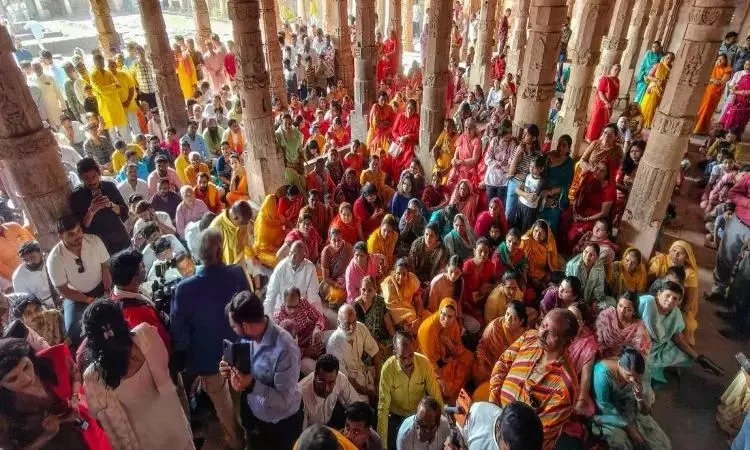

The Madhya Pradesh High Court’s declaration of the Bhojshala-Kamal Maula complex in Dhar as a Hindu temple, followed by unrestricted Hindu worship at the disputed site, turned the centuries-old monument into a theatre of triumphalism and anguish on Friday as right-wing groups staged what they called the first ‘maha aarti’ there in over seven centuries.
Even as Muslim petitioners challenged the verdict before the Supreme Court, Muslims, who had offered Friday namaaz at the site for decades under an ASI-mediated arrangement, were forced to confine their prayers to their homes in symbolic protest amid allegations that the authorities had displayed undue haste in opening the complex for the Hindu side.
Under the watch of nearly 1,800 security personnel, Dhar resembled a fortified township, with barricades sealing roads to the monument and police patrolling communally sensitive localities after overnight flag marches aimed at forestalling unrest, according to The Indian Express.
The administration’s haste in operationalising the High Court order, even before the Supreme Court could hear the Muslim side’s appeal, drew criticism from petitioners who alleged that the state had shown undue eagerness in facilitating Hindu rituals while dispossessing Muslims of a site where Friday prayers had continued for years under official sanction.
Inside the ASI-protected complex, Hindu devotees moved barefoot beneath the sculpted stone colonnades, chanting Hanuman Chalisa and offering prayers to Goddess Saraswati, whom they invoked as “Ma Vagdevi”, while Hindu organisations proclaimed the ceremony a civilisational reclamation and celebrated the verdict as an assertion of Hindu resurgence.
The High Court ruling on May 15 had overturned the 2003 ASI arrangement under which Hindus were permitted worship on Tuesdays and Basant Panchami while Muslims offered Friday namaz.
The court held that the religious character of the monument was that of Bhojshala, a Saraswati temple, though it simultaneously reaffirmed the site’s status as a protected monument.
Emboldened by the verdict, Hindu litigants have now demanded the opening of locked chambers within the complex and the removal of what they described as “unauthorised Islamic symbols”.
Meanwhile, Muslim organisations responded with black-band protests, shuttered shops and home-bound prayers, insisting that the constitutional guarantee of worship was being steadily eroded.