














Air Force to deliver NEET papers: Edu minister, isn’t it time to quit?
text_fields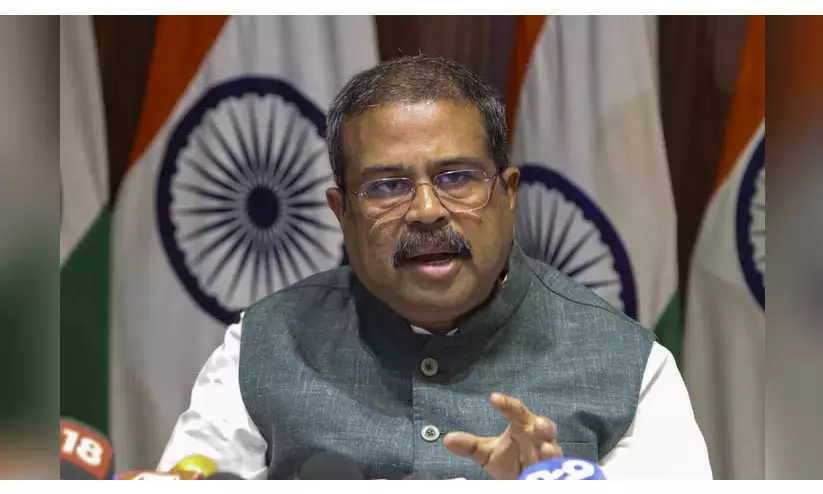

The National Eligibility cum Entrance Test (NEET) re-examination question papers will now reportedly be transported by aircraft with the assistance of the Indian Air Force. The extraordinary move has once again exposed the deep crisis surrounding India’s national examination system. If the Union government has reached a stage where even the agencies entrusted with conducting examinations cannot be trusted with the secure delivery of question papers, then the question naturally arises: has the time not already come for Union Education Minister Dharmendra Pradhan to accept moral responsibility and resign?
The NEET-UG paper leak scandal is not merely another corruption case. It represents the complete collapse of the country’s examination machinery. More than 2.4 million students spent years preparing for one of India’s most competitive medical entrance examinations. Yet, while ordinary students struggled through sleepless nights and crushing academic pressure, organised rackets allegedly sold question papers in advance for massive sums of money. Disturbingly, several names linked to the scandal reportedly belonged to BJP leaders and their associates.
The paper leak networks that surfaced in Bihar, Gujarat and Haryana have embarrassed the country nationally. Ultimately, even the Central Bureau of Investigation had to step in to probe the scandal. But why should this be viewed as a direct administrative failure? There are at least three undeniable reasons.
First, the credibility of the National Testing Agency (NTA), the central body responsible for public examinations, has been shattered. An institution incapable of conducting a secure examination can no longer claim public trust.
Second, despite the existence of such a large and organised examination mafia, intelligence agencies and the Union Home Ministry allegedly failed to detect the operation in advance. That failure raises serious questions about the government’s preparedness and oversight.
Third, the Education Ministry initially dismissed allegations of a paper leak and attempted to downplay the controversy. Only after evidence began surfacing publicly did the government reluctantly acknowledge the scale of the crisis.
Meanwhile, the real victims are ordinary students and their families. Lakhs of parents borrowed money for coaching classes, hostel fees and exam preparation, believing merit alone would determine their children’s future. Instead, their hopes were crushed by systemic corruption and administrative negligence. Cancelling examinations and ordering re-tests may appear simple on paper, but the emotional trauma and uncertainty imposed on students cannot be measured so easily.
Even the Supreme Court was eventually forced to intervene sharply in the matter. Although the Centre later introduced new laws claiming to strengthen transparency in examinations, those promises ring hollow when loopholes within the system remain untouched. The cancellation of several other national examinations soon after NEET only reinforced public distrust.
At examination centres, authorities subject students to humiliating levels of scrutiny, checking even pens and belts in the name of security. Yet the same system has repeatedly failed to stop question papers from leaking directly from within official networks. At a time when the government constantly promotes the idea of a “Digital India,” the inability to secure examination papers has become a symbol of administrative failure itself.
The larger question haunting millions of Indian students today is painfully simple: when will they finally be able to write an examination without fearing that corruption, leaks and political protection networks will once again destroy their future?