



















States fear Rs 7,000–9,000 crore annual revenue loss as GST reforms lower slab rates
text_fields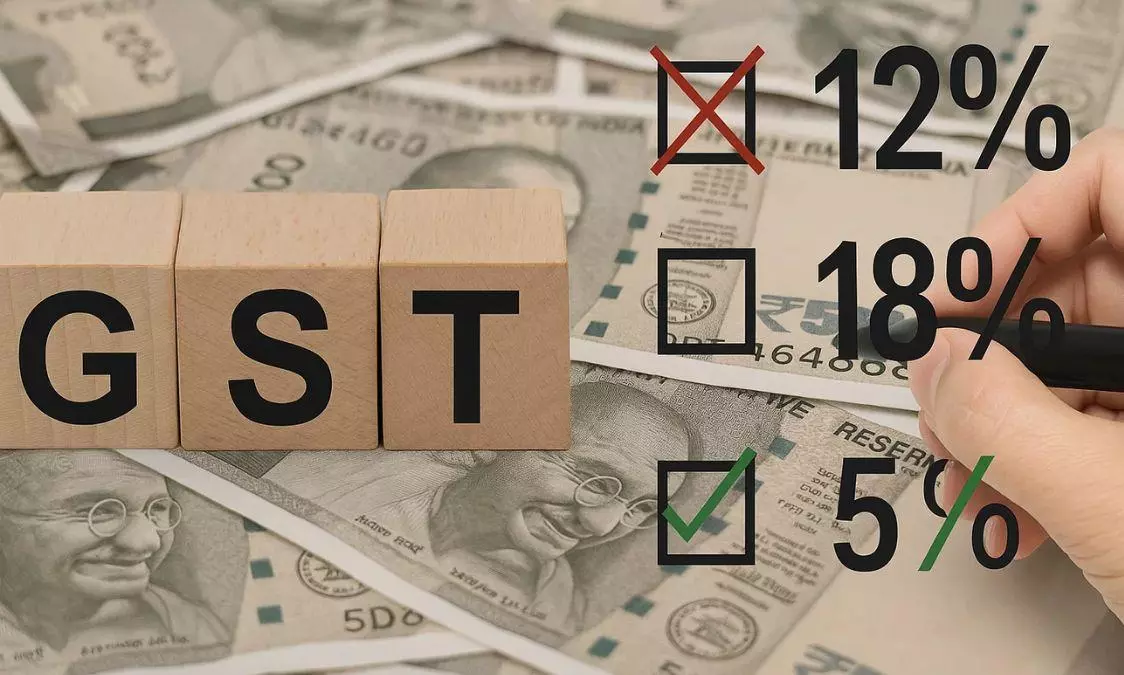

States across the country are anticipating an annual revenue loss ranging between Rs 7,000 and Rs 9,000 crore as the proposed overhaul of the Goods and Services Tax (GST) regime is set to lower rates on key items, with automobiles, cement, and white goods expected to shift from the 28 per cent slab to the 18 per cent slab.
The reduction in rates is projected to erode the major sources of GST revenue for most states, and governments fear the loss will curtail their capacity to finance social welfare programmes and state administration, particularly since their ability to raise additional resources remains limited, The Indian Express reported.
The concerns are heightened by earlier trends when GST rate cuts failed to translate into meaningful price reductions for consumers resulting in higher sales turnovers with consequently increased revenue, but did lead to diminished collections for states, and this experience has made officials wary of the forthcoming reforms.
The new structure proposes to simplify GST into two primary slabs of 5 per cent and 18 per cent, alongside a 40 per cent special rate for sin and demerit goods, yet states argue that this shift will disproportionately affect their fiscal health.
Central government officials have clarified that tobacco will continue to attract the same effective tax incidence of 88 per cent through a combination of base rate and additional levy, though a few states remain concerned about the implications of allowing excise duties to fill the gap created by lowering the base rate.
Independent economic assessments suggest that the rate rationalisation could cost the exchequer more than Rs 1.2 trillion annually, which is over 0.4 per cent of GDP, and the expected implementation from October 2025 would mean a fiscal impact of around 0.2 per cent of GDP in FY26.
The loss is likely to be shared equally between the Centre and the states, resulting in a revenue shortfall of about 0.1 per cent of GDP each.