








Naked truths that backfire
text_fields

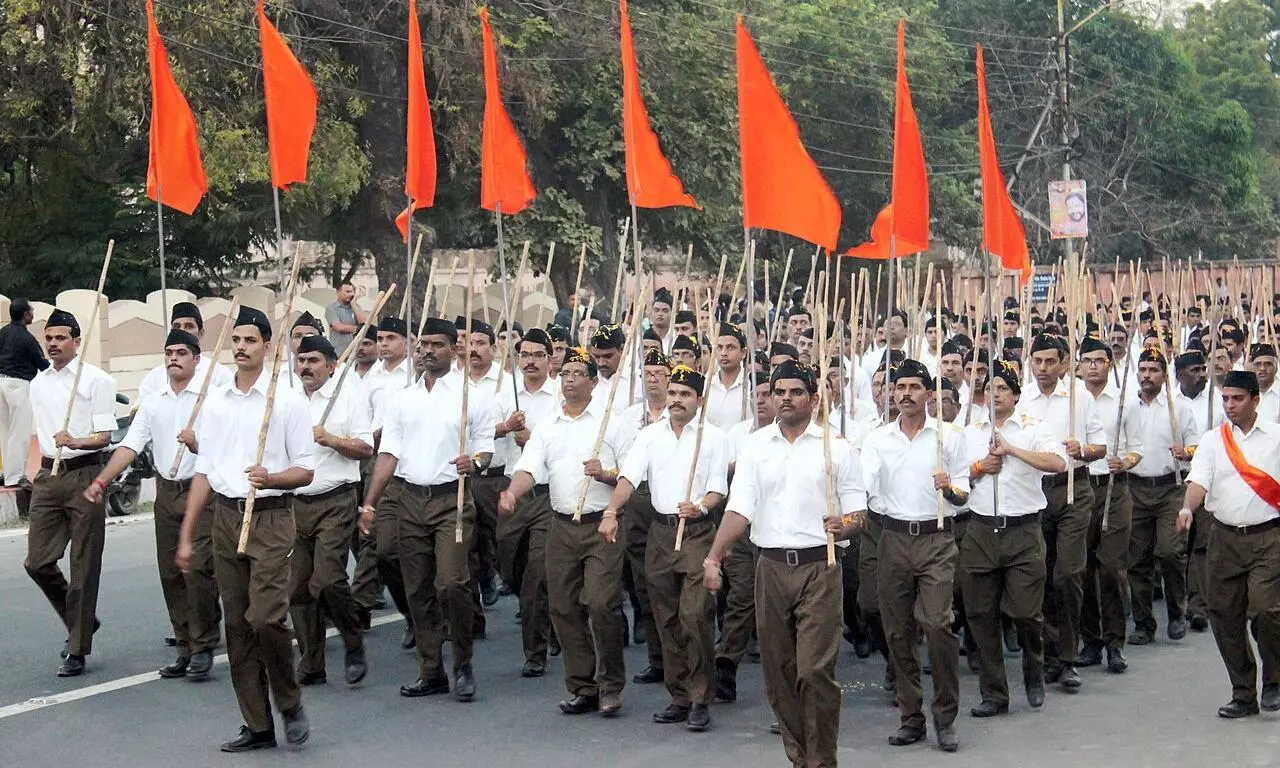
The U.S. Commission on International Religious Freedom, an official agency that closely studies religious freedom in various countries and regularly submits reports to the U.S. government, has in its latest report highlighted serious discrimination and denial of religious freedom faced by religious minorities in India. The report is one that should serve as a wake-up call for the Modi government and the country as a whole. The Commission points out that the government’s claim, and the narrative promoted by its supporters, that all religious minorities in the country are completely safe and enjoy full religious freedom under India’s secular democratic Constitution is not true. The report also recommends that the U.S. government impose strict sanctions on the Rashtriya Swayamsevak Sangh (RSS), describing it as an extremist Hindutva organisation. Furthermore, it suggests that India be designated as a “Country of Particular Concern” due to serious violations of religious freedom. The Commission has also called for linking arms sales and trade policies with religious freedom conditions. The report provides detailed documentation of the incidents and evidence on which these conclusions are based. It notes that, due to the close ties between the RSS and the BJP, several discriminatory laws related to citizenship, religious conversion, and cow slaughter have been enacted and implemented in India. It further reveals, citing specific examples, that throughout the year, mobs associated with Hindutva nationalism have carried out attacks and harassment against Muslims and Christians across several states.
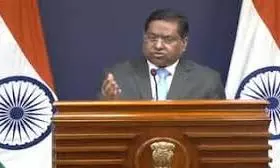
The report also highlights the deportation of hundreds of Bengali-speaking Muslims from Assam to Bangladesh, and the legislative measures adopted by the government under the pretext of identifying “infiltrators”. In addition, it points to the implications of the Waqf Amendment Bill recently passed by Parliament. Another example cited is the move by the Uttarakhand government to dissolve madrasa boards and establish a State Authority for Minority Education. The report also records that anti-conversion laws passed in various states serve as examples of injustice against religious minorities. Finally, the Commission recalls that several individuals, including Umar Khalid and Sharjeel Imam, have been detained for nearly five years without trial for protesting against the 2020 Citizenship Amendment Act. The Commission has also urged the U.S. government to freeze the assets of the RSS and to deny entry into the United States to its leaders. It did not stop short of mentioning official agencies like the R&AW as well. However, India has rejected the report’s observations as biased. The Ministry of External Affairs responded that such assessments are based on questionable sources and would undermine the credibility of the Commission.
It is clear that the Modi government cannot conceal or justify, through mere denial, the reality that extremist Hindutva regimes are targeting religious minorities through harsh laws and their brutal implementation. Simply suppressing the media and imprisoning journalists using draconian laws will not be enough to protect the government’s image in a modern world dominated by science and technology. One must reflect on what was achieved by the Narendra Modi government’s move to blacklist the BBC for exposing before the world the true picture of the Gujarat riots in 2002—an episode often described as one of the bloodiest chapters in independent India’s history. In reality, it only damaged further the country’s image on the global stage. Therefore, what is required of Central and state governments that come to power through democracy is the willingness and broad-mindedness to uphold the fundamental freedoms, equal opportunities, and protections for religious minorities as guaranteed by the secular democratic Constitution. Otherwise, no matter how hard one tries to cover up the truth, undeniable realities will eventually strike back.