


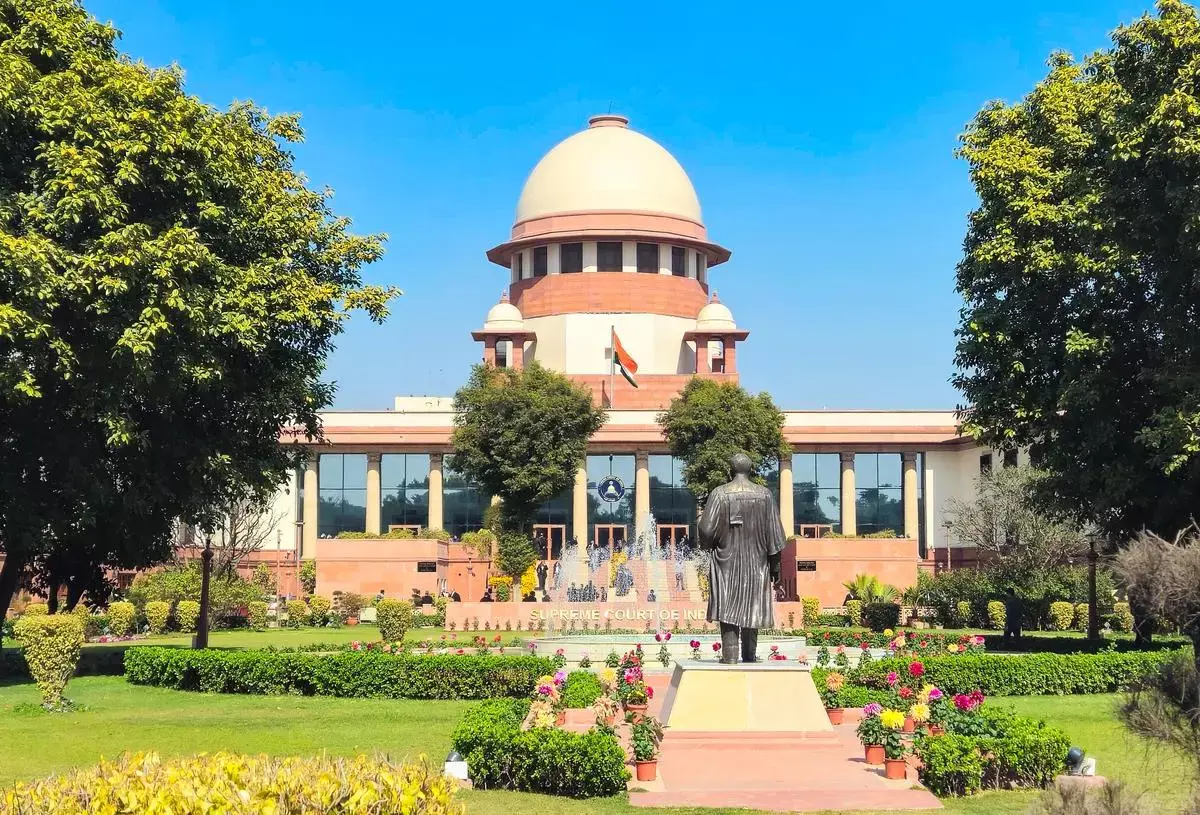













SC raps HC judge for overwhelming no. of bail grants in dowry deaths
text_fields

New Delhi: A judge of the Allahabad High Court has come under scrutiny after data showed an overwhelming pattern of granting bail in dowry death cases, shortly after facing criticism from the Supreme Court of India, The Indian Express reported.
An analysis of 510 bail orders delivered between October and December 2025 by Justice Pankaj Bhatia found that bail was granted in 508 cases, accounting for 99.61% of the total. The cases largely involved charges under Section 304B of the IPC (dowry death) along with provisions of the Dowry Prohibition Act.
The Supreme Court had earlier set aside one of Justice Bhatia’s bail orders in February, questioning the reasoning adopted in granting relief in a serious dowry death case. The case involved a woman who died within months of marriage, with postmortem findings indicating strangulation. The apex court emphasised the need to examine factors such as the nature of the offence, evidence, and the relationship between the accused and the deceased.
A Supreme Court Bench of Justices J B Pardiwala and K V Vishwanathan observed, “We fail to understand on plain reading of the impugned order as to what the High Court is trying to convey… what weighed with the High Court in exercising its discretion in favour of the accused for the purpose of grant of bail in a very serious crime like dowry death,” TIE quoted.
Following these remarks, Justice Bhatia requested that he not be assigned bail matters, citing a demoralising impact.
Data shows that in most cases, bail was granted citing absence of criminal antecedents, time spent in custody, and lack of evidence indicating harassment soon before death—a key legal requirement in dowry death cases. The orders also followed a near-identical structure, with uniform bail conditions and bond amounts.
The majority of the accused had spent less than a year in custody, and most cases involved deaths by hanging. Bail was denied in only two cases, both involving strong prima facie evidence of violent offences.