












SC expands definition of ‘terrorist act’ in denying bail to Umar, Sharjeel
text_fields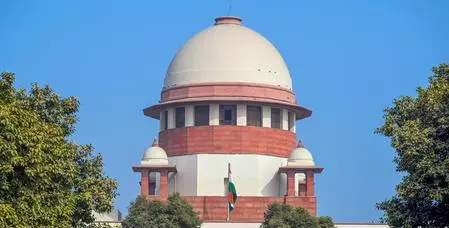

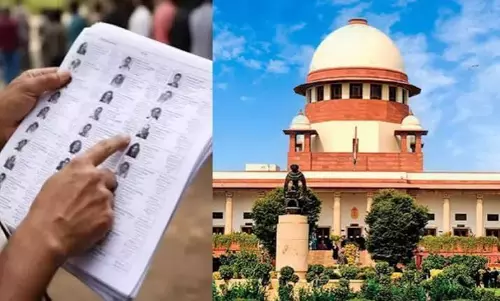
The Supreme Court on Monday granted bail to five of the seven individuals accused in the 2020 Northeast Delhi riots, while rejecting bail pleas filed by Umar Khalid and Sharjeel Imam.
In its order, a Bench led by Justice Aravind Kumar observed that the accused could not be treated as equally culpable. The court noted that the allegations against the main accused suggested a leading and directive role in allegedly formulating, planning and coordinating what was described as a terrorist act. In contrast, the material on record against some of the co-accused indicated involvement of a secondary or facilitative nature.
The ruling effectively distinguished between different levels of responsibility, despite all the accused facing similar charges under the Unlawful Activities (Prevention) Act, the Arms Act, and various provisions of criminal law. The court assessed the role of each accused individually rather than treating them as a single group, Indian Express reported.
The case raised broader legal questions, including how a “terrorist act” is defined and who has the authority to make such a determination, as well as whether prolonged pre-trial detention can be justified under anti-terror legislation. The bail petitions, particularly those filed by Khalid and others, had also come to symbolise concerns over delays in the judicial process.
Beyond its immediate impact on the accused, the order was seen as endorsing a wide interpretation of what constitutes a terrorist act under the law.
Section 15 of the UAPA defines a terrorist act as an act done “with intent to threaten or likely to threaten the unity, integrity, security, economic security, or sovereignty of India or with intent to strike terror or likely to strike terror in the people or any section of the people in India.”
The provision, however, specifies that the act of striking terror may be carried out through the use of bombs, explosives, inflammable substances, firearms, or “any other means.” The prosecution has argued that the alleged conspiracy by Umar Khalid and others to organise a “chakka jam” or road blockade would fall within the scope of this broader phrase.
Appearing for Khalid, senior advocate Kapil Sibal contended that calling for road blockades or chakka jams is a recognised and lawful form of protest in a democratic society. He argued that since the statutory provision primarily refers to violent instruments, the phrase “any other means” should be interpreted as covering only other forms of violence.
While considering the bail plea, the Supreme Court examined this interpretation and accepted the prosecution’s position. The court observed that the methods through which such acts are carried out are not limited to conventional weapons such as bombs, explosives or firearms. It noted that Parliament had deliberately used expansive language by including the phrase “any other means of whatever nature,” which, according to the court, could not be treated as redundant.
The Bench further held that the focus of the law is not merely on the tools used to carry out an act, but on its underlying design, intent and impact, indicating that non-violent methods could also fall within the ambit of the provision if they were intended to create terror.