














US mulls sanctions on China, UAE, Oman to choke Iran economically
text_fields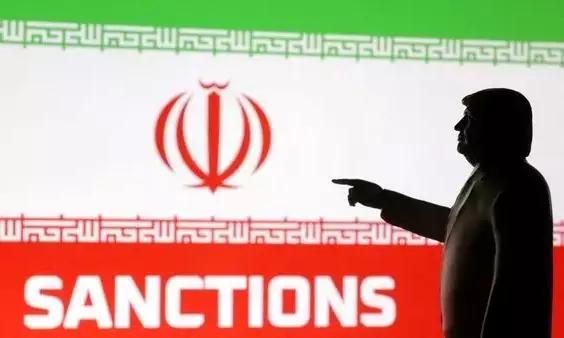

Amid reports in sections of the Pakistan media pointing to the possibility of a second round of ceasefire negotiations between the US and Iran, parallel accounts indicate that the US is preparing to intensify its coercive apparatus by weaponising financial pressure, with secondary economic sanctions poised to target countries such as China, the UAE and Oman that continue to transact with Iranian-linked entities.
The emergent strategy, articulated by Treasury Secretary Scott Bessent, signals a calibrated pivot from overt kinetic engagement to a more insidious fiscal siege, wherein economic instruments are deployed as the “financial equivalent” of bombardment, thereby seeking to suffocate Tehran’s already strained economy, according to Associated Press reports.
This prospective escalation hinges upon penalising third-party states and institutions that facilitate Iranian oil purchases or harbour Iranian capital, a move that risks entangling allies and adversaries alike in the US’s widening sanctions dragnet.
According to officials within the administration of Donald Trump, confidential deliberations suggest that Iran’s perceived resilience may falter if its ability to remunerate internal networks and loyalist structures is systematically undermined, while additional pressure points, such as the sprawling bonyads that dominate large swathes of Iran’s economy, remain under consideration for targeted disruption.
Concurrent warnings were dispatched to financial institutions across China, Hong Kong, the UAE and Oman as the US accuses these countries of enabling illicit financial conduits tied to Iranian operations.
Critics, including Senator Elizabeth Warren, contend that escalating sanctions may prove counterproductive, particularly in light of rising global oil prices linked to tensions in the Strait of Hormuz, which bolster Iran’s revenues. Legal and policy experts further caution that expansive secondary sanctions could provoke diplomatic backlash and fracture already fragile international coalitions.
Simultaneously, the US has moved to sanction an extensive oil transport network allegedly connected to the late Iranian official Ali Shamkhani, targeting a constellation of companies, individuals and vessels accused of trafficking Iranian and Russian oil through intermediary fronts, many based in the Gulf.
Within the administration, confidence appears to be consolidating around the belief that recent military and logistical disruptions, including damage to Iranian infrastructure and constrained maritime flows, have shifted strategic momentum in the US's favour, while US Vice President JD Vance framed the moment as an opportunity to secure a sweeping geopolitical bargain that would trade nuclear restraint for economic rehabilitation.
However, scepticism persists even among Republican ranks, as lawmakers, including Mike Rounds, question whether sanctions alone can recalibrate Iran’s strategic calculus, with some suggesting that only systemic political transformation within Iran may yield a durable resolution.