















Trump claims ‘very positive’ Iran talks on guiding stranded ships from Hormuz
text_fields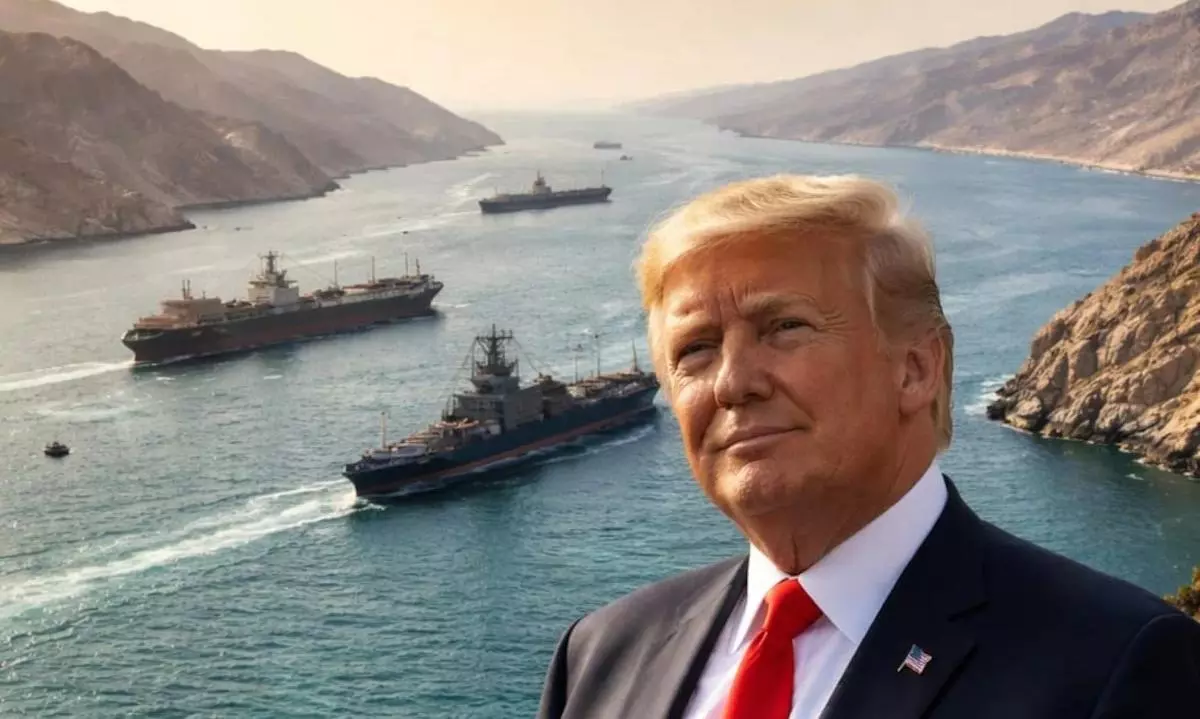

Soon after Iran confirmed that it had received the US response to its previously rebuffed peace proposal, President Donald Trump announced an American-led plan to guide hundreds of vessels stranded in the Strait of Hormuz to safety on humanitarian grounds, while claiming that “very positive” discussions were under way between the two adversaries after months of military escalation and maritime paralysis.
In a reversal from his confrontational rhetoric of recent days, Trump declared on his Truth Social platform that the operation, christened “Project Freedom”, would seek to secure the evacuation of more than 850 trapped commercial vessels and nearly 20,000 sailors immobilised in the Gulf, The Guardian reported.
The American president asserted that the initiative was being undertaken “on behalf of the US, Middle Eastern Countries but, in particular, the Country of Iran”, while warning that any obstruction to the operation would be “dealt with forcefully”.
Although Trump portrayed the move as a humanitarian intervention intended to restore navigational safety through one of the world’s most strategically indispensable maritime corridors, the US provided scant operational details regarding the mechanics of the proposed mission.
American officials quoted by the Wall Street Journal indicated that the initiative would not presently involve direct naval escort operations by the US Navy, but would instead function as a coordinated maritime traffic mechanism designed to facilitate the staggered movement of vessels through the contested waterway.
Meanwhile, Iranian official warned that any unilateral American interference in the Strait of Hormuz would constitute a breach of the fragile ceasefire brokered weeks earlier through Pakistani mediation.
Iran’s foreign ministry stated on Sunday that it was studying the US’s response to its 14-point peace framework, which reportedly prioritised the reopening of the strait, the lifting of reciprocal blockades and the creation of a new mechanism to regulate Gulf navigation.
The continued closure of the Hormuz passage, through which nearly a fifth of the world’s oil and gas supplies ordinarily transit, has intensified fears of prolonged economic disruption and geopolitical destabilisation, with crude prices surging beyond $120 a barrel amid mounting anxieties over energy insecurity and global inflationary shockwaves.
US Central Command subsequently confirmed that “Project Freedom” would be supported by guided-missile destroyers, more than 100 aircraft, unmanned multi-domain platforms and approximately 15,000 American service personnel stationed across the region, where the US has now deployed three aircraft carriers for the first time since the 2003 Iraq war.
Despite Trump’s unexpectedly conciliatory tone regarding negotiations with Iran, military tensions across the region remained combustible, with Israeli officials insisting that any enduring settlement must include the termination of Iran’s uranium enrichment programme and the surrender of its highly enriched uranium stockpiles, conditions Iran has consistently resisted amid intensifying diplomatic brinkmanship.