




Palestine welcomes Trump’s ‘Riviera’ plan, but only if Gazans benefit
text_fields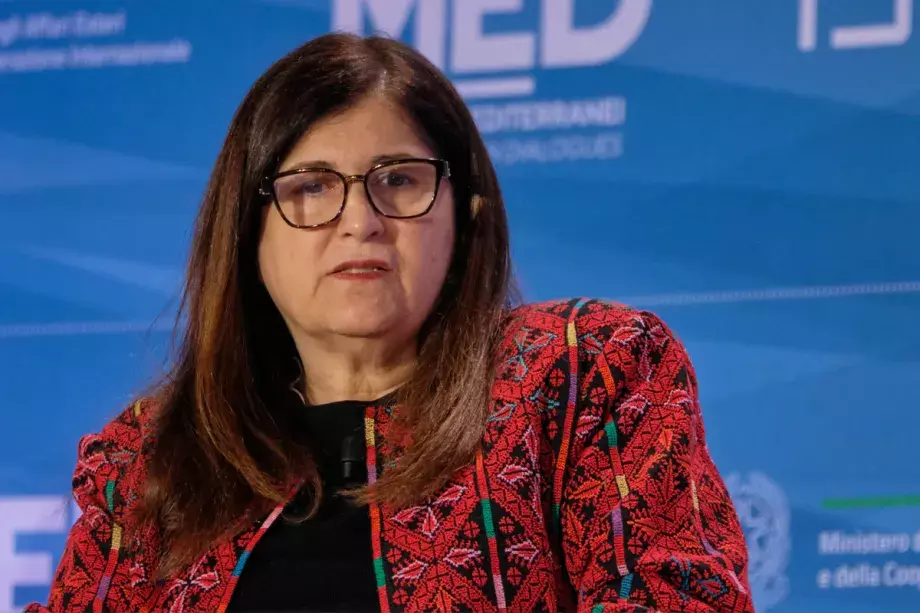

New Delhi: Palestine may be open to US President Donald Trump’s proposal of turning the Gaza Strip into a Mediterranean “Riviera”, but only if the initiative serves the Palestinian people and is not imposed at their expense, Palestinian Foreign Minister of State Varsen Aghabekian Shahin said on Friday.
In an exclusive interview with PTI Videos, Shahin emphasised that any development plan must prioritise the rights and welfare of Gazans. “Well, a Riviera for its people. I mean, why not? If it’s a Riviera for Gazans, the Palestinians, to enjoy, yes. But if it’s a Riviera for others to enjoy without the Palestinians, no,” she said.
Her remarks come amid renewed global attention on Gaza’s reconstruction and the US-led “Board of Peace” initiative proposed by Trump. While welcoming efforts to foster peace, Shahin stressed that rebuilding Gaza cannot be separated from the broader struggle for Palestinian political rights.
Shahin, who is in India to attend the India-Arab Foreign Ministers’ meeting, said the Palestinian issue would remain “at the forefront” of her discussions. “Any attempt at forging peace is welcome because it gives hope after decades of violence,” she said. “But we want this plan to be tied to something bigger, a clear path that leads to Palestinian independence.”
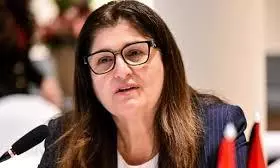
India has also been invited to join the proposed Peace Board, but has not yet made a decision. Shahin noted that New Delhi’s participation could be beneficial, but stressed that the objectives and outcomes of the process must be clearly defined. “It would help our cause if the path and the end results are clear,” she said, reiterating India’s consistent support for a two-state solution.
On Pakistan’s inclusion in the Peace Board, which has been opposed by Israel, Shahin said no country should dictate the peace process. “Israel must stop dictating to the world what is acceptable. What is acceptable is what meets international law,” she said.
Describing the ground situation in Gaza, Shahin said the region remains volatile despite a partial ceasefire. “We are not seeing the atrocities of the last two years, but the ceasefire is fragile. Only a permanent and sustainable ceasefire will allow people to breathe and begin reconstruction,” she said, adding that rebuilding Gaza would require sustained international support.
Regarding Hamas, Shahin said the group should disarm as part of any peace framework it accepts. She welcomed India’s balanced approach, noting that New Delhi’s ties with both Israel and Palestine could enable it to play a constructive role.
Shahin also warned that escalating US-Iran tensions could destabilise Gaza’s fragile calm. “Any instability in the region affects everyone, including Palestine. Conflicts should be resolved around tables, not through armed confrontation,” she said.
Turning to the West Bank, Shahin said conditions there were worsening even as attention remained focused on Gaza. “Illegal settlers are unleashing havoc, terrorising Palestinian lives daily. We are living under an apartheid system that violates international law,” she said, citing multiple UN resolutions Israel has yet to implement.
Asked about Palestinian sentiment toward Trump, Shahin said there is a belief that he could advance the peace process if Palestinian rights are respected. “Peace means respecting both peoples, not one at the expense of the other. The Palestinians deserve their state as enshrined in international law. Now is the time to help them materialise it,” she said.
India has yet to make a decision on joining the Peace Board, considering the sensitive issues involved. New Delhi has consistently advocated a two-state solution, supporting Israel and Palestine living side by side in peace and security within recognised borders.
Countries that have accepted Trump’s invitation to join the Board of Peace include Argentina, Albania, Armenia, Azerbaijan, Bahrain, Belarus, Bulgaria, Egypt, Hungary, Indonesia, Jordan, Kazakhstan, Kosovo, Morocco, Mongolia, Pakistan, Qatar, Saudi Arabia, Turkey, the United Arab Emirates, Uzbekistan, and Vietnam.
With PTI inputs