











Iran lays out tripartite plan to end war amid fierce fighting and economic stagnation
text_fields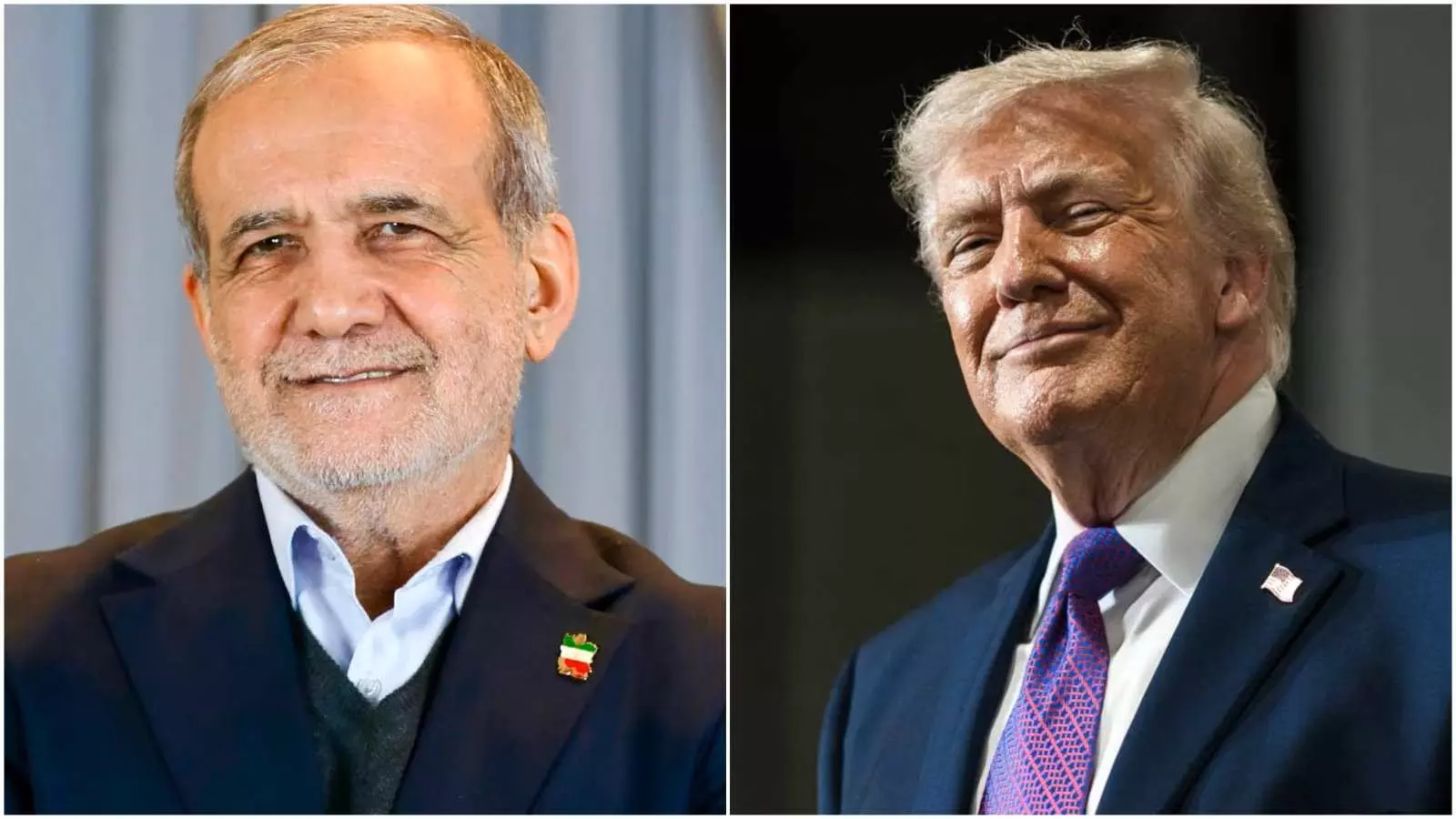

Amid high-heated tension prompting escalated striking of strategically significant targets by Iran, thereby creating a tumultuous phase in the Middle East and forming an impasse for global oil transport after the unilateral military onslaught launched by the US and Israel, Iranian President Masoud Pezeshkian has articulated a three-point framework which Tehran insists constitutes the sole viable pathway to terminate the widening war.
Pezeshkian has articulated a tripartite framework demanding formal recognition of Iranian prerogatives, comprehensive reparations for wartime devastation, and ironclad international guarantees against future aggression as the exclusive trajectory to mitigate the bellicose volatility presently destabilising the geopolitical equilibrium of the Middle East.
Thirteen days into the war, the Iranian president wrote on X (formerly Twitter), reiterating Iran’s commitment to peace while engaging in diplomatic consultations with Moscow and Islamabad, and asserting that any armistice necessitates a tripartite foundation: the formal validation of Iranian sovereignty, comprehensive fiscal restitution for wartime devastation, and ironclad multilateral safeguards to preclude further bellicose transgressions.
He said “the only way to end the war that has been “ignited by the Zionist regime & US” is: 1) by recognising Iran’s legitimate rights 2) payment of reparations, and 3) firm international guarantees against future aggression.”
The war, which erupted following the joint American-Israeli strikes on Iran on February 28, has since spiralled into an extensive theatre of confrontation stretching across several fronts in the Middle East, registering nearly 1,200 casualties while triggering relentless cycles of bombardment and counter-strikes that have destabilised the region’s fragile security architecture.
Iran escalated its strategy on Wednesday by striking civilian infrastructure and transportation arteries across the Gulf, including attacks on commercial vessels and a reported targeting of Dubai’s international airport, even as American and Israeli aircraft intensified their bombardment campaign against strategic sites within the Islamic Republic.
Senior Iranian officials adopted a defiant posture, warning that the confrontation could evolve into a protracted “war of attrition” capable of unleashing global economic dislocation as energy supplies from the region are throttled.
The escalation intensified further when Israeli warplanes bombarded Beirut’s southern suburbs and southern Lebanon after Hezbollah launched coordinated drone and rocket attacks on northern Israel in tandem with Iranian missile strikes. Israeli operations in Lebanon alone have killed at least 634 people and injured 1,586 within ten days, while more than 816,700 families have registered as displaced with Lebanese authorities.
Across the Gulf, regional states scrambled to defend critical infrastructure as Kuwait announced that its air defence systems had intercepted eight Iranian drones, while Saudi Arabia reported shooting down five drones heading towards its Shaybah oil field.
Contrasting the sombre reality, US President Donald Trump adopted a triumphalist cadence during a rally in Hebron, Kentucky, asserting that the US had effectively "won" within the first hour of engagement.
Nevertheless, Trump maintained that American forces would remain entrenched to "finish the job," even as Admiral Brad Cooper of US Central Command lauded the efficacy of "advanced AI tools" in degrading Iran’s ballistic capabilities.
While Israeli Prime Minister Benjamin Netanyahu implores the Iranian populace to rise against the clerical establishment, Tehran’s police chief, Ahmadreza Radan, has warned that security forces remain poised with "fingers on the trigger."