










India calls for UN Security Council reforms, slams hidden vetoes
text_fields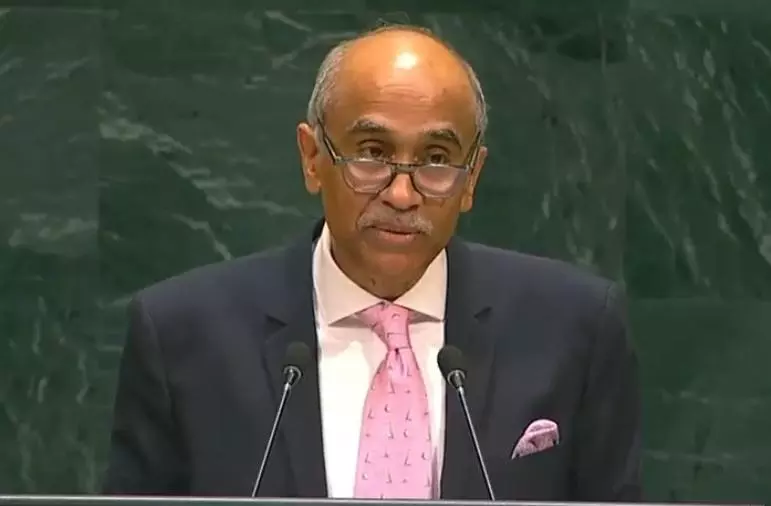

India has called for comprehensive reforms of the United Nations Security Council, accusing a group of countries of obstructing negotiations by using consensus requirements to block progress.
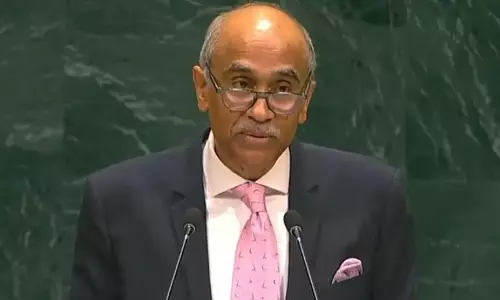
Addressing a UN General Assembly debate on Monday, India's Permanent Representative P. Harish said the Intergovernmental Negotiations (IGN) process had failed to produce results after 17 rounds because some members were effectively exercising a veto without any formal authority to do so.
The group Uniting for Consensus, led by Italy and including Pakistan, has prevented the adoption of a negotiating text through procedural tactics, he said. Harish noted that the 2008 General Assembly resolution establishing the process calls for the widest possible political acceptance, rather than consensus.
He also highlighted informal vetoes exercised by both permanent and elected Security Council members, which can block presidential statements, press releases and sanctions committee decisions under an unwritten consensus rule.
Citing cases involving Pakistan-based militants, Harish pointed to China's blocking of proposed sanctions against individuals linked to Lashkar-e-Taiba and Jaish-e-Mohammed.
He called for negotiations based on a clear text, with defined timelines and milestones, alongside an expansion of the Council's permanent membership.
India maintains that any country granted permanent membership in a reformed Council should also receive veto powers, arguing that creating categories of permanent members without such rights would perpetuate existing inequalities.
Harish said the Council's structure must reflect present-day global realities rather than the geopolitical order established after World War II.
With IANS inputs