













Aviation safety campaigners tell US Senate plane in Air India crash had recurring failures
text_fields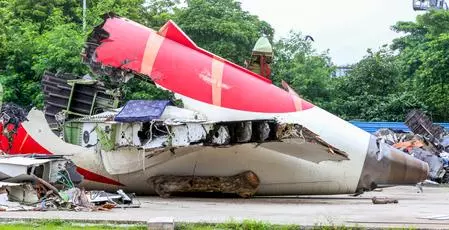

New Delhi: A report to the US Senate by aviation safety campaigners has alleged that the Boeing 787-8 Dreamliner that crashed shortly after take-off in Ahmedabad, killing 270 people, had a well-documented record of recurring technical problems.
The Foundation for Aviation Safety (FAS), which presented the report, said its records point to persistent flaws related to engineering, manufacturing standards, quality control, and maintenance practices involving the aircraft. The organisation also suggested that the plane may have suffered an in-flight fire. FAS is led by Ed Pierson, a former Boeing executive.
The crash of Air India Flight 171 ranks among the deadliest aviation accidents in recent years. According to the foundation, concerns had been raised well before the incident, with whistleblowers repeatedly warning that aggressive cost-cutting at Boeing—particularly for aircraft delivered outside the United States—could eventually have fatal consequences for passengers.
The report stated that technical issues began as soon as the aircraft entered service in India on February 1, 2014. It further claimed that during its 11 years of operation, the VT-ANB aircraft encountered a wide range of complex and persistent defects.
FAS said its documentation showed that these issues contributed to repeated electrical system failures, problems involving electronics and software, wiring damage, and incidents of smoke and fumes. The report also cited short circuits, burning, and overheating in power distribution components as part of the aircraft’s operational history, The Wire reported.
The report referred to two fire-related incidents involving the aircraft in 2022 to underline its concerns. It noted that the first incident, in January that year, originated in the P100 power distribution panel and caused damage so severe that the entire panel had to be replaced.
A few months later, in April 2022, the aircraft was grounded after multiple and unclear faults were detected in the landing gear indication system. According to the report, Air India subsequently replaced a proximity-sensing data concentrator module along with several other key components.
The findings also suggested that similar electrical system failures were present across other Boeing 787 aircraft operated by Air India. The report further claimed that comparable system failures had been reported in 787 aircraft registered in countries including the United States, Canada, and Australia.
The ongoing investigation into the crash is being conducted by India’s Aircraft Accident Investigation Bureau (AAIB), with participation from US authorities. The report referred to controversy surrounding a preliminary AAIB finding that stated fuel control switches had been moved to the “cut-off” position shortly after take-off, effectively starving the engines of fuel.
It noted that cockpit voice recordings indicated confusion between the pilots over who had operated the switches, leading to speculation that pilot error may have been responsible. This interpretation, the report said, triggered strong criticism from pilot associations and aviation experts.
The FAS stated that passengers and crew continue to operate aboard Boeing 787 aircraft without awareness of what it described as persistent safety risks, while also highlighting potential dangers to people on the ground.
In its assessment, the foundation alleged that Boeing, Air India, and government officials in India were deliberately withholding critical safety-related information from the public and regulatory authorities. The report also pointed out that the Union government bears responsibility for the maintenance of Air India’s aircraft.
FAS called for an investigation into what it characterised as a possible criminal cover-up, drawing parallels with the crashes involving Boeing’s 737 MAX aircraft—Ethiopian Airlines Flight 302 and Lion Air Flight 610. It warned that failure to fully examine these issues could result in similar tragedies in the future.