

















1.3 million children trapped in child labour in Pakistan’s Sindh province
text_fields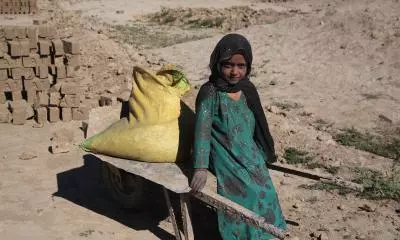

Islamabad: Around 1.3 million children aged between five and 17 years are engaged in child labour across Pakistan’s Sindh province, with nearly two-thirds working in the agriculture sector, according to a government survey cited by local media.
The Sindh Child Labour Survey 2023–2024, launched by the provincial Labour Department in partnership with UNICEF, marks the first comprehensive assessment of its kind in almost three decades.
As per the findings published by Dawn, about 65 per cent of these children are employed in agriculture, followed by 12.4 per cent in manufacturing and 10.8 per cent in wholesale and retail trade. The survey covered 29 districts and gathered data on children’s education, living conditions, and work environments.
The report noted a significant decline in the overall rate of child labour compared to the 1996 survey, which had placed it at 20.6 per cent. The latest study shows that 10.3 per cent of children in the five to 17 age group are now involved in labour, 13.7 per cent of boys and 6.6 per cent of girls.
Economic hardship remains a major factor, with 44.3 per cent of parents admitting they send their children to work to support household income. Meanwhile, 43.5 per cent of working children reported suffering from fatigue or injuries linked to their jobs.
The prevalence of child labour was found to be highest in Sujawal (35.1 per cent) and Tharparkar (25.6 per cent), while Malir (2.7 per cent) and Karachi South (3 per cent) reported the lowest figures.
The survey also revealed that more than half (50.4 per cent) of working children aged between 10 and 17 are exposed to hazardous conditions, such as carrying heavy loads (29.8 per cent), extreme temperatures (28.1 per cent), and workplace abuse (17.5 per cent).
Educational participation was notably low among working children, with only 41.2 per cent attending school compared to 69.9 per cent of their non-working peers. School attendance dropped further among adolescents aged 14–17, with just 29.1 per cent remaining in education.
The study further highlighted that 33.7 per cent of the poorest households have at least one child in labour, compared to only 3.8 per cent among the wealthiest. Families dependent on the Benazir Income Support Programme (BISP) or struggling economically showed higher child labour rates.
At the survey’s launch, Sindh Labour Secretary Asadullah Abro said the findings underscored the urgent need for stronger action. He reaffirmed the provincial government’s commitment to enforcing the Sindh Prohibition of Employment of Children Act, 2017, and to developing policies that address the root causes of child labour.
(Inputs from IANS)