
















NASA’s SPHEREx telescope delivers first full-sky map, unlocking new cosmic insights
text_fields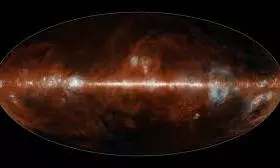

NASA’s SPHEREx space telescope has completed its first-ever full-sky map, marking a major milestone in efforts to understand the universe’s origins, evolution, and the distribution of life-forming elements across cosmic history.
Launched in March 2025, SPHEREx was designed to observe the sky in 102 different wavelengths of infrared light — far more than previous all-sky surveys. This capability allows scientists to see details of the universe that were previously invisible, offering fresh insights into the earliest moments after the Big Bang and the structure of the Milky Way.
According to NASA, the observatory completed the full-sky survey in just six months, capturing around 3,600 images per orbit as it scanned from pole to pole. Earth’s movement around the Sun gradually shifted SPHEREx’s field of view, enabling it to map the entire celestial sphere.
This is only the first of four planned surveys.
Over its two-year primary mission, SPHEREx will repeat the process three more times, producing increasingly detailed maps that will help astronomers refine their understanding of galaxies, stars, and cosmic chemistry.
Orbiting Earth roughly 15 times a day, the spacecraft uses a conical scanning pattern to sweep large swaths of the sky. By surveying across a broad range of wavelengths, SPHEREx will allow scientists to trace how galaxies formed and evolved over 13.8 billion years and how essential elements — such as water and organic molecules — became widespread in the universe.
Researchers say the data will complement existing space missions, filling critical gaps and enabling new studies into cosmic inflation, galaxy formation, and the conditions that made planets and life possible.