


















Hubble constant tension deepens as new gravitational wave method emerges
text_fields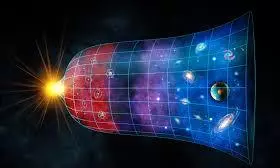

Astronomers are intensifying efforts to resolve the long-running discrepancy in measurements of the universe’s expansion rate, known as the Hubble tension, as results from supernova observations and cosmic microwave background data continue to clash.
The expansion rate, expressed as the Hubble constant, has been measured using nearby supernovae and observations of the cosmic microwave background, but the two approaches yield different results.
This mismatch has posed a major challenge for cosmologists, raising the possibility of unknown physics beyond current models.
Researchers are now exploring a third method using gravitational waves produced by merging black holes.
The North American Nanohertz Observatory for Gravitational Waves has monitored precisely timed pulsars to detect a faint gravitational wave background described as a cosmic hum. Scientists believe this signal likely originates from numerous merging supermassive black holes across the universe.
By statistically analysing this background as a stochastic siren, researchers suggest it may encode information about the expansion rate. In this framework, a lower Hubble constant would imply more mergers within a given volume, strengthening the background signal. Early applications of this method to data from LIGO and Virgo appear to favour a faster expansion, though findings remain preliminary.
Scientists are also examining other explanations, including early dark energy, exotic dark sector interactions, and possible modifications to gravity. Previous gravitational wave detections, such as a neutron star merger observed by LIGO, produced Hubble constant estimates consistent with supernova results.
By combining standard candles, gravitational wave standard sirens, and the newly detected background signal, astronomers hope to determine whether the tension signals a new cosmology or improved measurement techniques.