











Will military equations shift in West Asia?
text_fields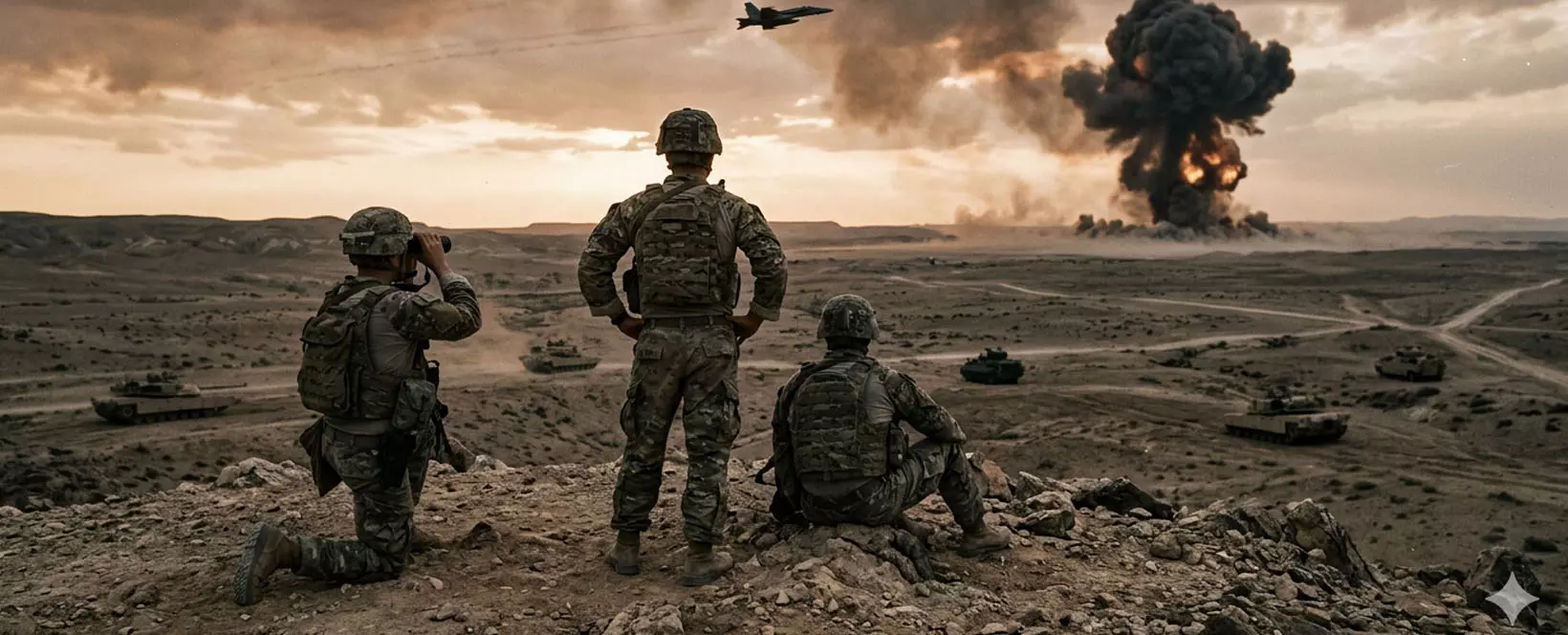

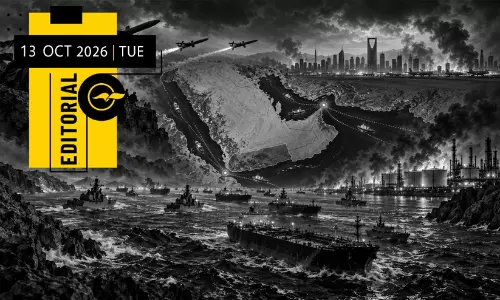
The trilateral defence agreement signed by Saudi Arabia, Türkiye and Pakistan in Mecca on Friday, August 7, has the potential to have significant long-term implications for strategic power relations in the region, against the backdrop of the ongoing conflict in West Asia. Saudi Crown Prince Mohammed bin Salman, Turkish President Recep Tayyip Erdoğan, and Pakistani Prime Minister Shehbaz Sharif signed the agreement. The terms of the agreement have not been fully disclosed. Therefore, its implications are also open to considerable speculation. The key element of the agreement, and the only one that has been officially highlighted, is that any attack against any one of the three countries will be regarded as an attack against all three countries.
There have been several military agreements in the past containing the aforementioned key provision. But experience shows that most of them have remained largely confined to paper. Even if this agreement is implemented in its principle, its scope remains unclear. It has not been specified what would constitute an “attack” or how far a retaliatory response could go. When NATO was formed, a similar provision was included in its founding treaty, and also in the GCC’s joint defence agreement signed by the Gulf states in 2000. It was this provision in the NATO treaty that led Russia to strongly oppose Finland and Ukraine becoming NATO members. Russia’s concern was that if the NATO powers in Europe were obliged to collectively respond to an attack on Ukraine, it could lead to military action against Russia. However, NATO itself has never taken action against another country on the basis of such an attack.
Countries participating in defence cooperation would naturally be expected to have in mind one or more identified adversaries, or neighbouring countries that may pose a threat to them. The same issue was raised when Saudi Arabia and Pakistan signed a defence cooperation agreement in September 2025. Since the contents of that agreement were never made public, all observations have tended to focus in that direction. Amid the ongoing US-Iran war, some view the latest agreement as a means of standing against Iran, particularly in the backdrop of the airstrikes Iran carried out against targets in Gulf states in several phases. However, Pakistan and Türkiye do not share the same interests as Saudi Arabia in this regard. Neither Pakistan, which shares a 900-km-long border with Iran, nor Türkiye, which shares a 500-km-long border with Iran, has any significant hostility towards the country. The overall hostility that existed historically between Saudi Arabia and Türkiye since fall of the Ottoman Caliphate can be said to have gradually faded. Their diplomatic relations, which got strained following the killing of Saudi journalist Jamal Khashoggi at the Saudi Consulate in Istanbul in 2018, have also improved since then.
After Saudi Arabia signed the agreement with Pakistan last year, there have been several Houthi attacks on Saudi Arabia. There is no indication that Saudi Arabia sought military assistance from Pakistan in response to any of them, in line with the military co-operation agreement. In the current war, most of Iran’s airstrikes have targeted US military bases and areas associated with them. Another point worth noting is that all the Gulf countries that came under Iranian attack are under the US security umbrella. And there are also US bases in all the Gulf countries, except Oman. In light of this, one could argue that the Gulf countries no longer see the US as a power they can rely on for their protection. Moreover, the Gulf states could also argue that they have been subjected to the blows they are now facing solely because of US military adventurism.
The three countries that are party to the latest pact have their own interests in the new trilateral agreement. This is the first time that the Gulf states have signed a multi-region military agreement. Each of the participating countries also has its own strength in that regard. Türkiye has considerable military capabilities and the strongest army in Europe within NATO. Saudi Arabia, is the region’s economic power house and a leading force in the petroleum sector. Pakistan has an army of 650,000 personnel and already provides military training in several Gulf countries. At the same time, the three parties to this agreement are countries who themselves have military cooperation with the United States. Therefore, it is worth considering where the three countries place the US in this equation. The Gulf countries, which once regarded Iran as an adversary, do not do so today. However, they are opposed to Iran’s retaliatory attacks in the context of the Israeli-US military offensive. At the same time, it cannot be ignored that Saudi Arabia is now more hostile towards Israel than towards Iran. Saudi Arabia cannot reconcile itself with Israel as long as it refuses to accept a two-state solution that includes a Palestinian state. From that perspective, it remains to be seen against which side of each power the three countries will stand by in the new trilateral agreement, should such a situation arise. Even if an opportunity may not arise to test this, it is still worth examining the issues on which Saudi Arabia is aligned with Türkiye and Pakistan. No one is likely yet to have a clear answer immediately.