






Kerala doesn't need party courts or mob killings
text_fields

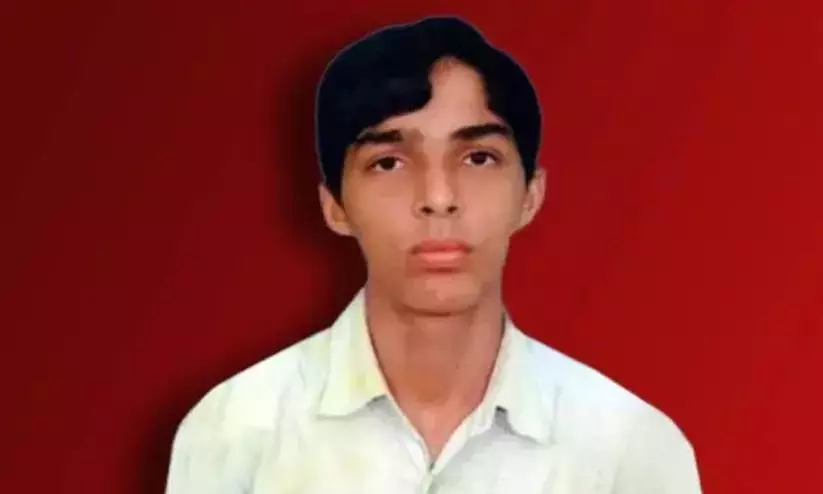
How many political murders would have taken place in united Kerala, which has now crossed seven decades of its existence? The truth is that there is no official record of such killings, as the term ‘political murder’ has no fixed definition. Neither the State nor the National Crime Records Bureau maintains separate statistics on political murders. Nevertheless, there have been numerous instances in which clashes between various political movements escalated into brutal killings and situations resembling riots. Studies based on an analysis of media reports from that period indicate that more than 150 people were killed in Kerala in clashes involving political parties during the first 15 years of this century. In the subsequent five years, around 70 more people lost their lives in similar circumstances. It is worth remembering that political murders have been taking place at an average rate of ten a year in the very ‘God's Own Country’ that proudly claims to be progressive and enlightened. Although every brutal killing is condemned, each incident bears witness to the fact that none of the mainstream political parties is willing to abandon the politics of eliminating their opponents. Among such incidents, the murder of Muslim Youth League activist Arikkil Shukoor stands out for several reasons. On February 20, 2012, Shukoor was killed by local CPI(M) and DYFI activists following a mob trial at a field in Chulliyode in Kannur district. Fourteen years thence, with the CBI court having pronounced sentences against those responsible for Shukoor's murder, Kerala's politics of violence has once again come under discussion from the perspective of justice. The discussion begins with a lingering question: Has justice truly been delivered to the young man named Shukoor, even though the court sentenced seven of the 13 people found guilty to life imprisonment?
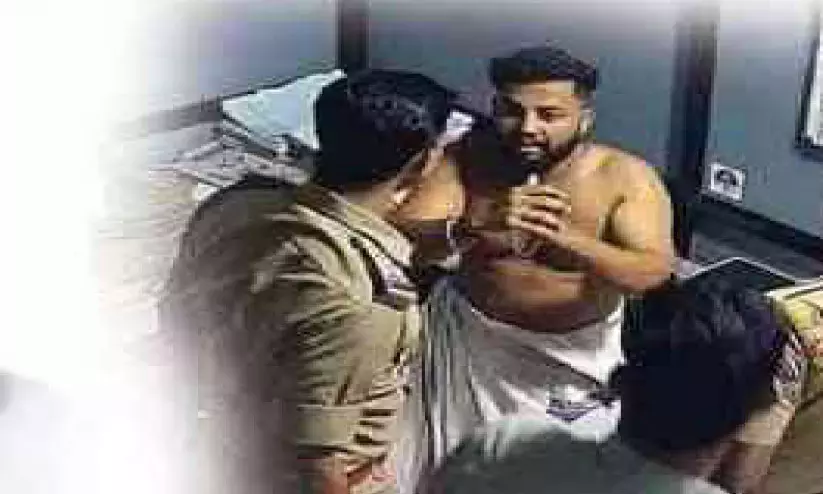
The circumstances surrounding Shukoor's murder and the modus operandi adopted in carrying it out were markedly different from those of other political killings. On February 19, 2012, a day before Shukoor was killed, clashes broke out between CPI(M) and IUML workers in the Ariyil area of Kannur. The following day, a vehicle carrying the then CPI(M) district secretary P. Jayarajan and TV Rajesh, who was then the MLA representing Kalliasseri, was intercepted by IUML workers when they arrived to visit the conflict-hit area. Provoked by this incident, CPI(M) workers killed Shukoor, who had no involvement in the dispute. On that day, Shukoor and his companions were taking a friend, who had been injured while playing cricket elsewhere, to hospital in a boat. CPI(M) workers apprehended Shukoor and another person accompanying him, identified as Zakariya, and took them to a nearby field. What followed was a ‘trial’ conducted in the presence of a mob and local party leaders. It is alleged that, to confirm that Shukoor was indeed the intended target, his photograph was sent by phone to someone at another location. At the end of this ‘trial’, the party mob stabbed Shukoor to death, while Zakariya escaped with injuries. The circumstances indicate that this unprecedentedly brutal act was neither accidental nor the result of a sudden outburst of mob frenzy, but rather an ‘execution’ carried out with careful planning. Yet, when the prosecution failed to establish the charges, including criminal conspiracy, P. Jayarajan, TV Rajesh and Shyamjith, son of CPI(M) state secretary M.V. Govindan Master, among others who had been named as accused under these charges, were acquitted. It is when one realises that this failure of the prosecution was effectively brought about by its own shortcomings that the justice supposedly delivered to Shukoor is seen to be incomplete.
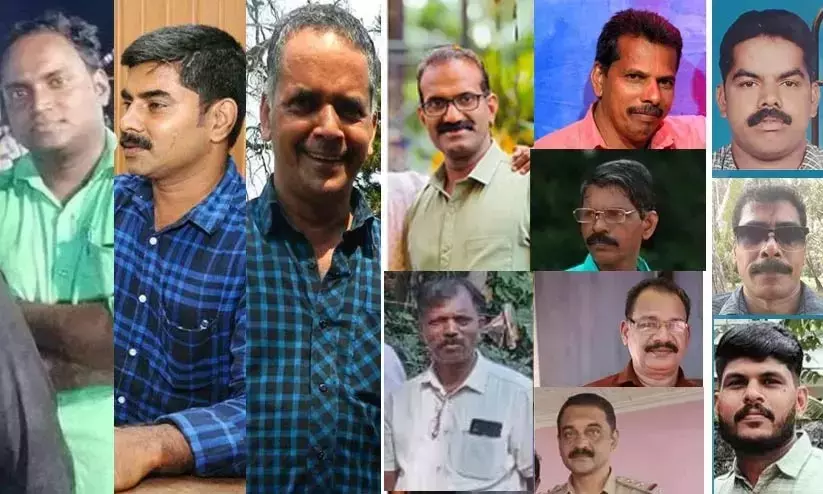
The prosecution's failure to establish the conspiracy charge is widely attributed to inconsistencies in witness statements and circumstantial evidence, as well as shortcomings in the initial investigation. There is some truth to this assessment. Even the second accused, who is alleged in the chargesheet to have first stabbed Shukoor, has been acquitted in the case. The accused did not kill Shukoor under the cover of darkness or by creating an atmosphere of terror through a bomb attack. The murder took place in broad daylight, in front of a crowd of onlookers. There were witnesses to the incident. Yet, the prosecution could not even ensure that their statements were recorded accurately. It could not even examine the two witnesses who had initially given statements against Jayarajan and Rajesh. Nor were steps taken to examine the phones of the accused who, according to the chargesheet, had taken a photograph of Shukoor and sent it elsewhere. Had this procedure, which should have been followed during the preliminary stages of the investigation, been carried out, the identity of the person at the other end could perhaps have been established beyond dispute. The case was thus marked by numerous lapses, both during the investigation and in the course of the court proceedings. Given these shortcomings, the verdict delivered by the court is, in a sense, hardly surprising. One point, however, deserves emphasis: It was the determination and fighting spirit of Shukoor's mother, Aathikka, that brought the case this far. Following the court verdict, Aathikka and her family have made it clear that they have not received complete justice. It is therefore evident that this legal battle will not end in the courtroom of the CBI court in Kochi. Chief Minister V.D. Satheesan and the Muslim League leadership have also responded in a similar vein, signalling that the fight may continue. If this struggle needs to be carried forward to bring an end to political murders and mob trials in paddy fields, then that should continue.