
















US seeking an honourable exit from the conundrum
text_fields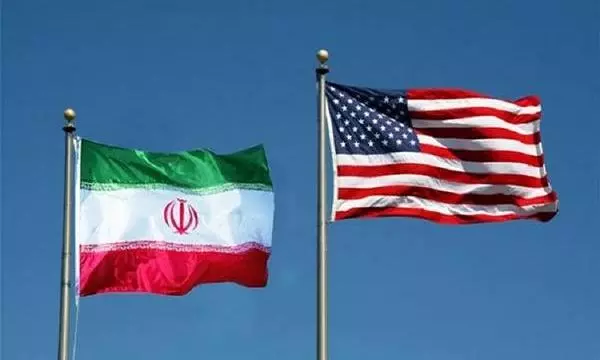

The world has been waiting for peace to prevail in West Asia, which has been in turmoil for nearly four months. The primary hope is that with the resumption of shipping through the Strait of Hormuz following the Iran-US peace talks, the trade and industrial stagnation will end, and international oil prices will drop. However, some concerns still remain regarding the contents of the bilateral agreements that recently took place in Bürgenstock, Switzerland.
Also read: IAEA chief says inspections of Iran's nuclear sites will resume
The discussions, based on the memorandum of understanding (MOU) signed by both countries on June 15 through the initiative of mediators, are currently nearing completion. When the war began on February 28, America had declared a regime change in Tehran as one of its war objectives; however, other than the change of individuals and emergence of a new leadership team, the US-Israel alliance failed to achieve none of such goals. Instead, what they witnessed was the Iranian populace standing firmly with their government. Challenging Iran's control over the closed Strait of Hormuz, America imposed a blockade with the help of its naval power and subsequently bragged about its control over it.
Also read: India issues advisory asking citizens to avoid non-essential travel to Iran
According to the bilateral understanding, a ceasefire will soon come into effect in all regions, including Lebanon. Both countries will recognise each other's sovereignty and will not interfere in each other's internal affairs. The sanctions imposed by America on Iran's ports will be lifted, alongside the withdrawal of transit restrictions in the Strait of Hormuz. Iran must remove all transit obstacles in Hormuz; in other words, Iran will clear the mines believed to be scattered in the sea. According to what Iranian Foreign Minister Abbas Araghchi posted on X, a significant portion of Iran's assets has been released by America, and Iran's massive reconstruction and development project has commenced. Araghchi also states that Iran's crucial conditions have been fulfilled. On the other side, the primary requirement is the assurance that Iran will not produce nuclear weapons. This was something Iran had already agreed to during Obama's tenure in the pact made with America and Western nations in 2015. Based on that, the sanctions on Iran were lifted. It was after Trump came to power for his first term that the agreement was unilaterally withdrawn and the said sanctions were reimposed.
Also read: US Senate approves resolution limiting Trump's military action in Iran
It was Trump’s intense desire to reach a face-saving agreement of some kind and withdraw from this war. Echoes of this aspiration can be seen even in section of US media that cannot be called anti-Trump by any standards and even the Israeli press. And that the U.S. Senate passed a resolution the other day to halt the war with Iran was a clear sign of domestic opposition. Trump's claims that Iran will no longer be able to manufacture nuclear weapons (which Iran has never demanded) and that Iran will no longer have authority over the Strait of Hormuz were all intended to cover up Trump’s failure. The major gain for Iran came on the issue of sanctions and that is official now. According to an order issued by the U.S. Treasury Department on Monday, June 22, the sanctions that had existed for the past 40 years on Iran's production, sale, and transfer of oil have been lifted for 60 days, during which the talks are to take place. According to the sanctions imposed in 1980 over the U.S. Embassy hostage crisis in 1979, U.S. companies could not buy Iranian oil. After 2010, these sanctions were tightened further, providing that if companies from other countries bought Iranian oil, the sanctions would apply to them as well meaning 'secondary sanctions'. While the relaxations brought by the 2015 agreement applied only to transactions with third countries, American companies now face no obstacles in engaging in such transactions directly with Iran. During the term of the said prohibitions, Iran's oil exports had shrunk from 2.5 million barrels per day in 2011 to 1.5 million barrels per day in 2012. Under the new relaxation, a situation has emerged where U.S. oil refineries can buy Iranian oil, pay for it in dollars, and load it onto ships of their choice. Perhaps this itself is the greatest temporary relief that Iran receives under the agreement, which is valid for 60 days.
Also read: Iran to resume oil exports as US-Tehran talks advance
America's willingness to make this compromise may be primarily prompted by the anti-war sentiment that has emerged worldwide, and particularly within America itself. Keeping the discussions alive and lifting the transit restrictions in the Strait of Hormuz has become a global necessity. Through this, another objective might be to bring down oil prices and thereby deprive China of the low-priced oil it has been obtaining from such markets. However, since Iranian oil had already been entering the market in minor quantities previously, the immediate impact of the agreement will not be that substantial. Furthermore, for Iran's oil to secure a stable market, locations beyond just the small-scale refineries in China are also required. All of this must endure beyond the 60-day period for Iran to gain permanent trading partners and for banks and insurance companies to engage accordingly. Nevertheless, the crucial factor is that Trump cannot go back on the sanction relaxations all that easily. Having once burned its fingers, America refraining from further wartime misadventures is the first prerequisite for peace to prevail in West Asia. The second is its reconsideration of its alliance with Israel.