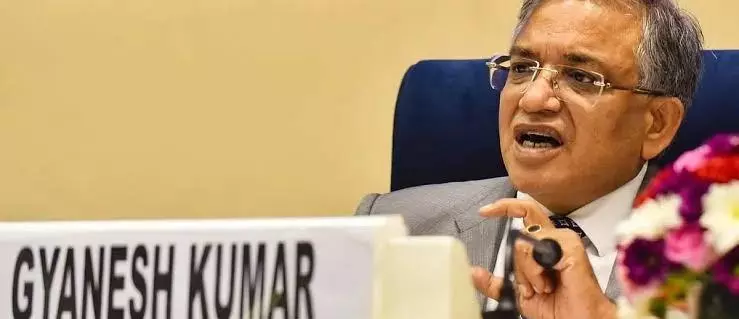







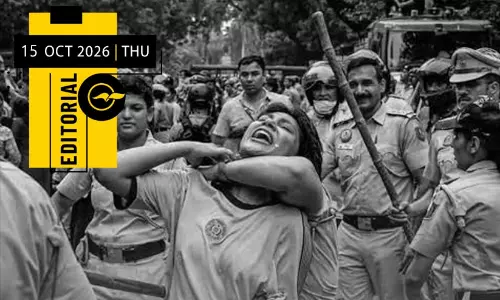







This commission cannot rectify its error
text_fields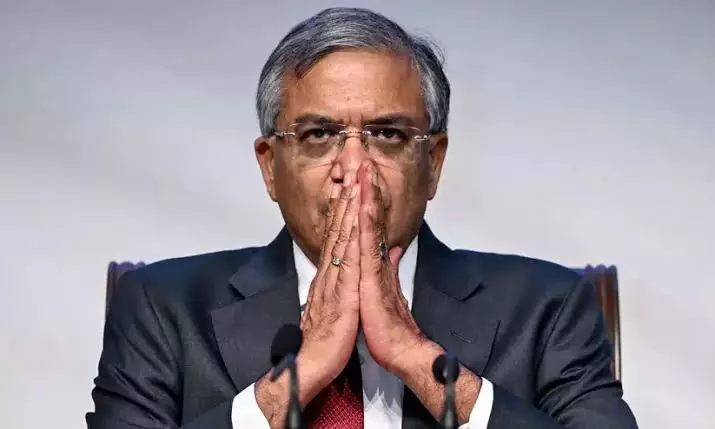

The Election Commission has expressed a willingness to announce a few corrections—and thereby extricate itself from the situation—only after its errors became public knowledge. This is merely a ploy to evade legal and moral consequences. Only inadvertent mistakes can be rectified; deliberate transgressions call for punishment first, not correction. Despite the existence of multi-tiered corrective mechanisms, the Commission rendered them ineffective and deliberately infringed upon citizens' rights. One cannot expect justice from a system in which subservience to the ruling authority is ensured by the very structure of appointments. The errors are not trivial. If the Chief Election Commissioner had the audacity to decide—without even the knowledge of the other two commissioners—which citizens should be granted voting rights, then the malady is not merely superficial; nor is it something that can be cured by a temporary application of medicine. The mere fact that the Chief Election Commissioner unilaterally and illegally altered Form 6—used for new voter registration—is sufficient grounds for his impeachment. After all, he adopted the stance that, despite the constitutional guarantee of the right to vote, only those approved by him would actually receive it. More than 10 crore voters were removed from the list under the 'SIR' category. There are no paper records available to verify the accuracy of these removals.
The authority to add or remove names from the voter list was stripped from local-level officials and placed under the control of the IT division in Delhi—all done without anyone else's knowledge. The principle that the Election Commission is not synonymous with the Chief Election Commissioner alone was repeatedly violated: the CEC kept updating the voter list without the other commissioners' knowledge, and deliberately delayed the registration of new-generation voters. Many elections were conducted based on such arbitrary lists. Can the Commission re-conduct elections that could effectively be considered subverted? How will the errors that have already occurred—including the serious denial of voting rights—be rectified? In West Bengal alone, 2.7 million voters were excluded from the rolls through software manipulation. Millions of complaints remain unresolved. Similar tactics reportedly took place in Delhi, Maharashtra, and elsewhere. The Commission which-- having deleted voters -- forced them to run from pillar to post with their grievances, and conducted elections while excluding crores of citizens—is now attempting to evade accountability by issuing a cavalier announcement of corrections. The corrections currently proposed by the Commission are inadequate, as they merely trivialise and justify past actions. In an area demanding absolute transparency, what can be rectified, and how, when grave offences have occurred and yet no one is held accountable? The Commission remains silent on matters requiring accountability. Who is responsible for denying millions their right to vote and forcing voters to scramble to prove their citizenship? It is a constitutional institution—central to the democratic process—that is attempting to evade responsibility after knowingly committing egregious wrongs, simply by promising to be more careful in the future.
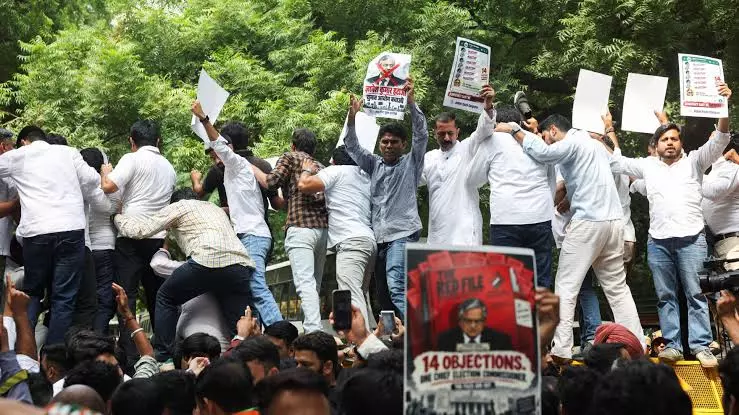
Furthermore, as for the claim that the Supreme Court upheld the Commission's insistence on a declaration accompanying Form 6, it is incorrect. Whose are the hands—which the Commission is reluctant to reveal—behind the hundreds of thousands of appeals filed against the retention of over 33 lakh individuals on the list, a move recommended by the court-appointed judicial officers? Although the Chief Commissioner bears primary responsibility for the errors, the other two members cannot entirely absolve themselves of accountability either. Despite having raised objections on 14 occasions, they silently extended their support to Gyanesh Kumar in front of the media. Even now, they have not been able to exert pressure for an internal inquiry into why they were kept in the dark all this time. What the Commission has done is merely a superficial remedy; the underlying ailment persists. Such measures would have sufficed had the issue been merely a procedural lapse or an isolated error. But that is not the case. The malady is a lack of integrity; it is subservience to the ruling establishment; it is the law which grants immunity that ensures protection regardless of one's actions. It is the arbitrariness involved in commission appointments. All of this must be rectified, and those responsible must be punished. The wrong they have committed is not something this commission can correct, because this biased commission itself is the problem.