







Popular anger should not be repressed
text_fields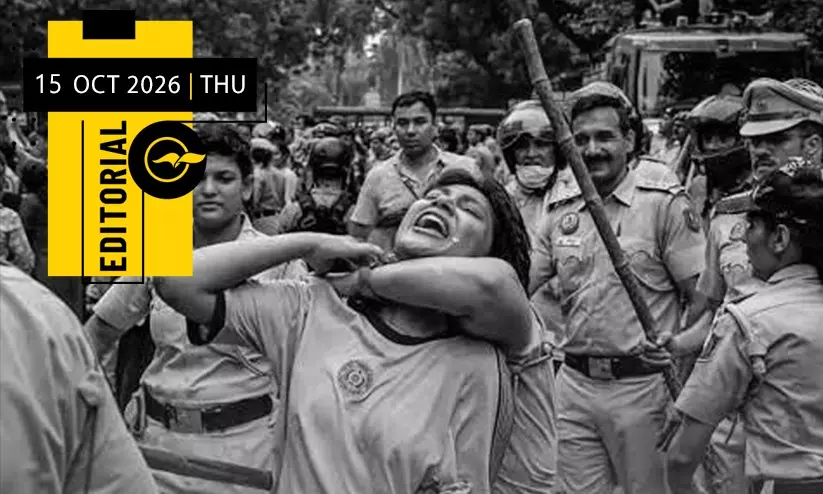

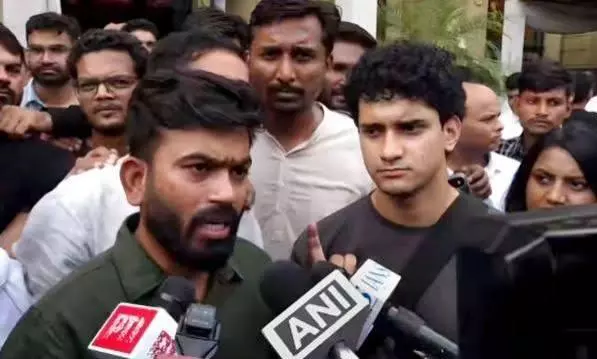
The opposition ‘INDIA’ alliance, and the youth movement ‘Cockroach Janta Party’ (CJP) along with other opposition parties are continuing their protests, demanding a halt to the Special Intensive Revision (SIR) of the voter list and the resignation of Chief Election Commissioner Gyanesh Kumar. The Delhi Police order issued on October 12—declaring Jantar Mantar, the primary protest venue, off-limits for demonstrations—must be viewed as a tactic to render this public outcry invisible. The police action partly relies on observations made by the Supreme Court just three days earlier, where the Court had explored whether an alternative protest site could be found especially in view of the the lack of basic amenities, such as restrooms, in the Jantar Mantar area.
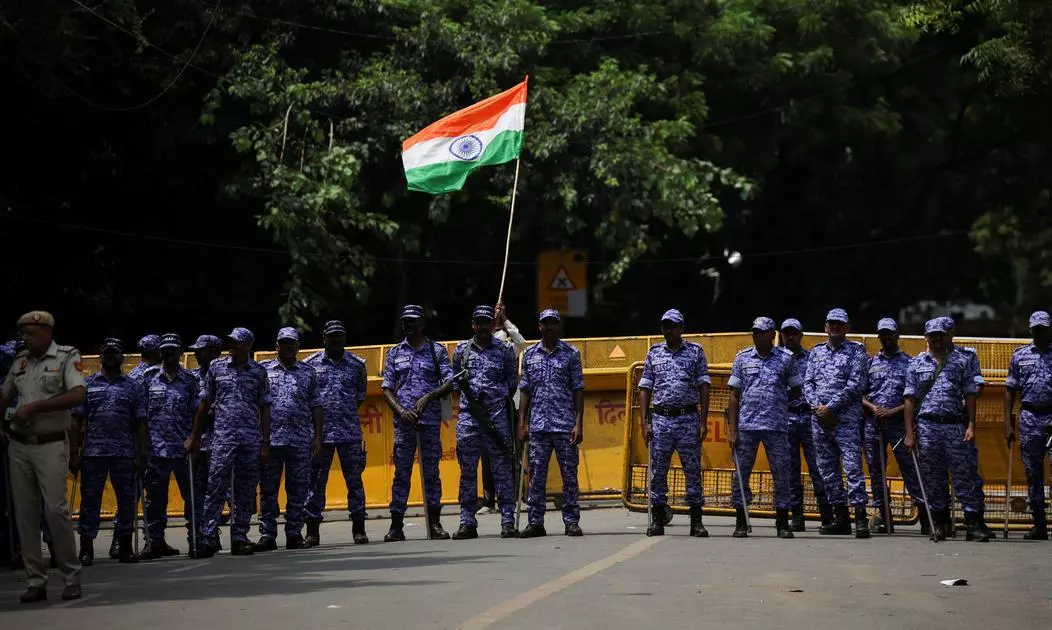
However, the precincts of the historic Jantar Mantar—built in the 18th century—have long served as a venue for reflecting the public sentiment of the times. A venue that has hosted numerous protests in recent times ranging from the 2011 anti-corruption movement and the 2012 Nirbhaya protests to the 2019 anti-Citizenship Amendment Act (CAA) demonstrations, Jantar Mantar has now become the site of a new confrontation. It is at this juncture that the Delhi Police have issued an order seeking to disrupt the rhythm of these protests just as their echoes are resonating across the country. It is another matter that protesters are likely to temporarily pause their agitation to avoid disrupting puja religious festivals in northern India. And if and when the protests resume at Jantar Mantar, it remains to be seen how law enforcement will respond.
Instead of Jantar Mantar, venues such as Ramlila Maidan (4 km away), Burari Ground (15 km away), and the Central Business District (CBD, 13 km away) have been proposed as alternate sites for protests. However, none of these locations offers the same visibility as Jantar Mantar, situated close not only to the seats of power—such as Parliament and government offices—but also to major media houses. This is precisely why CJP spokespersons and Opposition leader Rahul Gandhi immediately rejected the Delhi Police's decision. Protests and agitations are normally held in locations that capture the attention of relevant stakeholders and the general public. The CJP has stated that if the police do not respond to their letter within 24 hours with a suitable date and time for the protest at Jantar Mantar, they will organize a mass protest on a newly scheduled date. Meanwhile, CJP leaders Saurav Das and Ashutosh Ranka have been arrested and remanded to custody for five days for entering Jantar Mantar.
In 2020, the Supreme Court had declined a blanket permission to the police to forcibly evict protesters from Shaheen Bagh—a major hub of women-led protests against the CAA—citing COVID-19 restrictions. The court attempted to reach an agreement through discussions between the court-appointed envoys and the protesters regarding the protest site, but that did not succeed. At that time, the court had sought whether the obstruction of roads could be at least partially alleviated. And in the current context, the court has said that Delhi's metro, internet services, and road transport should not be totally suspended. The judiciary has maintained the stance that both the freedom of movement and the right to protest must be equally protected in a balance.
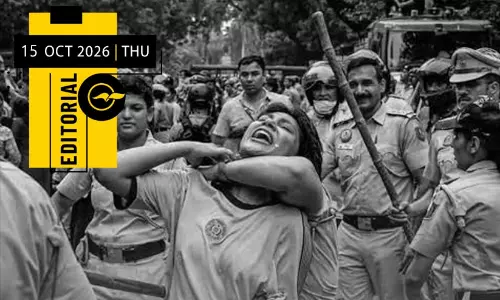
Beyond merely denying permission for protests, the police are also resorting to physical violence. There are numerous reports detailing the brutality committed by the police upon protesters arrested on Monday. Television footage captured the physical assault on member parliament, John Brittas. Even prior to that, on October 10, 11, and 12, the police had taken into preventive custody protesters—including minors—belonging to student and youth organizations. Those detained were transported in vans with specially partitioned cells, which resembled prison cells. Reports also spoke of police employing harsh tactics, such as denying water to those who asked to drink from bottles readily available there and even dragging women by their necks. It appears the government is under the illusion that popular protests can be ruthlessly suppressed through force. It is to be noted that these are protests directed against the process that removed over 13 crore voters from the electoral rolls—effectively depriving them of citizenship—and against the Chief Election Commissioner who bears primary responsibility for it. In this context, the struggles form part of popular resistance aimed at rectifying actions that undermine the very basic processes of democracy. Such resistance should not be allowed to be stifled or crushed under the pretext of space constraints or restrictions on freedom of movement.