













The court order that brought ‘Cockroach Protest’ to an end
text_fields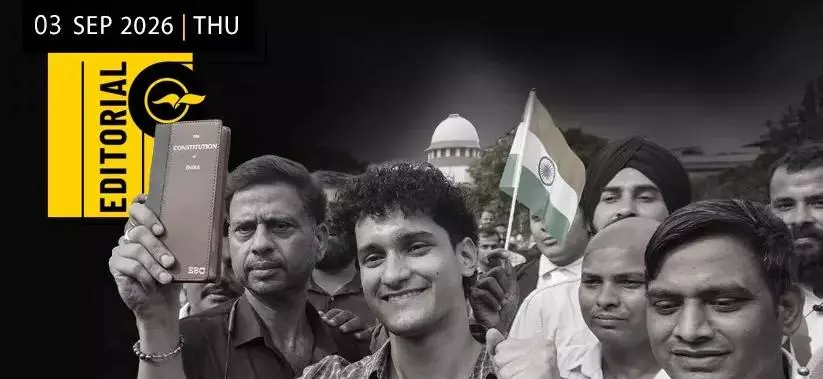

It was an unprecedented development in the country’s recent political history that the Union government took a decision to concede to the demands raised by the newly formed youth movement Cockroach Janta Party (CJP) during its protest at Jantar Mantar in Delhi, following the NEET question paper leak, the subsequent re-examination conducted by the National Testing Agency (NTA), and the alleged suicides of around 20 students in connection with the controversy. The protests culminated in the resignation of Education Minister Dharmendra Pradhan. However, since all the cases registered, including those in Delhi, had not been withdrawn and the other agreed demands had not been fully implemented, the CJP had planned to hold a mass march in Delhi on the 5th of this month. Meanwhile, petitions were filed before the Supreme Court seeking the withdrawal of FIRs registered against students. Based on the Solicitor General’s submission that the demand was acceptable to the government, the court itself passed an order accordingly. Cancelling FIRs that have already been registered is not something that can be unilaterally carried out by the executive. Since such cancellation of FIRs also requires the approval of the judiciary, the Supreme Court itself exercised the special powers conferred on it under Article 142 of the Constitution and ordered that the FIRs already registered would have no legal effect. The apex court invoked Article 142 out of the necessity to resolve the issue. The provision grants the apex court extraordinary powers to adopt other remedies when it is satisfied that the existing judicial process is inadequate to ensure complete justice in a particular matter.
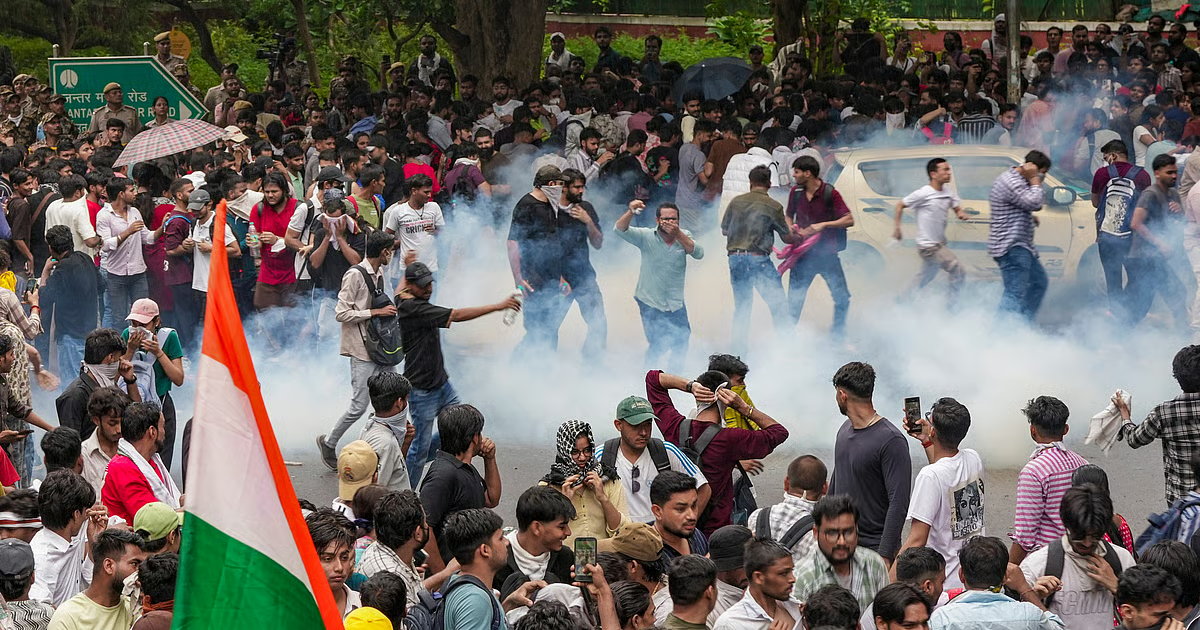
One of the most recent, and striking instances in which Article 142 was invoked was in the Ayodhya case concerning the Babri Masjid. The same five-judge bench that described the demolition of the Babri Masjid by Hindutva kar sevaks in Ayodhya in December 1992 as an egregious violation of the rule of law, also used its special powers under Article 142 to facilitate the construction of a temple on the disputed site. What is particularly noteworthy in the current case is that, through an order applicable across the country, the court has forestalled the FIRs that could potentially be pursued by different states. Equally significant is the fact that the BJP-led Union government itself supported the move. The reasons behind such a political decision by the Centre warrants special note. Even earlier, during the Cockroach Janta Party’s protests, the Centre appeared to have recognised the unprecedented public support the party and its movement was receiving. Realizing that allowing it to take deeper root would risk the soil under its own feet being swept away, the Centre made the necesssary concessions to check its growth. That is why Dharmendra Pradhan, a key cabinet member with an RSS background, was sacrificed, and the issue was brought to a close with little regard for the possible perception that they had given in to the demands. According to the Supreme Court’s order, the FIRs registered by the Delhi Police and the states of Maharashtra, Assam, Bihar and West Bengal in connection with protests held between July 20 and 25 will stand quashed. Any FIRs registered by other states or Union Territories will also be closed without further proceedings or investigation, except in cases involving physical assault or damage to property. As for the compensation to those who lost their lives, the Union government has been directed to formulate a nationwide policy on compensation within three months and circulate it to the states and other authorities responsible for implementing it. Once the policy is finalised, compensation must be handed to the families of students who died by suicide following this year’s NEET examination. The court also recorded a statement by CJP co-convener Saurav Das announcing the withdrawal of the protest march to India Gate scheduled for September 5. Following the statement, protests have been called off for the time being.
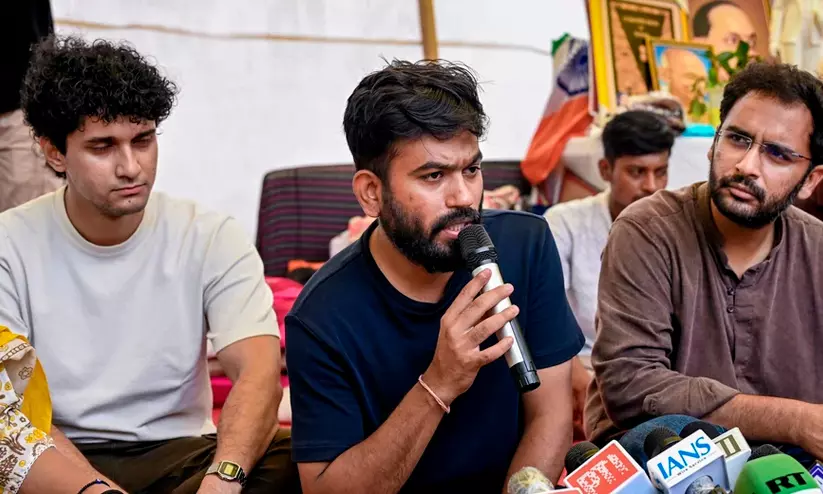
The developments in Delhi once again demonstrated the success of the Cockroach Janta Party’s (CJP) protest and strategy. For the BJP-led alliance, which has so far relied on electoral victories built around divisive politics and communal polarisation and helped by a fragmented opposition, the strength of issue-based protests and the anger of young people emerging from the victims represent a challenge unlike any it has encountered before. The government has also realised that the strategy of diverting public attention from genuine problems and keeping people focused on emotional issues, while projecting hollow claims of economic growth and development, will not work in this instance. The NEET controversy itself demonstrated this. Instead of making a sincere effort to identify and prosecute those actually responsible for the question-paper leak, the government’s attempt to create the impression of stern action by removing around 50 officials, failed to address the core issue. The CJP’s protest eventually compelled the government to take more substantive measures. The CJP movement can therefore be said to have temporarily come to an end on Tuesday, but not without leaving behind an important lesson: citizens can, if united and determined, use democratic means to compel elected governments to confront issues that directly affect the people.