









The call of hunger
text_fields

While Prime Minister Narendra Modi proudly declares at every possible platform that India has grown to become the world’s third-largest economic power, the Global Hunger Index (GHI) 2025 paints a different picture. Do we realise where India stands in that list? Out of 136 countries, India ranks 102nd. The Hunger Index is prepared based on four key indicators, namely undernourishment, child stunting (low height for age), child wasting (low weight for height), and child mortality. Based on the scores, countries are categorised as having low hunger, moderate hunger, serious hunger, or alarming hunger. With a score of 25.8, India falls under the “serious hunger” category — even more than three-quarters of a century after independence. Below India, in the “alarming hunger” category, are countries such as Somalia, South Sudan, Congo, Madagascar, and Haiti. These are nations suffering from intense internal conflict, political instability, violence, and natural calamities. On the other hand, India which prides on being the world’s largest democracy, stands on the foundation of a secular, democratic, and socialist Constitution with regular and fair elections. The country does not face administrative instability, internal conflict, or widespread national disasters. It is also self-sufficient in food production and ranks among the world’s largest food producers. Moreover, there is not a single state in India without a proper public distribution (ration) system. Yet, how has the country found itself in the “serious hunger” category?

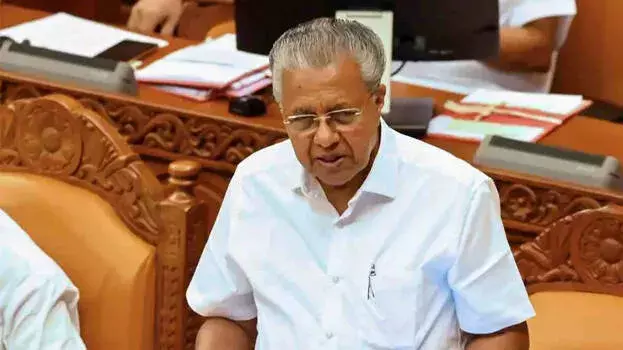
Among our neighbouring countries, only Pakistan (ranked 106th) and Afghanistan (ranked 109th) are placed below India. China, which has a population comparable to India’s, ranks 6th on the list. Sri Lanka is ranked 61st, Nepal 72nd, and Bangladesh 85th. When examining the situation within Indian states, based on the same criteria, Chandigarh, Sikkim, and Puducherry rank at the top, followed by Kerala, which performs best among the larger states with a good score. Kerala falls under the “moderate hunger” category. Even Chief Minister Pinarayi Vijayan, who declared Kerala as free from extreme poverty, admits that the state still remains poor in many respects. The only consolation is that there is no severe hunger in Kerala. Meanwhile, states like Bihar, Jharkhand, and Chhattisgarh which fall under the “alarming hunger” category, are grouped alongside some of the world’s poorest nations such as Haiti, Niger, Liberia, and Sierra Leone. Why does such a vast gap exist between Indian states? And why does the nation as a whole lag far behind countries like Bangladesh and Nepal in the hunger rankings? These are serious questions that demand answers. The reasons lie in many interconnected issues: the government’s misplaced priorities, its greater emphasis on power and display of strength rather than addressing human problems, the impermissible inequality in wealth distribution, economic policies that favour corporations and large capital interests, as well as deceit, extravagance, corruption, and a deliberate marginalisation of certain sections of society. All these factors together have led to India’s low position in the global hunger index.
Elections are meant to be crucial moments when people’s real problems are discussed seriously. However, ever since the Hindutva alliance came to power at the Centre and in most states, fundamental issues such as poverty, unemployment, and poor health have been completely neglected. Instead, unrealistic and emotionally charged subjects have taken centre stage in the campaigns of those who rule the country. This was clearly evident in the election campaigns for the assemblies of Rajasthan, Madhya Pradesh, Maharashtra, Haryana, and Jharkhand. In the most recent Bihar assembly election, Prime Minister Narendra Modi and Home Minister Amit Shah made sending back the so-called “illegal infiltrators” from Bangladesh their main campaign theme. But no one bothered to ask the obvious question as to why people from Bangladesh, which has a rank of 85 on the Global Hunger Index, want to sneak into India, which stands much lower at 102nd? Once mocked by former U.S. Secretary of State Henry Kissinger as an “international basket case,” Bangladesh today has surpassed India in several areas, both economically and in terms of employment. Yet, the glaring contradiction of using money which should have been used to eradicate hunger among millions of India’s poor was instead spent on constructing gigantic statues has never been seriously questioned. What promise did Amit Shah make to the people of Bihar, who continue to struggle in conditions of extreme hunger? An 800-crore temple dedicated to Goddess Sita would be built there. None of the VVIP guests of Mukesh Ambani, who spent Rs 5,000 crore on his son's wedding, noticed the pitiful faces of the poor children crying for a single meal in Gujarat. Those who expect the ones carrying the ugly faces of capitalism to take India off the poverty list are undoubtedly in a fool's paradise.