

















Passport: definitely a document issued to citizens
text_fields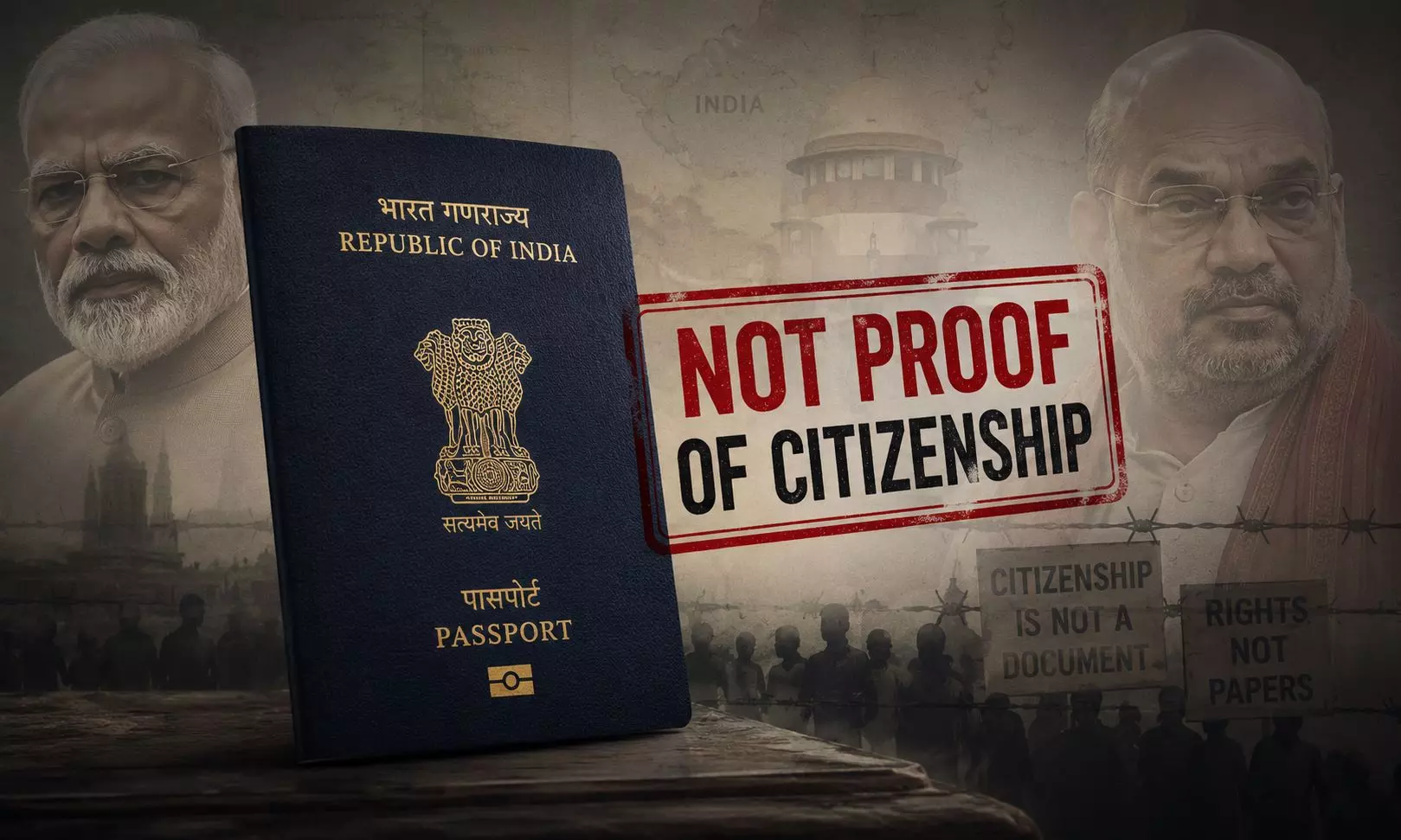

The statement by the External Affairs Ministry spokesperson that a passport is not a document of citizenship has become controversial, more so in the context of the policy approaches of the Union government. The statement has created confusion as well as concern. Not only Indians but also governments of foreign countries consider a passport as an important proof of Indian citizenship. The ridiculous contradiction that it is “proof” of citizenship but not a “document” proving citizenship, although it can be said to be the result of a difference between practice and technical understanding, gives the government excessive and undue power in the fundamental issue of citizenship. That is where this ambiguity becomes dangerous in the current situation. It is true that Section 20 of the Passport Act (1967) allows the Union Government to issue passports to non-citizens in special circumstances in the public interest. However, this is not a rule; it is only an exception to the rule. This section has been invoked very rarely, for example, in the case of Sri Lankan refugees. It is not logical to treat an exception to the law as a rule. Similarly, it is not right to generalize the Bombay High Court's (2013) decision not to require passports as proof of citizenship in the specific context of illegal entry.
Another argument is that although citizenship is granted under the Citizenship Act of 1955, passports are issued under the Passport Act of 1967. This again is pointless. According to the Citizenship Act, passports are issued after strict citizenship checks (except in rare cases where it is determined in advance that a person is not a citizen). So, wouldn't it be logical under the law that a passport is a document of citizenship? The Passport Manual states that a passport is proof of “nationality”. According to Section 6(2)(a) of the Passport Act (1967), a passport cannot be issued to an applicant who is not a citizen of India. The only exception to this is Section 20 of the Act. In the Maneka Gandhi case of 1978, it was settled that a passport is conclusive evidence of Indian nationality, and that those who have Indian nationality and thereby a passport, are entitled to all services from India's offices abroad. Saying that the passport, which is considered the most reliable proof of citizenship, is not a citizenship document opens the door to excessive power and injustice. The Union government and the Supreme Court have already taken the position that Aadhaar is not proof of citizenship. Even then, the country believed that the passport was a definitive document of citizenship. Instead, the existence of loose definitions that the authorities could adapt at will allowed the government to apply them in an anti-people manner. And the Election Commission has been able to remove lakhs of eligible voters from the voter list because of the ambiguities being created regarding the documents.
The Election Commission itself, which included a passport as one of the documents indicating citizenship, excluded many people from the SIR in West Bengal despite having a passport. The ambiguity created now also gives more support to such a denial of citizenship. We are also seeing it being applied in some states to the extent of even giving room for a change of government. Although the passport statement of the Ministry of External Affairs came in response to a question from a reporter of ‘The Hindu’ newspaper on the occasion of Passport Seva Day, this technique and ambiguity can become a weapon in the hands of a government that displays aggressive, overbearing tendencies. Saying that passports should be issued only to those who can prove they are citizens, while at the same time saying that a passport is not a document of citizenship, can only be understood as sophistry that is not in line with logic or democracy. It paves the way for the government to gain the illegitimate power to decide who is a citizen. Those who do not hesitate to remove voters from the voter list will not hesitate to make citizens stateless. The argument that in effect makes people living and travelling all over the world - and even officials appointed by the Indian government - stateless, is a shame for the country.