







Hasina's future and Indo-Bangla ties
text_fields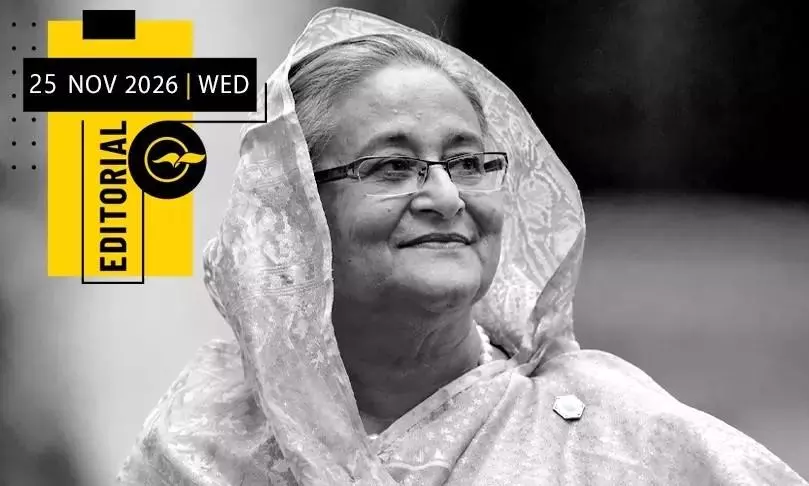

Recent reports indicate that Bangladesh, which had been relatively calm since the Bangladesh Nationalist Party came to power with a two-thirds majority in the general elections held in February 2026, is once again heading towards unrest. It is not too late to forget that in July 2024 the then Prime Minister Hasina Wajid, who dealt with the student protests which shook the country with an iron fist, shed blood in the country and led to the utter collapse of peace. According to the United Nations, at least 1400 people were killed that day. The massacre carried out by the ruling Awami League, the police, and the army culminated in Prime Minister Hasina's escape. What has once again stirred up the atmosphere now in Bangladesh is the moves being made by Hasina, who sought asylum in India in early August as planned, to return to her country in December 2026.
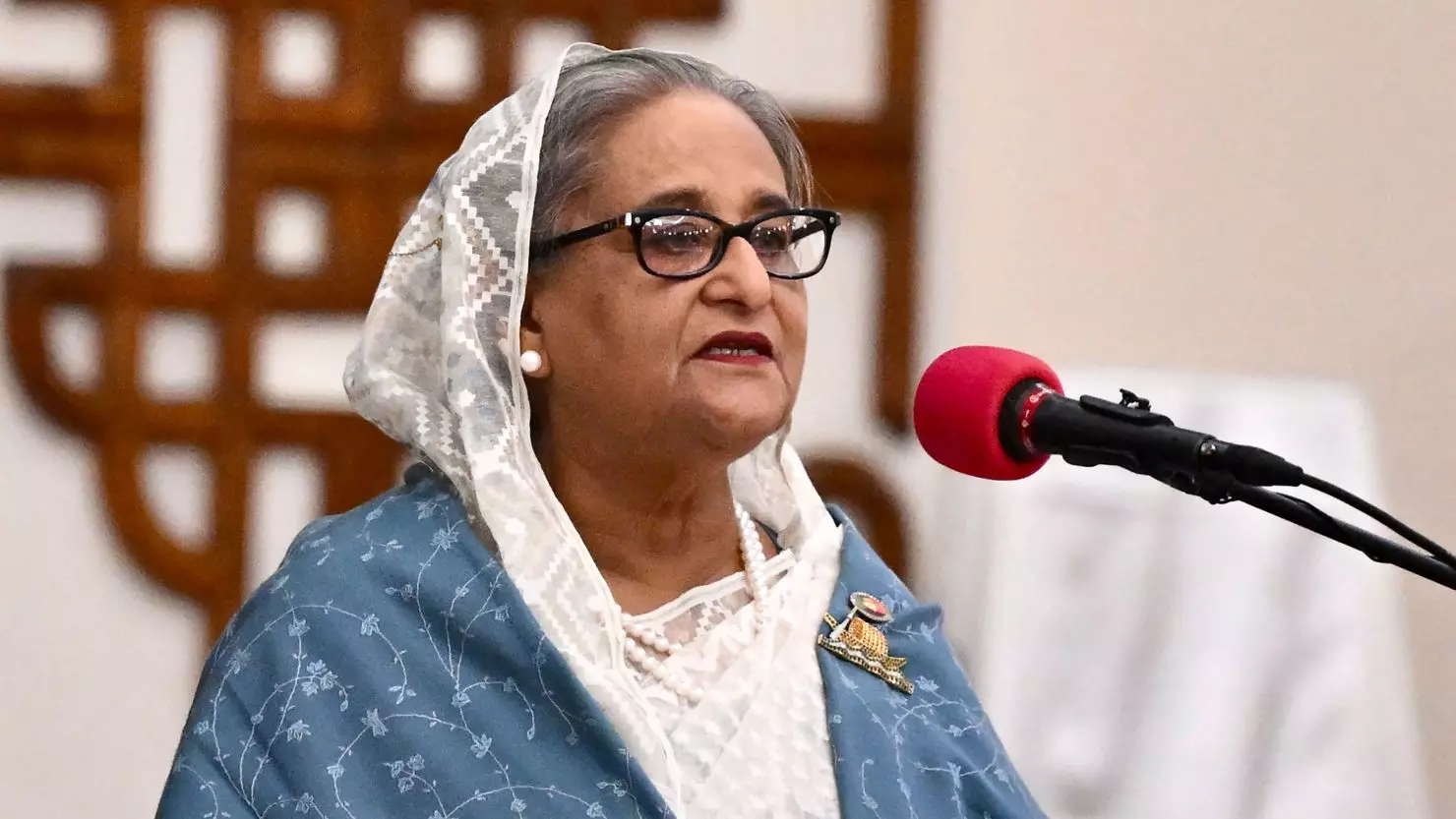
The fact that the international tribunal she herself set up to destroy her opponents, sentenced her to death for war crimes in her absence can be termed only as a revenge of fate. For the international tribunal was a slipshod machinery set up by herself in aconspiracy to have the Bangladesh Jamaat-e-Islami leaders sentenced to death half a century after they were accused of collaborating with the Pakistani army in a bloody operation in 1971. But the question of why she has declared her desire and decision to return to her country at this time, when India has kept them safely without formally declaring asylum, remains unanswered. Bangladesh Prime Minister Tarique Rahman has repeatedly demanded that India hand her over to the Bangladesh government, as the former prime minister is a criminal sentenced to death. Since India has neither accepted nor rejected this demand so far, relations between the two countries remain uncertain. When meetings of multilateral organizations of which Bangladesh is a member are held in India, the uncomfortable situation of that country not being able to attend continues indefinitely. Most recently, the Ganges Water Treaty signed between India and Bangladesh on December 12, 1996, which is 30 years old this year, is awaiting an urgent solution to the issue of its renewal. The Indian delegation, which arrived in Dhaka for discussions on the matter, held a joint meeting on November 22 and 23. However, no information has been released about any decision to renew the treaty.

It is to be assumed that while our country's relations with Pakistan continue to be at their worst, Prime Minister Narendra Modi is seized of the fact that being at loggerheds with Bangladesh too would be detrimental to national interests. India, which has been closely monitoring the developments in Bangladesh, has acted with complete restraint so far. The restraint is probably due to the conviction that turning its back on Bangladesh, which shares a 4,000-kilometer border with India, for a long time will not be beneficial. Meanwhile, it remains to be seen what will happen to the current outburst of the now banned Awami League, which realizes that it cannot regain its strength and relevance by keeping its leader in exile indefinitely. The Awami League is a party that supported Begum Khaleda Zia's BNP in the elections to prevent their arch-enemy, the Bangladesh Jamaat-e-Islami, from coming to power. The fact that it has to 'fight' with the government led by the same party is one of the strange mandates of fate. Reports say that four people have been killed and hundreds of houses destroyed in the violent riots. The house of Nobel Peace Prize laureate Muhammad Yunus, who had to take over the country's reins following Hasina's flight, was also among those destroyed. It was Muhammad Yunus's interim government that accepted the demands of the student protesters to ban her party and denied the party the opportunity to contest the elections. It may be a travesty of fate mocking at the Awami League that it was the Hasina government which banned the Jamaat-e-Islami for 15 years. Independent observers are of the view that the killings and arson cannot be seen as part of a political movement. They are also confident that the law enforcers will not have any difficulty in controlling it since it has not spread throughout the country. In any case, one can assume that our rulers will show the wisdom to not push our neighboring country, Bangladesh, into the enemy camp merely in the name of the just or unjust stance of a lone Hasina.