








Fiscal federalism is in danger
text_fields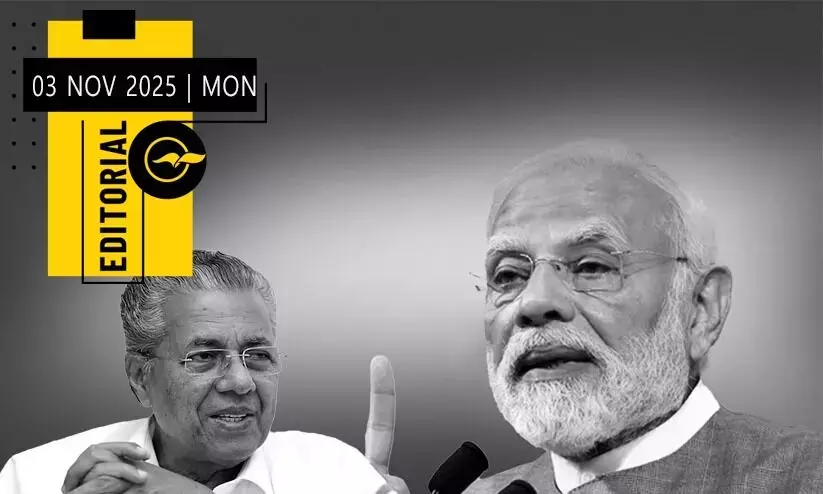

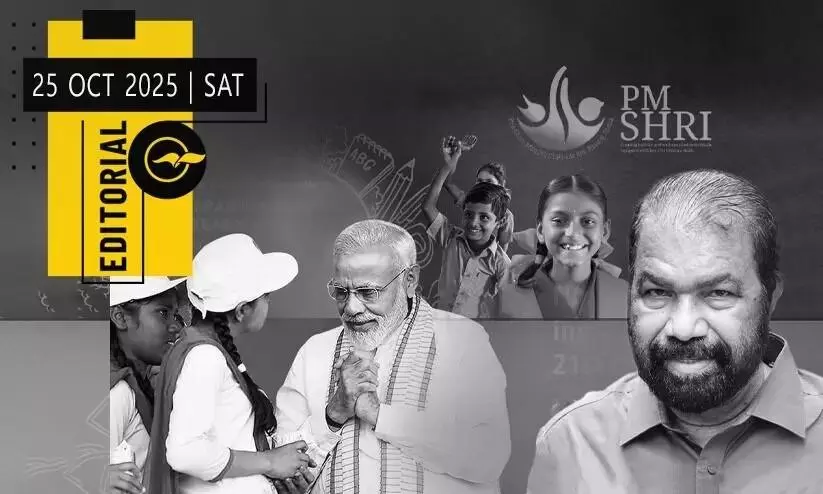
Although the crisis in Kerala’s ruling front regarding the PM SHRI agreement has been resolved for now, the underlying reason for signing the agreement remains the same. It has been decided that the state government will write to the Union government demanding that the agreement be frozen. A cabinet sub-committee will review the PM SHRI. In fact, although this review helped to freeze the crisis in the coalition, the fact is that it has no logical relevance. Even those who signed the MoU may not think that the signing of the MoU was correct in terms of ideology or procedure. Neither PM SHRI nor the National Education Policy has ever been acceptable to the Front or its allies. Kerala has already achieved what the North Indian states are achieving through PM SHRI. An agreement that is ideologically incompatible, even putting the Front in a crisis, was signed only to get funds for the quality that has already been achieved. The core of the problem is that the Union government is making the states work as slaves by withholding funds. It remains to be seen how practical the decision to withdraw from PM SHRI, if necessary, is. Even if it is practical, the problem of not getting the funds that are due remains. In short, the Union government's policy of forcing people to join an unwanted project is a bigger problem than joining it. That problem remains as such.
Even if PM SHRI is no longer in force, there is a need for a political and legal fight against the anti-federal and unconstitutional Union government's practice of financially strangling the states. There is blatant discrimination in the allocation of tax revenue and in the provision of grants for various schemes. The pre-GST rights that the states had were lost with the introduction of GST and the solutions that were promised at that time were not delivered too. The mechanisms of fundraising and distribution, which were previously managed above party politics, have been centralised under the Union Government. The insistence in the last few years that only those states that implement projects according to the narrow political vision of the PM SHRI is just one example of this. The Modi government began its efforts to strangle the states financially and force them into political submission as soon as it came to power in 2014. The Prime Minister's Office had put pressure on the 14th Finance Commission to make a significant cut in the 42 per cent tax share allocated to the states. Unwilling to yield to this, the commission headed by YV Reddy passed the same share, but then the Union government had a history of hastily changing the Union Budget and reducing the allocation for welfare and education by half. Later history has also shown that the trick behind the introduction of GST was fiscal restraint.
This resource concentration continued by reducing the share of the states and relying more on taxes and surcharges that do not have to be shared with the states. During 2015-20, while the southern states (mostly those ruled by non-BJP parties) alone contributed 22.26 lakh crore to the Union exchequer in GST and direct taxes, they received only 6.42 lakh crore back. While the BJP-ruled states are given ample funds, they are also withholding what is due to others. The weapon used for this is the condition that the policies and schemes of the Union government should be implemented. Out of the Rs 1,73,040 crore allocated in January this year, UP alone was given 17.95 per cent; all five southern states together got just 15.8 per cent. In the case of PM Shri, Tamil Nadu is in a legal battle for federal rights. This should be expanded to ensure fairness in the total financial allocation, and states, including Kerala, should also join as a party. It is time for a broad struggle to uphold federalism and the Constitution.