














A fragile truce in Trump’s ill-judged war
text_fields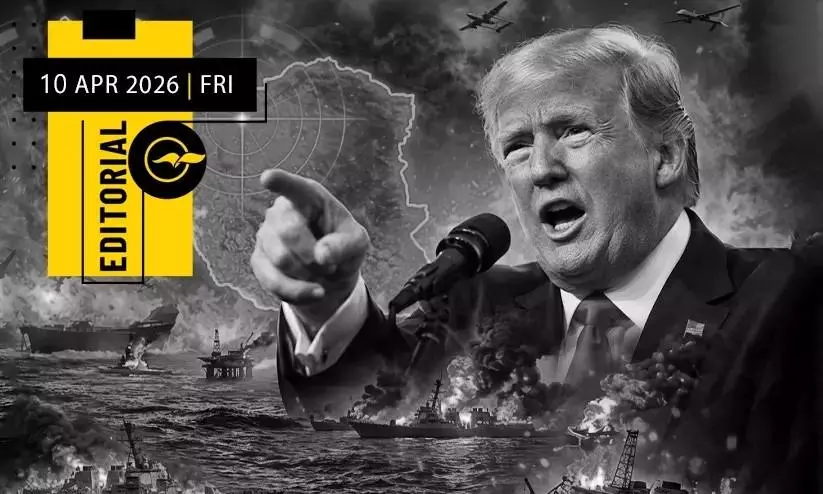

US President Donald Trump and his ally, Benjamin Netanyahu, having forced an utterly unjustifiable war upon Iran, sowing misery not merely within that sovereign state but across the wider world, have been compelled to bring their campaign to an abrupt halt, with their military ambitions entirely unrealised. It was upon the promise of a fortnight’s conditional ceasefire and imminent peace negotiations that the military strikes over the past forty days were declared temporarily suspended. This delicate accord was forged through the concerted initiatives of Pakistan, Turkey, and Egypt, whilst China played a role quietly from the shadows. In accordance with this pact, bilateral dialogues are anticipated to commence on Friday April 10 in the Pakistani capital of Islamabad.
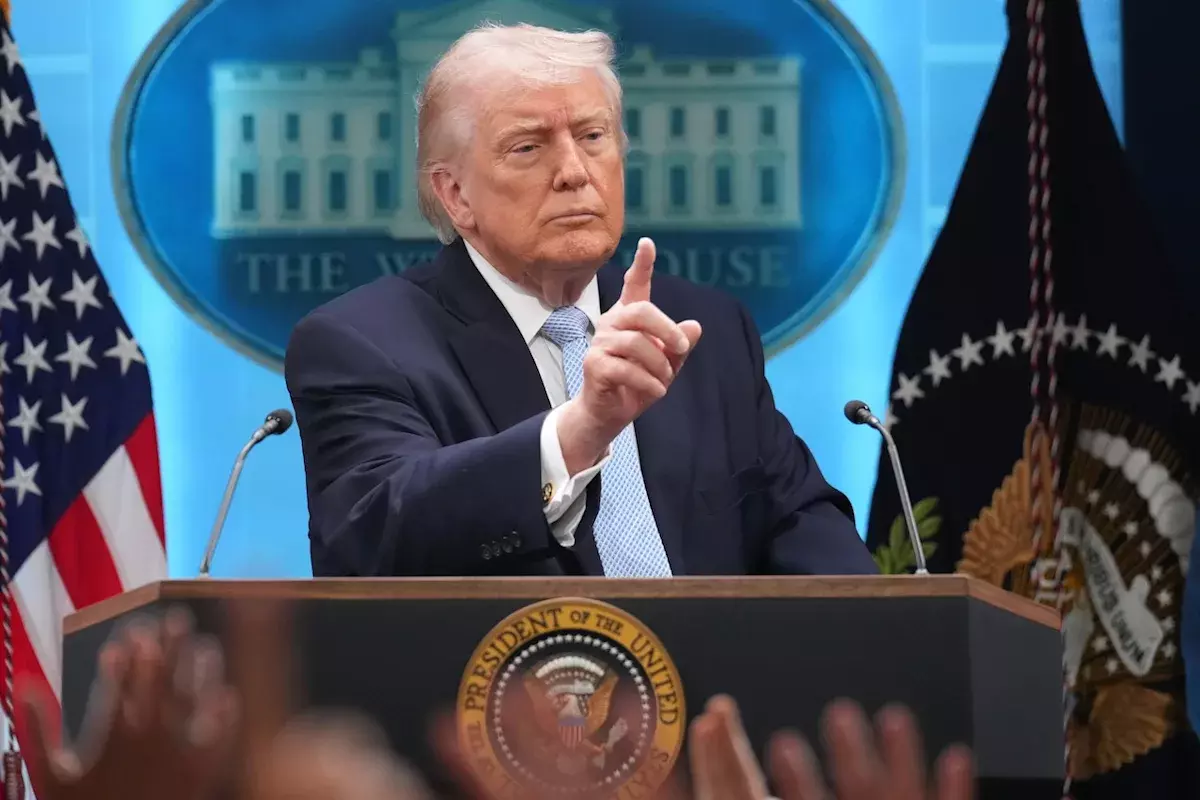
For forty days, as the sky and the earth alike were consumed by conflict, official figures grimly recount that upwards of two thousand souls—amongst them children and the infirm—perished in Iran, alongside more than five hundred in Lebanon. Tens of thousands were left wounded. The airstrikes wreaked devastating ruin upon the region's vital infrastructure. In retaliation, Iranian strikes against Gulf nations harbouring American bases inflicted catastrophic losses, effectively putting the oil and natural gas industries behind by several years. This was further compounded by a paralysis of commerce and an economic malaise, born of Iran’s closure of the Strait of Hormuz. Anxiety and the loss of livelihoods swept through vast swathes of the populace, not least amongst the Indian expatriate community residing in the Gulf. In an act of unprecedented belligerence, the United States and Israel had ignited the hostilities on 28 February by assassinating the Iranian head of state, his family, and the upper echelons of the ruling leadership. The ensuing Yankee-Zionist onslaught also claimed the lives of key figures, including Ali Larijani, the former head of security and senior advisor, as well as the army chief, Abdolrahim Mousavi. Amidst the chaos, Iran mounted a formidable counter-offensive, launching volleys of missiles and drones at US and Israeli military installations across the Gulf. Yet, the American campaign—launched with the solemn vow to never rest until it had neutralised Iran’s missile and drone capabilities, alongside its nuclear ambitions—failed entirely to secure any of its stated objectives. It is true that Iran suffered colossal damage to its civilian, military and industrial assets. However, on the opposing side, President Donald Trump betrayed a ludicrous state of disarray, frequently shifting both his war aims and the ultimatums delivered to Iran. Sometimes, Trump and Benjamin Netanyahu even mentioned regime change in Tehran as their ultimate goal. Yet, those Iranian opposition factions, which moments before the war had protested with their internal grievances, were nowhere to be seen on the streets clamouring for the government's downfall. At one point, Trump was even reported to have contented with the delusion that by assassinating the ruling elite, a change of regime had somehow been achieved.
As the transport of petroleum through the Strait of Hormuz became fraught with peril, prices surged, dealing a staggering blow to the very foundations of the global economy. This crisis was twofold: on one hand, the physical scarcity of fuel followed Iran’s closure of the Strait, through which a fifth of the world’s oil production has to pass, coupled with its targeted strikes against industrial hubs in the Gulf. On the other hand, the volatile speculation inherent in the market economy drove prices up to exorbitant heights. President Donald Trump’s grand design to loosen Iran’s stranglehold upon the Hormuz has, thus far, remained an exercise in futility. Furthermore, among its ten-point proposals put forth for the peace negotiations, Iran has maintained an uncompromising stance on this very issue. Only if the contradictions between this and the US's 15-point proposals, are reconciled can the peace process hope to find a way forward.
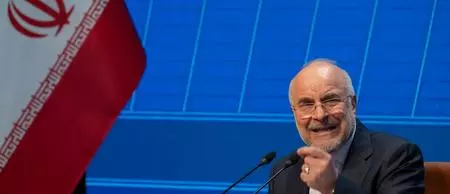
If lasting peace is to be secured in the Middle East, a fundamental shift in American policy is imperative. The primary requisite for that is for the United States to relinquish its self-appointed position as the world’s policeman. This means the US should cease borrowing from the flawed logic of Israel, a nation obsessed with the pre-emptive neutralising of Iran’s nuclear and missile capabilities. America must also grasp that engaging in such an aggressive stratagy alongside Israel is no simple feat when directed at a country of Iran’s vast geography and a populace so fervently prepared to defend, even by giving their lives, its national assets, including its nuclear facilities. The consensus among international observers, foreign policy experts, and even members of Donald Trump’s own Republican Party is clear: military adventures of this magnitude should not be undertaken blindly on the prompting by Israel, devoid of precise objectives or a coherent strategy. The sooner America internalises these lessons, the brighter the outlook for global peace and stability of the world economy.