










Zohran Mamdani’s win: a lesson in representation and moral leadership for India
text_fields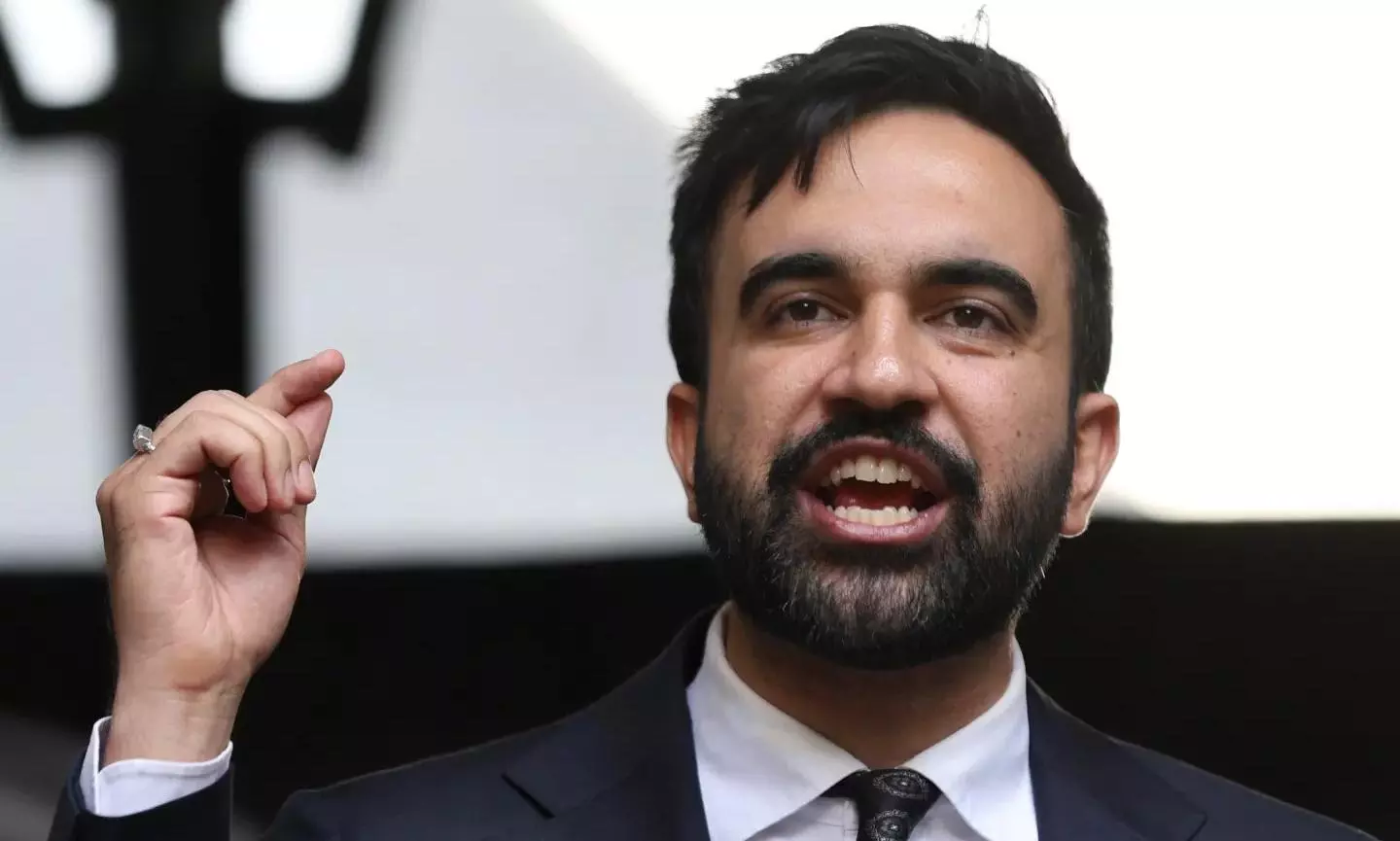
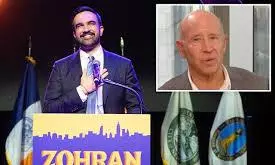
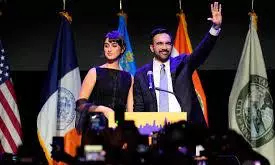
“I am young despite my best efforts to grow older. I am Muslim. I am a democratic socialist. And most damning of all, I refuse to apologize for any of this.”
— Mayor Zohran Mamdani, victory speech, New York City
Zohran Mamdani’s historic win as New York City’s first Muslim mayor marks more than a political milestone—it’s a cultural and moral statement about belonging in an era of fear and division. His refusal to apologize for who he is—Muslim, South Asian, immigrant, and democratic socialist—was not defiance for its own sake. It was a declaration that integrity and faith can coexist with leadership in the modern world.
For millions of minorities and Muslims across the United States, Mamdani’s victory represents a long-overdue recognition that identity need not be concealed to be accepted. It proves that inclusion is not merely symbolic, but substantive when backed by courage and competence.
Mamdani’s victory speech was both personal and political. It spoke to a generation raised under the shadow of 9/11, where Muslim identity has been scrutinized, politicized, and too often vilified. For decades, Muslim Americans were told to integrate by erasing difference, to participate by muting faith, and to succeed by staying silent about injustice.
Mamdani rejected that bargain. The son of Ugandan-Indian immigrants—his father, the scholar Mahmood Mamdani, and his mother, filmmaker Mira Nair—he embodies a cosmopolitan identity that transcends simplistic binaries. African and Asian, Muslim and Western, progressive and principled, Mamdani symbolizes the possibility of belonging without assimilation.
His campaign broke with political convention. While others distanced themselves from controversy, he spoke openly about poverty, Palestine, and policing. His critics labeled him a “radical” and tried to weaponize his faith against him. Yet, as the Brookings Institution noted, his success was a rejection of political gatekeeping—a reminder that authenticity, when coupled with competence, can cut through fearmongering.
Much of the media framed Mamdani’s win as a triumph of socialism. But it is important to clarify what kind of socialism he represents. His vision is not the Marxist or communist rejection of faith and markets; it is a moral, humane form of democratic socialism rooted in fairness and responsibility.
In many ways, his worldview resonates with the Islamic economic ethos—a moderated model that blends free enterprise with social welfare. Islam encourages entrepreneurship but condemns exploitation. It protects private property yet insists on public accountability. In other words, it is capitalism with a conscience.
Mamdani’s platform—rent freezes, universal childcare, and free public transit—reflects that moral balance. It recognizes that economic systems must serve people, not the other way around. His politics are not about redistribution for ideology’s sake, but about ensuring that opportunity is not a privilege of birth or wealth.
This distinction is vital. In a polarized political landscape, Mamdani represents not the rejection of capitalism, but its moral correction.
For Muslims and minorities in America, Mamdani’s win carries both symbolic and structural meaning. It challenges the lingering assumption that Muslim identity is incompatible with civic leadership. His unapologetic embrace of faith, coupled with a record of ethical activism, reclaims public space for Muslims as citizens, not suspects.
This transformation didn’t happen overnight. It took years of grassroots organizing, coalition-building, and moral consistency. It also required the courage to confront Islamophobia not with anger, but with integrity. As Politico observed, Mamdani’s success lies in his ability to transform marginalization into moral authority—showing that representation without values is hollow, but representation anchored in justice can be transformative.
Mamdani’s rise holds lessons far beyond America. For India—and particularly for Kerala, where Muslims have long been part of a pluralistic, progressive, and politically engaged social fabric—his story offers inspiration and caution in equal measure. Here is a Muslim leader succeeding not by exploiting faith for power, but by embodying faith as compassion, humility, and service.
In India’s current climate, where religious identity is increasingly politicized to divide rather than unite, Mamdani’s example offers a powerful counter-narrative. He shows that it is possible to be rooted in faith while championing universal justice—that Islam’s political vision, when rightly understood, is not about domination but dignity.
Moreover, Mamdani’s victory underscores the importance of diversity within Muslim societies themselves. His African-Asian heritage and pluralistic outlook challenge narrow notions of who speaks for Islam. For India—with its vast spectrum of regional, linguistic, and sectarian identities—his inclusiveness offers an important reminder: diversity is not a threat to faith; it is its moral test.
In a world increasingly defined by cynicism and populism, Mamdani’s win restores faith in politics as a moral enterprise. His refusal to apologize for his multiple identities—religious, racial, ideological—signals the arrival of a new kind of Muslim leadership: one that is confident without being confrontational, principled without being dogmatic.
It also redefines success. In an era obsessed with celebrity politicians and billionaire donors, Mamdani’s journey from grassroots organizer to mayor demonstrates that authenticity still resonates. His campaign wasn’t powered by money, but by moral credibility—the most undervalued currency in politics today.
For Muslims in the West, his victory validates the idea that faith can inform fairness. For India and other multi-faith democracies, it offers a lesson that politics rooted in ethics can still inspire across divides. For the world, it is a reminder that leadership built on conscience can endure even in times of polarization.
Zohran Mamdani may be the mayor of one city, but his message travels far beyond its borders: that justice is not a Western ideal or an Islamic one—it is a human one. His success challenges both Islamophobes who fear Muslim power and Muslim leaders who misuse it.
In his refusal to apologize, he has done something remarkable: he has made faith visible again—not as a threat, but as a bridge between conviction and compassion.