














Mamdani's meteoric rise to New York mayorship
text_fields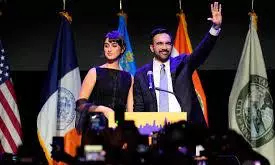

The convincing victory of Indian-origin Zohran Mamdani in the New York mayoral election on Tuesday was unique and historic in many ways. He is the first South Asian mayor of New York with Indian roots, and also the first Muslim to hold this office. At 34, he is now the youngest mayor in the city’s history. Although Mamdani contested as a Democratic Party candidate, an interesting detail is that his main opponent was former New York Governor Andrew Cuomo, who also ran against him in the primaries of the same party and lost. Then he quit the party and entered the contest as an independent candidate. In an election where more than two million votes were cast, Mamdani secured over 51 percent of the votes, while Cuomo received 41.7 percent. Republican candidate Curtis Sliwa received just seven percent. The traditionally visible Republican presence in New York City was notably absent in the voting patterns — perhaps because their entire focus was centred on one goal: defeating Mamdani, with consequent switch of Republic votes to Cuomo.
Also read: Zohran Mamdani quotes Nehru in victory speech after winning NYC mayoral race
Leading the opposition against Mamdani was President Donald Trump himself, who actively campaigned. One of the topics that has been debated for months is the family and national background of immigrant Zohran Mamdani. Born in Kampala, the capital of Uganda, to Mira Nair — an Indian film director and producer with family roots in Kerala — and Mahmood Mamdani, a university professor from a Gujarati Muslim family, Zohran Mamdani moved to South Africa at the age of five and then at seven to the United States with his parents. In a country with a long history of immigration, he rose to prominence in the political arena through his education, ideas, and hard work. The anti-immigration Republican President Trump was especially resentful of Mamdani — not only because he is an immigrant, but presumably also because he is Muslim.
Trump threatened to use his presidential authority, if Mamdani won, to withhold funding for New York, deploy the National Guard to take control of law and order, and even deport Zohran Mamdani. However, Mamdani’s campaign focused on connecting with ordinary New Yorkers — including the poor and immigrant communities — and addressing their everyday struggles in a city of 8.5 million people. At the same time, his resort of going directly into neighbourhoods, meeting people face-to-face, and asking for their votes — even in areas dominated by his opponents — rather than depending on the support of the super-rich and large corporations-- which his rival Andrew Cuomo relied on--proved to be a key factor in Mamdani’s success.
Also read: Trump sounds like a dictator, threatens to rein in New York funds if Mamdani elected mayor
Mamdani’s strongest tool was his strategic use of social media for campaigning. Yet, he never felt any compulsion to dilute his convictions when responding to counter-campaigns driven by Islamophobia and racism. He had already taken a firm public stand against the genocide in Gaza and in support of Palestinian rights. His approach of addressing different ethnic communities — speaking in Urdu, Hindi, Spanish, as well as English — even during their night shifts, was something New York had not seen before. The fact that he managed to win while maintaining such stances— in a city where the Zionist lobby is widely considered highly influential — only adds to the significance and brilliance of Mamdani’s historic victory.
Also read: NYC mayoral race: Mamdani defends Muslim identity amid 'racist attacks'
Mamdani’s innovative proposals for solving the problems faced by New Yorkers also captured the public’s attention. He made affordability — ensuring that the basic necessities of life remain within reach — a central slogan of his campaign. He emphasised easing the enormous burden created by rising transportation and housing costs. He promised that if elected, he would make city bus travel free, freeze rent hikes, establish city-owned grocery stores, implement a $30 minimum wage, and raise taxes on the wealthy. During the campaign, critics attempted to discredit him by claiming that he supported Hamas and was pro-Palestine. But Mamdani stood his ground never sounding apologetic on that score. Trump himself was at the forefront of this opposition. His attacks included branding Mamdani as “100 percent communist,” arguing that Mamdani would start grocery stores owned by government and claiming that New York would fall into communism if Mamdani became mayor.
Also read: Zohran Mamdani, NYC mayoral candidate criticises PM Modi at Diwali event
Meanwhile, Mamdani is set to take office as Mayor of New York when Trump’s diatribes will continue. More significant than the fact that a Muslim Asian is taking office is the fact that Mamdani’s campaign ideas and messaging managed to overcome the fierce resistance of the American right. New York’s popular mandate now stands in contrast to the broader American public’s perceived norm of supporting Israel, capitalism, and entrenched power structures. It is reassuring to conclude that the aspirations and collective will of New Yorkers themselves played as crucial a role as Mamdani’s meticulous, well-designed campaign strategy.