













US is being “humiliated” in Iran talks, says German Chancellor Merz
text_fields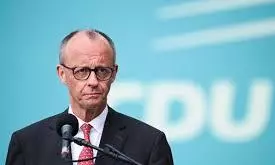

German Chancellor Friedrich Merz has criticised the United States’ handling of negotiations with Iran, saying Washington was being “humiliated” by Tehran’s leadership during stalled diplomatic efforts.
Speaking to students in Marsberg, Merz suggested the administration of US President Donald Trump was being outmanoeuvred in indirect talks with Iran. His remarks came after Trump cancelled a planned trip by US negotiators to Islamabad for discussions with an Iranian delegation. An earlier round of talks in Pakistan, led by Vice President JD Vance, had ended without progress.
“The Iranians are obviously very skilled at negotiating, or rather, very skilful at not negotiating,” Merz said, adding that US negotiators were returning without results.
The comments contrast with Trump’s recent assertion that the US “has all the cards” in the negotiations.
Iran has reportedly proposed a ceasefire arrangement centred on reopening the Strait of Hormuz, while postponing discussions on nuclear weapons, sanctions, and missile programmes. Iranian officials said broader nuclear talks could only take place after the US blockade ends.
The proposal includes a plan under consideration in Iran’s parliament to charge ships fees for passage through the strait. However, the International Maritime Organization rejected the idea, saying there is no legal basis for imposing charges on international navigation routes.
The conflict and blockade have intensified pressure on Iran’s economy. The International Monetary Fund has forecast a 6.1 percent contraction in Iran’s economy this year, with inflation nearing 70 percent.
Iranian Foreign Minister Abbas Araghchi met Russian President Vladimir Putin in Moscow on Monday to seek support against the economic impact of the blockade. Putin said Russia would support efforts aimed at restoring peace.
According to official media, Putin told Iranian Foreign Minister Abbas Araghchi that Russia would do everything possible to serve Iranian interests.
Araghchi said the conflict had demonstrated Iran’s strength, describing the country as a “stable, solid and powerful system.”
Analyst Nikita Smagin told The Guardian that discussions in Moscow focused on Russian military and economic assistance, including alternative transit routes for Iranian trade. If the blockade continues, the Caspian Sea and land connections through Russia could become some of Iran’s few remaining trade channels.
However, those routes face challenges. Israel struck the Iranian port of Bandar Anzali in March, targeting the Caspian trade corridor. Even before the attack, analysts said the route could not replace the Strait of Hormuz, which handled more than 90 percent of Iran’s prewar trade.
Ali Vaez of the International Crisis Group said the Trump administration may have underestimated Iran’s willingness to endure economic hardship rather than make concessions on its nuclear programme.
Vaez said the blockade has intensified Iran’s economic crisis but argued that Tehran views the conflict as existential and is prepared to absorb significant costs. He added that US President Donald Trump faces domestic political pressures, including rising fuel prices, inflation, and concerns over global jet fuel shortages ahead of the World Cup in North America.
Analysts said Trump could still claim a diplomatic victory if Iran agrees to reopen Hormuz, citing damage inflicted on Iran’s nuclear and military infrastructure. However, concerns remain over Iran’s stockpile of highly enriched uranium, estimated at 440 kilograms, which could theoretically be used for multiple nuclear warheads.
Ariane Tabatabai of the Chicago Council on Global Affairs said Iran could rebuild parts of its military capability relatively quickly because its strategy relies on low-cost and easily deployable systems.
Meanwhile, Israeli Prime Minister Benjamin Netanyahu warned that Hezbollah’s rockets and drones continue to pose a threat, raising the possibility of further military action in Lebanon.